

Case Study: Refurbished Laptops in UK Education in 2026
A refurbished laptop project is only as strong as the evidence behind it. The question behind “case study refurbished laptops in education UK” is practical: can the devices meet learning needs consistently, and can the procurement decision be justified with credible evidence?
Before committing to a bulk purchase, assess the required tasks, device specifications, batch condition and value for money. Start with verified user requirements, then measure results against a baseline. Avoid assuming that refurbished devices will automatically deliver learning benefits, reliability or savings.
This article provides a practical framework for evaluating an education laptop project without inventing a school deployment or unsupported results. It explains how to define the project context, assess device suitability and batch consistency, and identify evidence for evaluating outcomes. It also sets out what to prepare for a bulk procurement discussion about refurbished Dell, Lenovo or HP laptops, so the decision is easier to assess and explain to stakeholders.
Key Takeaways
- Build a case study refurbished laptops in education UK around documented project needs, not assumed user numbers or outcomes.
- Match learning tasks to verified specifications, condition criteria and consistency across the batch.
- Compare refurbished and new options against the same project requirements, and distinguish comparison criteria from case findings.
- Measure outcomes against baseline data, and separate the wholesaler’s supply role from the education organisation’s deployment activities.
- Prepare user requirements, quantities, device criteria and evaluation measures for a focused bulk procurement discussion.
Case study context: the refurbished laptop challenge in UK education
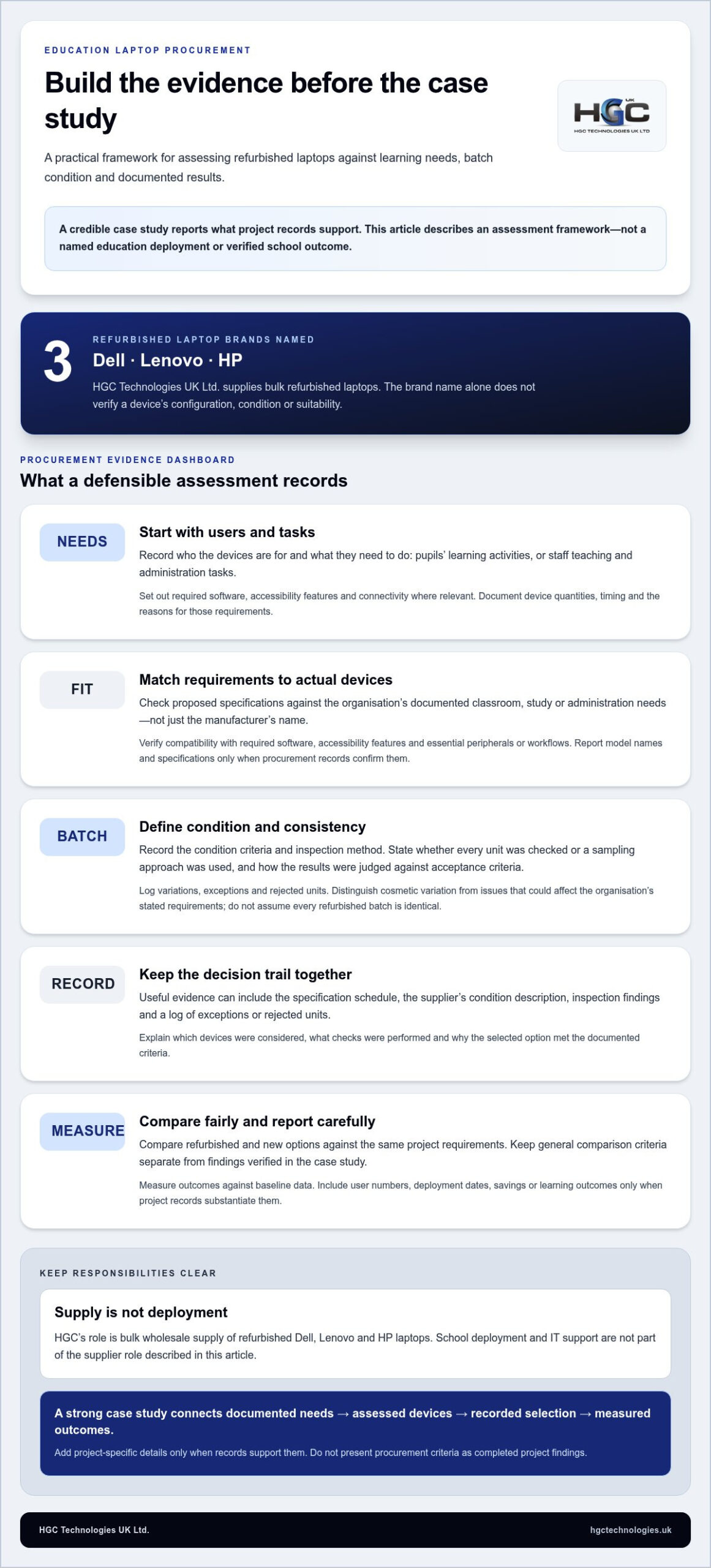
A credible case study starts with documented project evidence, not a presumed school success story. HGC Technologies UK Ltd. supplies bulk refurbished laptops, but this article does not describe a named education organisation or a completed school deployment. It therefore does not attribute device purchases, user numbers or outcomes to a particular school, college or trust. Treat it as a framework for documenting a case study, with project-specific details added only when records support them.
This distinction matters because sector-wide pressures are not evidence of one organisation’s needs. Device shortages, budget constraints, sustainability targets and improved learning outcomes should not be attributed to a specific buyer without project records. A useful case study documents the organisation’s actual priorities and decisions, rather than inferring them from general procurement discussions.
What the education organisation needed from its laptops
Start with the intended users and the tasks the devices need to support. For pupils, record the learning activities; for staff, note teaching or administrative tasks. List required software, accessibility needs and connectivity requirements where they apply. These details turn a broad request for laptops into criteria that can be checked against proposed specifications.
Record the number of devices sought and the required timing, along with the reasons behind those requirements. A case study should report user numbers, device quantities, specifications and deployment dates only when the organisation has documented and approved those details. Keeping the requirements clear also helps decision-makers compare options on the same basis.
Why refurbished laptops entered the procurement assessment
Document the buyer’s stated reasons for considering refurbished laptops rather than assuming them. Cost, availability or environmental considerations may form part of a procurement decision, but the case study should report only priorities recorded by the organisation. Then show how those priorities influenced the assessment and selection criteria.
Refurbishment describes work carried out to prepare used electronics for further use, and processes and assurances can vary. A general overview of what a refurbished laptop is provides background, but it does not verify the condition or testing of a particular batch. For a procurement decision, compare the supplier’s condition description with the buyer’s requirements and record the checks used to assess the devices.
To build a complete case study, document the organisation type and setting, intended users, requirements, quantity, timing and reasons for considering refurbished devices. Substantiate any later claims about selection or outcomes with project records. HGC’s role is bulk wholesale supply of refurbished Dell, Lenovo and HP laptops, rather than school deployment or IT support.
How the refurbished laptop solution was assessed and selected
A useful case study explains how the buyer reached its decision. Record the devices considered, the checks performed and the reasons for the final selection. A practical assessment begins by defining intended use, translating it into required capabilities, checking proposed devices and their condition, then documenting how each option performed against the criteria. This keeps the specification tied to the tasks the laptops must support.
Keep project findings separate from general procurement guidance. The case study should describe only steps supported by procurement documents, while a framework can explain what a robust assessment would examine. This distinction lets readers apply the process without mistaking an example criterion for a verified project detail.
Matching laptop capability to education tasks
Compare the organisation’s documented classroom, study or administration needs with the specifications of the proposed devices. Include required software and accessibility features, and check compatibility against the actual configuration rather than relying on the brand name. Where a particular application or peripheral is essential, include it in the requirements and verify the relevant workflow before purchase.
If procurement records identify Dell, Lenovo or HP models, report the model names and specifications from those records. Otherwise, keep the discussion at category level. A clear record connects each requirement to the evidence used to assess whether the proposed laptops meet it.
Assessing condition and consistency across a bulk order
Set out the condition criteria and inspection process used for the batch. Explain whether each unit was checked or a sampling approach was used, how variations were recorded, and how the buyer decided whether the batch met its acceptance criteria. These details help readers understand what “consistent condition” meant for the project.
Useful procurement records can include a specification schedule, the supplier’s condition description, inspection findings and a log of exceptions or rejected units. Distinguish cosmetic variation from issues that could affect the organisation’s stated requirements. Do not assume every refurbished batch is identical: record what was assessed and how the results were judged.
A clear case study connects the organisation’s requirements to the devices assessed and the documented basis for selection. HGC supplies bulk refurbished Dell, Lenovo and HP laptops; organisations preparing a procurement shortlist can explore bulk refurbished laptop supply as one procurement route.
Refurbished versus new laptops: what the education case can show
A fair comparison holds both options to the same requirements. A case study should document the models, specifications, batch details, costs and outcomes before drawing conclusions about suitability, reliability or value. Use the table to separate project findings from criteria an education buyer can apply when structuring a comparison.
| Comparison area | Refurbished option in this case | New-device alternative, criteria only |
|---|---|---|
| Required tasks and specification | Project requirements and supplied specifications aren’t documented. | Assess against the same recorded user tasks and specification requirements. |
| Condition and consistency | Batch condition, checks and variation aren’t documented. | Record the proposed condition and consistency criteria for comparison. |
| Procurement fit | Quantity, timing and purchase terms aren’t documented. | Compare against the same quantity, timing and procurement criteria. |
| Lifecycle and support | Support arrangements and lifecycle evidence aren’t documented. | Assess using equivalent, evidenced assumptions and arrangements. |
Which comparison criteria matter to education buyers?
Start with documented user tasks and compare each option against the same requirements. Check proposed specifications against those needs: brand and device age alone do not establish suitability. For a bulk order, compare the required quantity and timing with the available batch information, then assess condition criteria and variation using recorded evidence. Include support arrangements and lifecycle assumptions only when they are documented.
Apply the same discipline to commercial comparisons. Use project costs only when records define what they include, and compare equivalent purchasing scopes. Do not treat a general price estimate or an unverified lifecycle assumption as a case result. If information is incomplete for one option, state the limitation rather than filling the gap with an assumption.
What the case evidence does, and doesn’t, prove
Without a documented selection and follow-up evidence, a case study cannot establish which option was chosen or whether it met the organisation’s needs. Separate measured operational data from stakeholder feedback: each can inform the account, but neither by itself proves wider learning impact.
To support a savings claim, define the baseline, compare equivalent device requirements and state the measurement period. Reliability claims also need a clear measure and period. For feedback, identify whose views were collected and in what context. Note missing data, sample size and differences between the options being compared. Keep conclusions within the limits of the evidence.
This evidence-led approach makes a case study refurbished laptops in education UK useful even when findings are mixed. It shows what the project can support, what remains uncertain and what information buyers should gather before drawing a procurement conclusion.
Deployment and outcomes: measuring an education laptop project
A procurement decision is not the same as a successful deployment. A case study about what happened after selection needs a traceable sequence from order and receipt through acceptance and the customer’s own setup and distribution activities. Record milestones, quantities and dates only when approved project records support them.
Keep responsibilities distinct. HGC supplies bulk refurbished laptops. The education organisation or its appointed teams manage activities such as configuring devices, assigning them to users and introducing them into lessons or administrative work. A clear account identifies the responsible party at each stage and avoids attributing deployment work to the wholesaler.
What to record during rollout
Use procurement and acceptance records to document what was ordered, what was received and whether the accepted quantity matched the order. Then use the organisation’s rollout records to show when and how devices entered use. Record setup and distribution responsibilities, delays, faults and responses when supported by evidence. This creates a useful timeline without implying that the wholesaler carried out school IT or deployment work.
How to evaluate results after deployment
Choose follow-up measures that relate directly to the original need, and compare them with a recorded baseline. Device availability may be relevant if the organisation tracked it consistently, but it should not be reported as a result without data. Feedback can add context if the account identifies whose views were gathered, how they were collected and the period they cover. Keep measured data separate from reported experience and editorial interpretation.
A compact outcome table can make the evidence and its limits easy to assess:
| Measure | Baseline | Follow-up | Evidence status |
|---|---|---|---|
| Devices available for intended use | Not provided | Not provided | No verified comparison |
| Acceptance or recorded faults | Not provided | Not provided | No approved project records |
| User or staff feedback | Not provided | Not provided | No attributed feedback supplied |
These entries describe the evidence presented in this article, not a negative project result. For each published outcome, state the measurement period and method alongside the finding. If the baseline is missing, the sample is limited or conditions changed between measurements, disclose that limitation rather than implying a like-for-like result. A case study refurbished laptops in education UK is most useful when readers can see both what the evidence supports and what remains unknown.
For procurement planning, HGC’s bulk refurbished laptop procurement guide can help frame the supply discussion. Prepare a documented requirements brief using the criteria above, then discuss bulk refurbished laptop requirements with HGC.
How HGC supports bulk refurbished laptop procurement for education
Turn the project criteria into a clear procurement brief. HGC Technologies UK Ltd. supplies bulk refurbished Dell, Lenovo and HP laptops to corporate buyers and resellers across the UK. For education organisations assessing these laptop categories, begin with a defined requirement: who will use the devices, what tasks they need to support and which specifications the buyer has set.
HGC supplies laptops; the education organisation or its appointed teams manage decisions about configuration, user allocation and putting devices into use. Keeping these responsibilities separate clarifies procurement expectations and helps case studies attribute activities and outcomes accurately. For wider context on working with a UK wholesale supplier, see this UK wholesale laptop distributor reference.
What education buyers can bring to a bulk procurement discussion
A focused brief connects the requirement to the relevant laptop category and gives the buyer clear criteria for assessment. Prepare:
- Quantity and intended users: state the number of devices sought and the groups or roles they are for.
- Required specifications: document the capabilities needed for learning or administrative tasks, along with software and accessibility requirements.
- Condition criteria: set out condition expectations and how the organisation intends to assess consistency across the batch.
- Timing and procurement criteria: describe the required timeframe and the factors that will guide the decision, without treating them as a guaranteed fulfilment date.
These details support a more precise discussion about bulk refurbished Dell, Lenovo or HP laptops. The appropriate category depends on the project brief; a brand name alone does not demonstrate that a device meets a particular education requirement.
Turning case-study learning into a practical next step
A case study refurbished laptops in education UK should leave decision-makers with a usable record, not just a headline conclusion. Before drawing lessons from a project or preparing a new requirement, use this evidence checklist:
- Are the intended users, tasks and device quantity documented?
- Are required specifications, condition criteria and batch information recorded?
- Are procurement timing and decision criteria clear?
- Can each reported outcome be traced to a baseline, follow-up period and source?
Treat any unanswered checklist item as an evidence gap rather than filling it with an assumption. This keeps comparisons fair and gives stakeholders a stronger basis for evaluating the eventual procurement decision. Buyers considering Lenovo devices can also use the bulk Lenovo laptop procurement guide as brand-specific sourcing context.
For a discussion grounded in your organisation’s quantities, specifications and intended use, discuss your bulk refurbished laptop requirements with HGC.
Make your next procurement decision evidence-led
Turn educational priorities into a brief that guides sourcing and evaluation. Define what the devices need to support, which requirements are essential and how you will judge whether the chosen option meets them. Agree how to capture baseline and follow-up evidence before devices enter use, so later decisions are easier to explain and refine.
A case study refurbished laptops in education UK is most valuable when it helps your organisation ask better questions about its project, rather than promising a result in advance. HGC supplies bulk refurbished Dell, Lenovo and HP laptops to business and reseller customers across the UK, providing a wholesale route to consider as you shape your requirements.
Set out your intended use, quantities and procurement criteria, then explore whether bulk refurbished laptops fit your organisation’s plans. Explore HGC’s bulk refurbished laptops for education procurement and take your next decision forward with clarity.
Frequently Asked Questions
Are refurbished laptops suitable for schools and colleges?
Refurbished laptops can suit schools and colleges when their verified capabilities match the work they will be used for. Assess a representative device against actual classroom or staff tasks, including the peripherals and accessibility features users rely on. Consider who will handle setup, updates and faults internally. Suitability depends on the use case and configuration, so refurbishment status or brand alone is not proof.
Can refurbished laptops run the software used in education?
Compatibility depends on each laptop’s configuration, operating system and the software’s current requirements. List the applications users need, compare those requirements with the proposed devices and test key workflows before purchase. Include connected equipment such as printers or specialist peripherals. For example, check a browser-based learning platform alongside any desktop applications rather than assuming internet access alone is enough.
How should a school assess the condition of refurbished laptops bought in bulk?
Set written acceptance criteria and apply them consistently across the batch. An inspection can record screen condition, keyboard and trackpad function, ports, webcam, charger and battery behaviour, where relevant to the school’s intended use. Track units that fail a check and record how they are handled. Define how cosmetic variation will be described so staff can distinguish appearance from faults that affect required use.
What evidence should an education laptop case study include?
A credible case study refurbished laptops in education UK connects the original need to the procurement decision and any reported result. Keep records of requirements, selected configurations, quantities, condition criteria, decision rationale and rollout dates. For outcome claims, preserve the underlying data, measurement method and time period. Attribute interview comments clearly and label them as feedback rather than measured results. Include gaps or changes that limit a like-for-like comparison.
How can schools measure the environmental impact of refurbished laptops?
Use a consistent, documented method to compare the refurbished purchase with the new-device alternative the school would otherwise have chosen. Record the number and types of devices, assumed period of use, energy use if available, transport and end-of-life treatment. Identify the source for emissions factors and state assumptions. Without comparable data and a stated method, describe the reuse rationale, but do not claim a specific carbon saving or environmental benefit.
Can refurbished laptop specifications vary within a bulk order?
Specifications can differ between units or models in a batch, so define acceptable limits before comparing or accepting an order. Record the minimum required processor capability, memory, storage and other relevant features, then document each configuration received. Assess any proposed substitutions against the same user needs and approval criteria. A batch schedule helps procurement and technical teams identify variation before devices are allocated to users.
What should an education organisation include in a bulk laptop procurement brief?
Include intended users, the number of devices required, learning or administrative tasks, essential specifications, software and accessibility needs, and relevant peripherals. Add the desired timing, condition expectations and criteria for comparing options. Identify who will manage setup and allocation, and how acceptance and outcomes will be recorded. Clear requirements help wholesalers discuss suitable bulk Dell, Lenovo or HP categories without implying that supply includes school deployment.

Refurbished Laptop Grading Standards UK: The 2026 Procurement Guide
A "Grade A" laptop from one wholesaler is frequently a "Grade B" disappointment from another, forcin

How Refurbished Hardware Impacts Company Image: A 2026 Strategic Guide
The most influential organisations in 2026 are no longer defined by the factory seal on their hardwa

Refurbished Laptops vs Smartphones for Business Productivity: The 2026 Guide
The most expensive mistake a procurement officer can make in 2026 isn't choosing the wrong brand, bu