

Creating a Business IT Hardware Policy: The 2026 Procurement Checklist
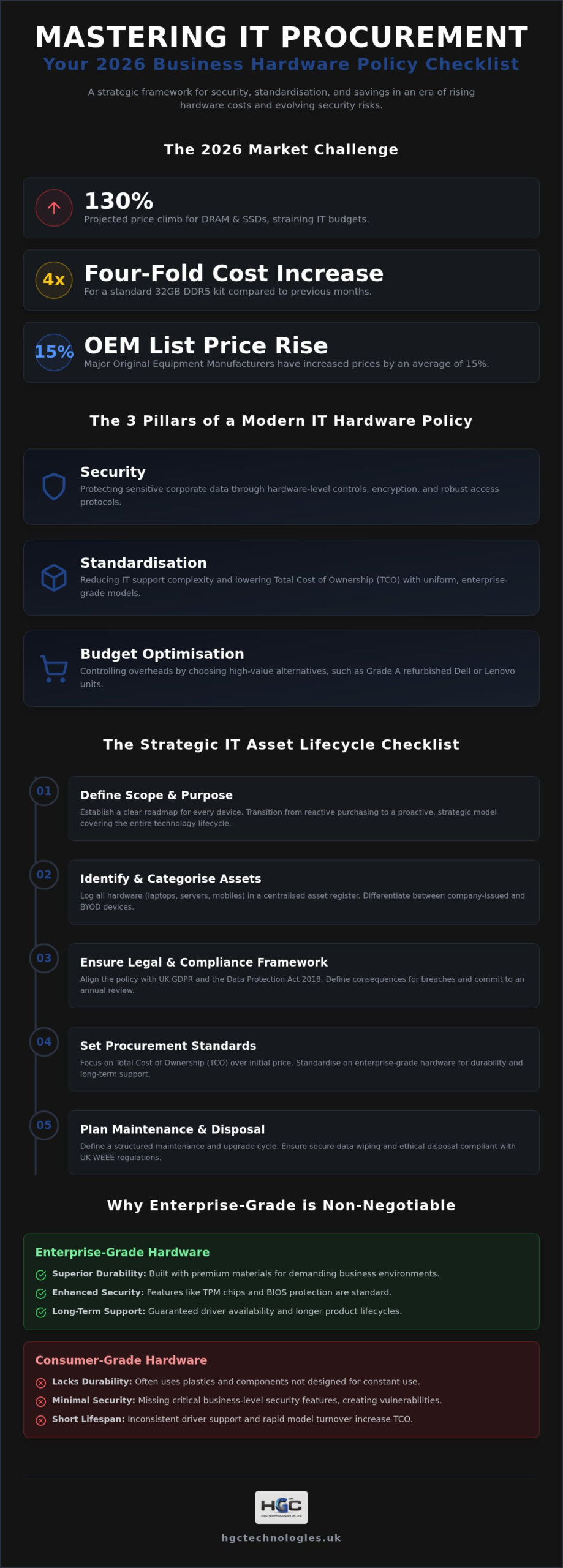
With DRAM and SSD prices climbing by up to 130% in 2026, the era of casual tech spending is over. You’ve likely noticed that a standard 32GB DDR5 kit now costs nearly four times what it did just months ago, whilst major OEMs have pushed list prices up by a further 15%. It’s a frustrating reality for any business leader trying to maintain a high-performance fleet without draining the annual budget or compromising on quality.
Creating a business IT hardware policy is no longer just a bureaucratic task; it’s a vital financial and security strategy. You need a framework that protects your assets from the moment of purchase to the point of ethical disposal. This guide provides a comprehensive 2026 procurement checklist designed to help you master IT asset management and slash overheads through smarter, more sustainable choices. We’ll explore how to standardise your fleet with enterprise-grade hardware, ensure UK data protection compliance, and establish strict protocols that mitigate the anxiety of potential data breaches from lost or stolen devices.
Key Takeaways
- Understand the financial and security imperatives for creating a business IT hardware policy to protect your infrastructure from rising market volatility.
- Learn to standardise hardware specifications across your organisation to simplify technical support and lower the total cost of ownership.
- Implement robust physical security protocols and acceptable use guidelines to safeguard company data on laptops and mobile devices.
- Define a structured maintenance and disposal lifecycle to ensure your hardware remains efficient whilst staying compliant with UK WEEE regulations.
- Optimise procurement by partnering with suppliers who provide high-quality refurbished enterprise units and bespoke server configurations.
Defining the Scope and Purpose of Your IT Hardware Policy
Establishing a definitive set of rules for your company’s technology isn’t just about restriction. It’s about clarity. Creating a business IT hardware policy allows your organisation to transition from reactive purchasing to a proactive, strategic model that supports long-term growth. This document serves as a roadmap for every device that enters your business, ensuring that your infrastructure remains secure, compliant, and cost-effective in an increasingly volatile market.
A formal policy is essential for asset protection. When you are creating a business IT hardware policy, you define exactly how hardware should be handled, who is responsible for it, and what happens when things go wrong. This applies to every member of staff, from office-based teams to remote and hybrid workers. The policy must cover the entire technology life cycle, starting at the point of procurement and ending with secure, ethical disposal. By defining these stages clearly, you eliminate the ambiguity that often leads to budget leakages and security vulnerabilities.
Your primary goals should be three-fold:
- Security: Protecting sensitive corporate data through hardware-level controls and encryption.
- Standardisation: Reducing IT support complexity by using uniform, enterprise-grade models across the fleet.
- Budget Optimisation: Controlling overheads by choosing high-value alternatives, such as Grade A refurbished Dell or Lenovo units, over overpriced consumer-grade tech.
Identifying Corporate Assets
Effective management begins with knowing exactly what you own. You must categorise your hardware into clear groups: laptops, desktops, server solutions, and mobile devices. It’s vital to distinguish between company-issued hardware and personal devices used under a Bring Your Own Device (BYOD) arrangement. Whilst BYOD can offer flexibility, it requires separate, stringent security protocols to protect your network. Every piece of equipment should be logged in a centralised asset register that tracks serial numbers, purchase dates, and technical specifications. This register is your first line of defence against asset loss and helps you plan for future upgrades without the guesswork.
Legal and Compliance Framework
Your hardware policy must align with current UK legislation, specifically the UK GDPR and the Data Protection Act 2018. Compliance isn’t optional; it’s a legal requirement that protects your business from heavy fines and reputational damage. Clearly define the consequences of policy breaches for employees to ensure accountability across the board. Because the tech market moves fast, you should commit to an annual review of this document. This ensures your standards reflect the latest advancements in cybersecurity and the evolving needs of your workforce.
Procurement Standards: Balancing Performance with Budget
Effective procurement is the cornerstone of fiscal responsibility within any modern organisation. When creating a business IT hardware policy, the focus must shift from the initial sticker price to the Total Cost of Ownership (TCO). This calculation includes maintenance, energy consumption, and the eventual cost of replacement. By standardising hardware specifications across your departments, you simplify technical support and ensure that your IT team isn’t juggling dozens of different driver sets or spare parts. A uniform fleet allows for faster deployment and more predictable performance benchmarks.
Choosing enterprise-grade hardware over consumer-grade alternatives is a non-negotiable standard for professional environments. Whilst consumer laptops often feature attractive price points, they lack the durability, security features, and long-term driver support required for business operations. With DRAM and SSD prices having climbed by up to 130% in 2026, finding value without sacrificing quality is paramount. Integrating sustainable sourcing into your policy doesn’t just lower costs; it aligns your business with modern environmental standards and corporate responsibility goals.
The Case for Refurbished Enterprise Hardware
Premium refurbished units represent the intersection of performance and value. High-quality bulk Dell refurbished laptops often outperform brand-new budget models because they are built with superior chassis materials and professional-grade components. Understanding refurbished grades is essential here; Grade A units provide the reliability your staff expect whilst significantly reducing procurement overheads. By leveraging wholesale refurbished computers UK, you can scale your team affordably without the performance compromises associated with entry-level retail hardware.
Custom Builds and Server Solutions
Standardisation works for the majority of the workforce, but certain roles require bespoke power. For creative departments or data analysts, custom-built PCs offer the specific performance required without paying for unnecessary features. Similarly, your infrastructure needs robust enterprise server hardware UK that can handle the 10.8% increase in global IT spending projected for 2026. A well-defined approach to creating a business IT hardware policy ensures that your budget remains resilient against market fluctuations. If you’re looking to standardise your fleet with high-performance units, exploring enterprise-grade refurbished solutions is a logical first step towards a smarter procurement strategy.
Acceptable Use and Physical Security Protocols
A piece of hardware is only as secure as the person carrying it. When creating a business IT hardware policy, you must move beyond technical specifications and address the human element of asset management. Physical security is the first line of defence against data loss. We recommend mandating the use of padded carrying cases and prohibiting equipment from being left unattended in vehicles, even if they are locked. For staff working in public spaces, privacy screens are a mandatory requirement to prevent “visual hacking” of sensitive corporate information.
The policy should frame hardware as a tool for professional growth rather than a monitored cage. Whilst the primary use of any device must remain business-related, overly restrictive rules often lead to “shadow IT” as employees seek workarounds. Instead, focus on high-impact areas: prohibiting the installation of unapproved software and ensuring that all devices are stored in secure, locked environments when not in use. This balanced approach encourages stewardship without stifling productivity.
Time is the critical factor when a device goes missing. Your policy must outline an “immediate notification” protocol, requiring staff to report lost or stolen equipment within two hours of discovery. This allows your IT department to initiate remote wipe procedures and lock accounts before a breach can occur. Clear instructions for reporting accidental damage are equally important, as they ensure that repairs are handled by authorised professionals rather than third-party shops that might compromise the device’s integrity.
Remote and Hybrid Working Security
Remote environments must mirror the security standards of the head office. This includes ensuring home routers are configured with strong passwords and that firmware is kept up to date. We strictly advise against the use of unauthorised peripherals, such as unbranded keyboards or “smart” home devices, which can introduce vulnerabilities into the corporate network. When using public Wi-Fi, a company-approved VPN is a non-negotiable requirement for all connections to protect against man-in-the-middle attacks.
Peripheral and Accessory Management
Standardising accessories like docking stations and monitors ensures seamless compatibility across your fleet. It also simplifies the onboarding process for new hires. Regarding storage, personal USB drives should be prohibited to prevent the introduction of malware. Instead, encourage the use of secure cloud environments. For company-issued smartphones, regular maintenance and the use of protective cases are expected to preserve the device’s lifecycle and resale value. This level of care is essential for creating a business IT hardware policy that actually preserves your capital investment.
Maintenance, Upgrades, and the Disposal Lifecycle
Proactive maintenance is the most effective way to shield your budget from the hardware price surges seen throughout 2026. When creating a business IT hardware policy, you must move beyond simple procurement and define a rigorous maintenance schedule. Regular health checks and internal cleaning prevent the thermal throttling that degrades performance over time. A device is only truly at its “End of Life” when it can no longer support essential security updates or when the cost of repair exceeds 50% of its residual value. Maintaining this threshold ensures your fleet remains an asset rather than a liability.
Compliance with UK WEEE regulations is a mandatory pillar of modern asset management. Your policy must ensure that 100% of electronic waste is handled through authorised channels to avoid the severe penalties associated with improper disposal. This transition from “use and discard” to a structured lifecycle management model protects both your corporate reputation and the environment. Documenting every step of this process creates an audit trail that is essential for both environmental compliance and internal financial reviews.
Extending Hardware Longevity
Maximising the lifespan of your fleet requires more than just careful handling. Implementing battery health management protocols, such as limiting charge cycles for docked laptops, can significantly extend the usable life of portable units. Before committing to a full replacement, evaluate whether a component upgrade is more viable. Upgrading an SSD or adding RAM to a Grade A refurbished Dell or Lenovo unit often provides the necessary performance boost at a fraction of the cost of a new machine. We recommend maintaining a centralised repair log to track recurring failures, which helps in identifying problematic models before they impact wider productivity.
Secure and Sustainable Decommissioning
Data security does not end when a device is retired. Your policy must mandate a data sanitisation process using certified software to ensure permanent erasure before any hardware leaves your premises. This is a critical step for maintaining UK GDPR standards and preventing data leaks. A well-structured decommissioning phase is the final, vital component of creating a business IT hardware policy that stands up to regulatory scrutiny. For a more sustainable approach, consider partnering with a wholesale laptop distributor UK to facilitate trade-in programmes. These programmes ensure that older assets are either refurbished for a second life or recycled in full compliance with environmental requirements.
If you are ready to implement a more sustainable and cost-effective fleet strategy, you can browse our range of enterprise-grade hardware to find the perfect balance of performance and longevity.
Implementing Your Policy with Reliable Hardware Partners
Policy implementation is where strategy meets reality. Creating a business IT hardware policy requires more than just a signed document; it demands a shift in operational habits across the entire organisation. To prevent the budget leakages of ad-hoc, retail-price purchasing, you must establish a formal “Hardware Request” workflow. This centralised process ensures all acquisitions pass through the IT department’s approved specifications, maintaining the performance standards you’ve worked hard to define. It’s a simple step that stops rogue spending and keeps your fleet uniform.
Monitoring is the final piece of the puzzle. It’s not enough to set rules; you have to verify they’re being followed. Schedule periodic asset audits to ensure the physical inventory in your offices and remote setups matches your digital register. These audits help you spot missing equipment early and identify departments where hardware isn’t being cared for according to your new standards. It’s a methodical way to protect your investment and maintain the integrity of your infrastructure.
Choosing a Strategic Hardware Supplier
A strategic partnership with a supplier that understands enterprise-level requirements is vital for long-term success. You need a partner that offers bulk availability to facilitate fleet standardisation. HGC Technologies UK Ltd. supports corporate IT policy implementation by providing wholesale volumes of Grade A refurbished Dell, Lenovo, and HP laptops, alongside custom-built PCs and server solutions. This ensures your hardware remains consistent, making maintenance and troubleshooting significantly more efficient. Vetting your suppliers for quality assurance and testing standards is essential to guarantee that every unit delivered meets your performance benchmarks.
Training and Cultural Adoption
Communicate the new policy through structured onboarding for new hires and refresher sessions for existing teams. Staff shouldn’t view these rules as barriers but as shared responsibilities. Educate your teams on the environmental and financial impact of their equipment. A well-maintained laptop can serve the business for years, whilst a neglected one becomes a costly liability. Create a “Frequently Asked Questions” document for your staff intranet to address common queries about repairs or upgrades. Recognising and rewarding departments that demonstrate exemplary asset care fosters a culture of stewardship amongst your workforce, ensuring your policy remains effective for years to come.
Securing Your Infrastructure for the Future
A robust framework ensures that every device, from the server room to the home office, serves a clear purpose whilst remaining secure. Creating a business IT hardware policy is the definitive step toward operational resilience and fiscal control in a market defined by rising component costs. By focusing on total cost of ownership and adhering to strict UK data protection standards, you protect your organisation against both financial waste and security vulnerabilities. This methodical approach to asset management transforms your IT department into a driver of efficiency.
As a UK-based wholesale specialist, we help you bridge the gap between high-end performance and budget sensitivity. Optimise your IT budget with bulk refurbished hardware from HGC Technologies UK Ltd., where we maintain strict Grade A refurbishment standards and provide expert custom PC and server configurations. This strategic approach to procurement doesn’t just save money; it establishes a sustainable, professional standard for your entire workforce. Take control of your technology lifecycle today to build a foundation for reliable, long-term growth.
Frequently Asked Questions
What is the most important section to include in an IT hardware policy?
The security and acceptable use section is arguably the most critical component. It defines how data is protected at the hardware level and establishes clear expectations for employee behaviour. When creating a business IT hardware policy, ensuring this section covers physical security, such as encryption and theft prevention, is paramount. This foundation protects the organisation from both accidental damage and malicious data breaches, whilst providing a clear framework for accountability across the entire workforce.
How often should a business update its hardware policy?
You should conduct a comprehensive review of your policy at least once every twelve months. The technology sector evolves rapidly; for instance, the 2026 market has seen SSD and DRAM prices increase by up to 130%. Annual updates allow you to adjust procurement strategies to account for these market fluctuations and integrate new security standards. This regular maintenance ensures your policy remains a relevant, living document that reflects current technical requirements and financial realities.
Can I include refurbished laptops in my corporate hardware policy?
Yes, integrating high-quality refurbished units is a strategic way to manage costs whilst maintaining performance. Professional Grade A refurbished Dell, Lenovo, and HP laptops are built to enterprise standards, often outlasting brand-new consumer models. Your policy should specify that these units must meet strict refurbishment criteria to ensure reliability. This approach supports a sustainable IT strategy and allows for wholesale procurement to standardise your fleet without the high price tag of new equipment.
What are the UK regulations for disposing of business IT hardware?
UK businesses must comply with the Waste Electrical and Electronic Equipment (WEEE) regulations. These laws mandate that all electronic waste is disposed of through authorised treatment facilities to minimise environmental impact. Your policy should outline a clear decommissioning process that includes professional data sanitisation before disposal. Partnering with certified handlers ensures you receive the necessary documentation for an audit trail, protecting your business from the legal and financial penalties of non-compliance.
How does a hardware policy help with GDPR compliance?
A hardware policy supports GDPR compliance by mandating the physical and digital protection of personal data. By requiring full-disk encryption and remote wipe capabilities on all company laptops, you mitigate the risk of data exposure if a device is lost or stolen. Additionally, the policy should define secure disposal methods that include permanent data erasure. This creates a documented chain of custody that is essential for demonstrating regulatory compliance during an official audit.
Should I allow employees to use their own hardware for work?
Whilst Bring Your Own Device (BYOD) policies offer flexibility, they often introduce significant security vulnerabilities that are difficult to manage. We generally recommend issuing company-owned hardware to maintain full control over security updates, software configurations, and data encryption. If you do allow personal devices, your policy must include strict requirements for VPN usage and mobile device management (MDM) software. This ensures that personal hardware does not become a gateway for threats to enter your corporate network.
What is the best way to track company IT assets?
The most effective method is maintaining a centralised asset register that is updated in real-time. This register should log every piece of equipment by its serial number, technical specifications, purchase date, and assigned user. Using dedicated asset management software simplifies this process, allowing you to track the hardware lifecycle from procurement to disposal. Regular physical audits are also necessary to verify the accuracy of your digital records and identify any missing or unaccounted-for assets.
How do I enforce an IT hardware policy for remote workers?
Enforcing your policy for remote teams requires a combination of technical controls and clear communication. You should mandate the use of company-approved VPNs and ensure that all remote devices are managed through centralised endpoint protection systems. When creating a business IT hardware policy, include specific guidelines for home office security, such as router password standards and the prohibition of unauthorised peripherals. Structured onboarding sessions help remote staff understand their responsibilities regarding the care and security of company assets.

Bulk Refurbished Business Laptops: The 2026 UK Procurement Guide
The most effective strategy for scaling a high-performance IT infrastructure in 2026 isn't found on

Refurbished Laptop Grading Standards UK: The 2026 Procurement Guide
A "Grade A" laptop from one wholesaler is frequently a "Grade B" disappointment from another, forcin

How Refurbished Hardware Impacts Company Image: A 2026 Strategic Guide
The most influential organisations in 2026 are no longer defined by the factory seal on their hardwa