
Refurbished IT Equipment in Bulk for UK Trade and Resale
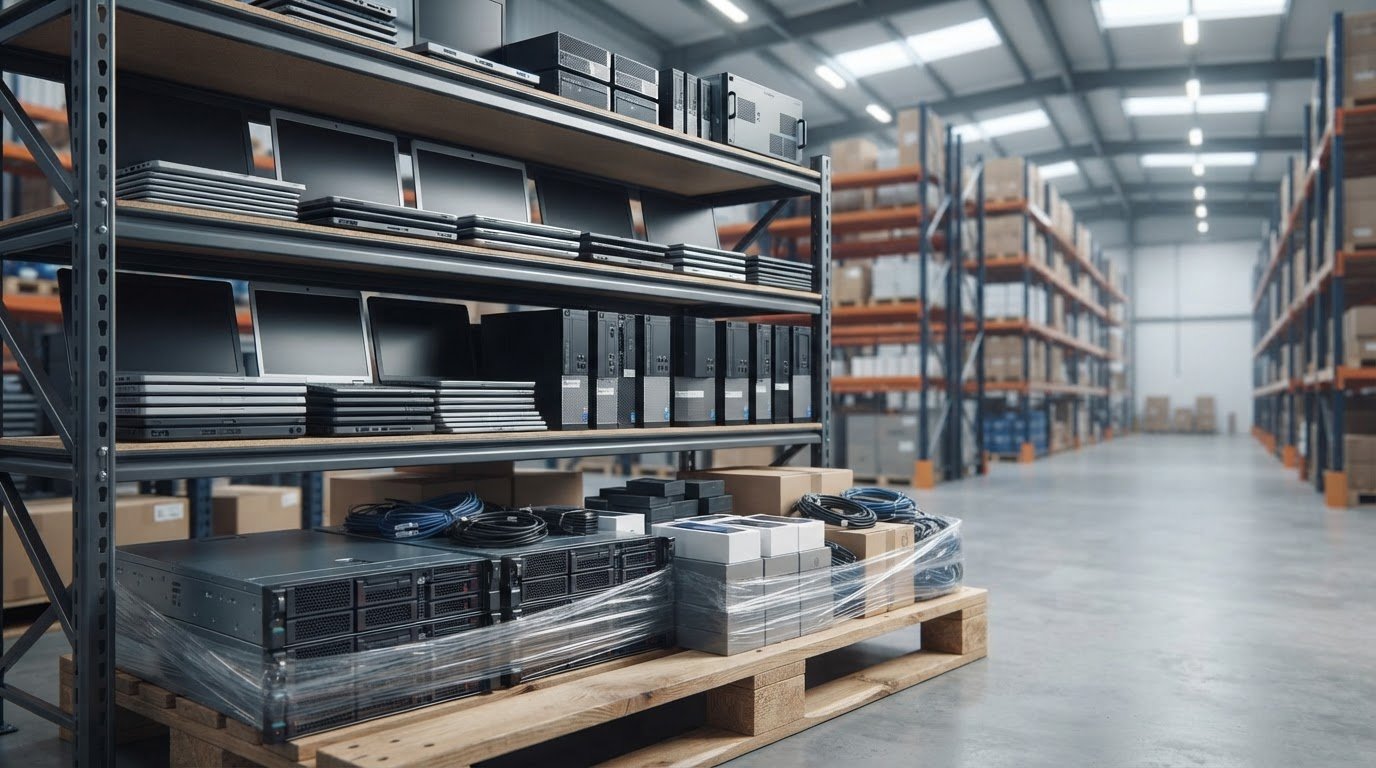
Buying refurbished IT equipment in bulk in the UK does not mean choosing just one type of device. You can build an order around laptops, custom-built PCs, smartphones or server solutions, depending on how the equipment will be used or resold.
For businesses and technology resellers, the practical questions are what equipment is available in bulk, who can order it, and what terms apply to quantities and warranties. The answers help you decide whether a purchase fits your deployment or resale plans.
This guide explains equipment options, how to plan quantities and what a return-to-base warranty involves: returning equipment to the supplier for assessment or repair under the written terms. It also outlines how refurbished laptops, PCs, smartphones and servers can support UK businesses and resellers, helping you assess your next step.
Key Takeaways
- Compare equipment categories to build a bulk order around business deployment or resale needs.
- Understand how minimum-order requirements affect the quantity and mix you plan to buy.
- Know which return-to-base warranty details matter when assessing refurbished equipment.
- See how HGC Technologies UK’s refurbished laptops, custom-built PCs and original smartphones can support trade and resale requirements.
Return-to-base warranty
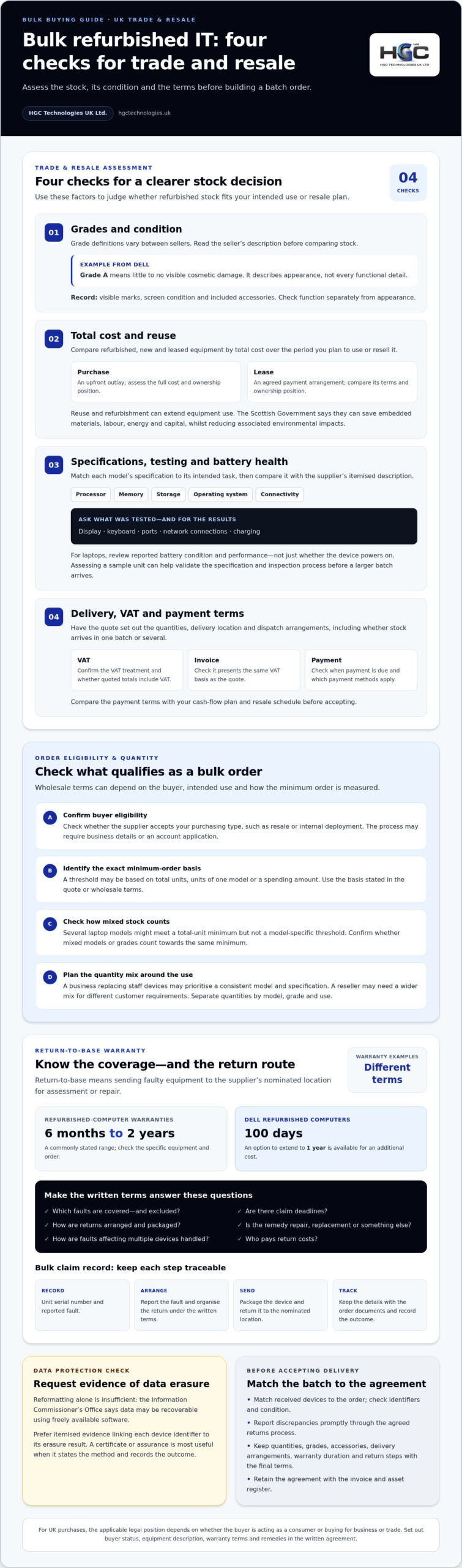
A return-to-base warranty means sending faulty equipment to the supplier’s nominated location for assessment or repair. The written terms should explain how to report a fault, arrange the return, package the device and receive it back. For a bulk order, record each affected unit’s serial number and reported fault, and keep those details with the order documents.
Warranty periods vary. Refurbished-computer warranties commonly last from six months up to two years. Dell refurbished computers come with a 100-day warranty, with an option to extend it to one year for an additional cost. These are different examples, so compare the warranty for the specific equipment and order rather than assuming one period applies to every refurbished device.
Warranty coverage depends on the written terms. Check which faults are covered, what is excluded, any claim deadlines and the return process. Confirm whether the remedy is repair, replacement or something else, and how the supplier handles faults affecting multiple devices. A clear process helps you plan for equipment that may be unavailable during a claim.
Ask for a record of the data-erasure process for each device. Reformatting alone is insufficient, because data may be recovered using freely available software, according to the Information Commissioner’s Office. Prefer itemised evidence linking each device identifier to its erasure result. A certificate or assurance is most useful when it states the method and records the outcome.
For UK purchases, the applicable legal position depends on whether the buyer is acting as a consumer or buying for business or trade. Set out the buyer’s status, equipment description, warranty terms and remedies in the written agreement to make the commercial arrangement clear.
Reduce bulk-order risks by agreeing how to inspect and report equipment on delivery. Match received devices to the order, check their identifiers and condition, and report discrepancies promptly through the agreed returns process. The quote or contract should state quantities, grades, included accessories, delivery arrangements, warranty duration, return steps and who pays return costs. Keep the final terms with the invoice and asset register.
Bulk IT equipment for trade and resale
Trade buyers need equipment they can describe accurately, assess against a resale plan and receive in a workable batch. These four checks help turn a mixed refurbished-stock order into a clearer purchasing decision.
Equipment grades and condition
Grades describe condition, but definitions vary between sellers, so read them before comparing stock. Dell assigns Grade A to computers with little to no visible cosmetic damage. That describes appearance, not every functional detail, so assess both separately. For resale, record visible marks, screen condition and included accessories. Matching these details to the grade helps set consistent expectations for customers and staff.
Cost and sustainability comparisons
Compare refurbished, new and leased equipment by the total cost over the period you plan to use or resell it. A purchase involves an upfront outlay, while a lease follows an agreed payment arrangement, so compare the terms and ownership position, not just headline figures. Refurbishment can also extend equipment use. The Scottish Government says reuse and refurbishment can save embedded materials, labour, energy and capital while reducing associated environmental impacts. Consider reuse alongside suitability and operating needs when making procurement decisions.
Specifications, testing and battery health
Before ordering, match each model’s specification to its intended task. Note the processor, memory, storage, operating system and connectivity requirements, then compare them with the supplier’s itemised description. Ask what testing was carried out and for the results, including checks of the display, keyboard, ports, network connections and charging. For laptops, review the reported battery condition and performance, not just whether the device powers on. Assessing a sample unit can help validate the specification and inspection process before a larger batch arrives.
Delivery, VAT and payment terms
For a UK order, have the quote show quantities, delivery location, dispatch arrangements and whether equipment arrives in one batch or several. Ask for the VAT treatment and whether quoted totals include VAT, then make sure the invoice presents the same basis. Payment terms should state when payment is due and which payment methods apply. Before accepting, compare those terms with your cash-flow plan and resale schedule. Explore bulk refurbished laptop options as you shape your stock requirements.
Bulk purchase eligibility and minimum order
Eligibility and order thresholds determine whether a business can buy wholesale and which stock combinations qualify. Before building an order, identify the buyer category, intended use and quantity mix, then compare them with the supplier’s terms.
Trade buyers and organisations should establish whether the supplier accepts their purchasing type, such as resale or internal deployment. The process may involve providing business details or applying for an account, while resellers may need to plan for onward sales. Read the eligibility criteria first and prepare the relevant purchasing details rather than assuming all wholesale channels work the same way.
A minimum order may be based on total units, units of one model or a spending threshold. These rules affect how you combine stock. For example, an order with several laptop models might meet a total-unit minimum but not a model-specific threshold. Check the minimum stated in the quote or wholesale terms, then calculate your order against that exact basis.
Build the quantity around the intended use. A business replacing staff devices may prioritise a consistent model and specification, while a reseller may need a wider mix to meet different customer requirements. Check whether mixed grades or models count towards the same threshold. Separating planned quantities by model, grade and use makes the order easier to assess.
Before placing an order, use this sequence:
- Confirm that your business or trade buyer category is eligible.
- Record the minimum quantity or spend and whether it applies per model or per order.
- List the required models, grades and quantities, then compare the total with the threshold.
- Check how substitutions or partial fulfilment affect the agreed order.
If a requested laptop model cannot meet the planned quantity, an accepted alternative could change the specification mix. Put any substitutions, delivery expectations and accepted quantities in the written order terms. This gives procurement and resale teams a shared record from approval through receipt, without relying on assumptions about what “bulk” means.
Bulk equipment options
Bulk orders can combine equipment categories or focus on one device type. When buying refurbished IT equipment in bulk in the UK, start by matching each category to its intended role, then compare full specifications and order terms.
Typical prices for refurbished computers
Refurbished laptops on the UK market typically cost between £201 and £250. That range is a market guide, not a quote for a particular model or bulk order. Configuration, condition and included accessories all affect comparisons, so assess each quoted laptop against its specification and intended use.
Desktop PC prices depend on components and configuration, so compare itemised system descriptions rather than broad category labels. For a bulk quote, specify the required configuration and quantities, then establish whether VAT and delivery are included. This gives procurement teams a clearer basis for assessing the total order value, without using laptop market ranges as desktop estimates.
Sources for bulk refurbished equipment
UK businesses can source refurbished equipment in bulk from specialist wholesalers and refurbishment businesses serving trade or corporate buyers. The right source depends on whether the equipment is for internal use or resale. When buying refurbished IT equipment in bulk in the UK, compare suppliers against the same model requirements and quantity mix.
Review product descriptions, grading, testing information and warranty terms alongside the quotation. Check that the listed categories match your intended order, and use the written quote to distinguish models, quantities and VAT treatment. This makes supplier offers easier to compare on a like-for-like basis.
A business considering refurbished Dell or Lenovo laptops can shortlist models against its deployment or resale requirements. Explore bulk refurbished laptop options as you develop a suitable equipment mix.
HGC Technologies UK Ltd.: Bulk Lenovo Refurbished Laptops
HGC Technologies UK Ltd. supplies bulk Lenovo refurbished laptops to businesses and resellers planning multi-device purchases. If your requirements centre on Lenovo laptops, this is a practical starting point for shaping an order around your deployment or resale needs.
For a wider equipment mix, HGC Technologies UK Ltd. also offers bulk HP refurbished laptops, custom-built PCs and original smartphones. Set out the categories and quantities your organisation needs to guide your purchasing discussion.
To discuss bulk equipment for your business or resale plans, contact HGC Technologies UK Ltd. or visit hgctechnologies.uk.
Shape your next procurement plan
Turn your equipment needs into a purchasing brief that supports your next steps. Set out who will use the devices, what tasks they need to handle and how they will fit your deployment or resale plans. This gives your team a practical foundation for buying refurbished IT equipment in bulk in the UK, rather than treating every order as one-size-fits-all.
HGC Technologies UK Ltd. supplies bulk Dell, Lenovo and HP refurbished laptops. These options give business buyers and resellers a clear starting point for planning a laptop-focused order. Share your purchasing requirements to move from general research to a defined equipment discussion.
Contact HGC Technologies UK Ltd. to discuss your business or resale requirements. A well-defined brief can help you take the next step with purpose and confidence.
Frequently Asked Questions
Which UK suppliers offer bulk refurbished laptops, desktops and monitors?
HGC Technologies UK Ltd. supplies bulk refurbished Dell, Lenovo and HP laptops to UK business and trade buyers. It also offers custom-built PCs, a separate option from refurbished desktop units. For an order that includes monitors, specify the equipment categories and model details in your purchasing brief, then compare itemised quotations to distinguish equipment types and quantities clearly.
What warranties and returns policies should UK bulk buyers expect?
UK bulk buyers should look for written warranty and returns terms explaining how to report faults, where to send affected equipment and what remedy applies. Keep the order reference and record each device’s serial number and fault to support efficient handling. Check whether the policy covers returns of multiple units and whether the buyer must arrange or pay for transport. Keep the agreed terms with your procurement records.
What certifications and data-wiping standards should UK refurbished IT suppliers meet?
Ask for itemised evidence linking each device identifier to its data-erasure result and stating the method used. Reformatting alone is insufficient, because data may be recovered using freely available software.
What UK consumer or business laws apply to buying refurbished IT equipment in bulk?
The applicable legal position depends on whether the buyer is acting as a consumer or buying for business or trade. Record the buyer’s status, equipment description, warranty terms and remedies in the written agreement.

Enterprise-Grade Refurbished Servers: The 2026 Strategic Procurement Guide
The most resilient data centres in 2026 aren't built on the promise of "new" hardware; they're built

Common Problems with Ex-Lease Laptops: A 2026 Procurement Guide
Did you know that battery-related faults account for 26% of all reported laptop issues, making them
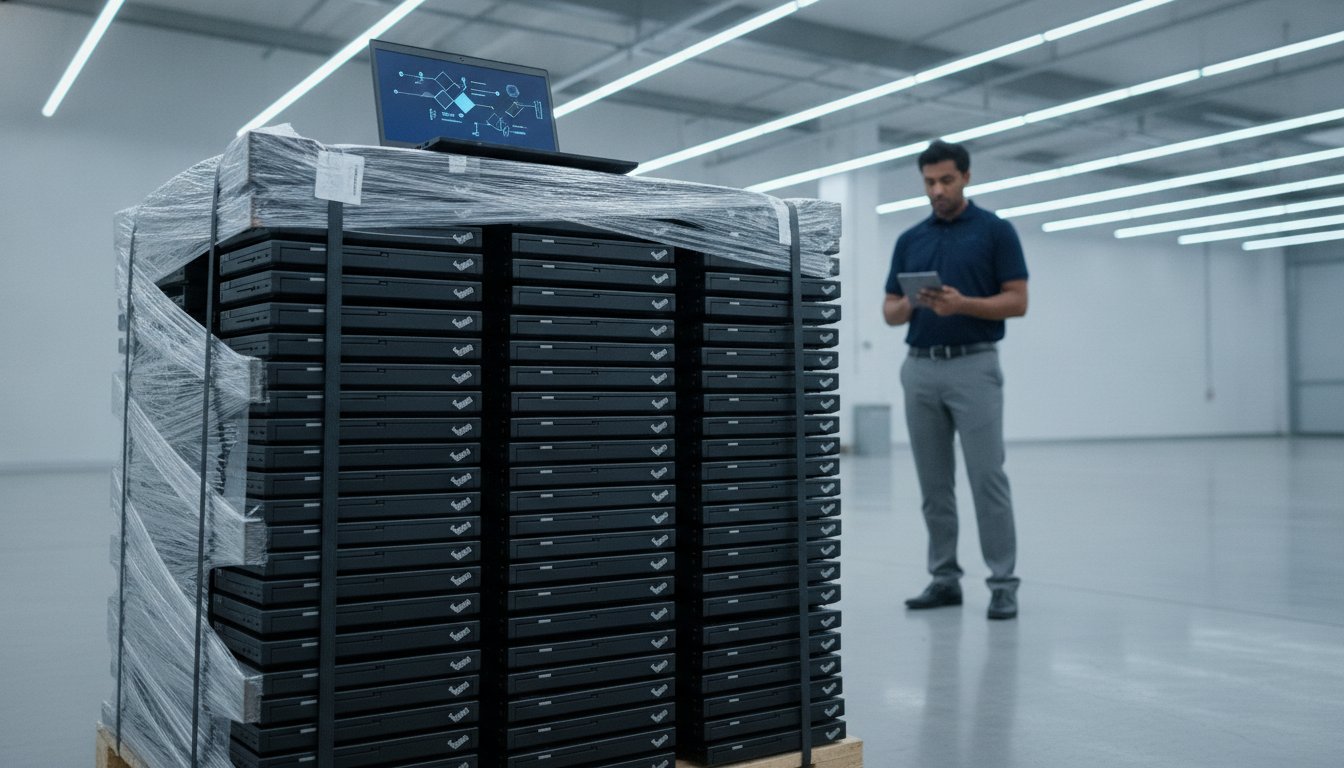
Bulk Lenovo Refurbished Laptops: The 2026 Wholesale Procurement Guide
By 2026, the global refurbished laptop market has surged to a valuation of over $10.5 billion, yet m