

Returns Policy for Bulk Refurbished Goods: UK Buyer’s Guide
A batch return can disrupt resale plans long before the paperwork is settled. A return policy for bulk refurbished goods should explain what happens when laptops arrive faulty, damaged or short of the agreed quantity, and how those situations differ from a change-of-mind return.
For UK business buyers, the contract matters: consumer cancellation rights should not be assumed to apply to a business purchase. Before ordering, understand the agreed reporting deadlines, evidence requirements, possible remedies and who arranges or pays for return transport. Clear terms help you plan stock and respond to a delivery issue without unnecessary disruption.
This guide explains which policy details to review before ordering, how to report faults or delivery discrepancies, and what records to keep. It also covers practical ways to compare return terms when purchasing bulk refurbished laptops for resale or business use, including Dell, Lenovo and HP stock. Recording the relevant details from the outset makes it easier to follow the process if an issue arises.
Key Takeaways
- Check how the policy treats faults, transit damage, specification differences and changes to your requirements.
- Compare notification deadlines, evidence requirements, return transport arrangements and possible resolutions before ordering.
- Distinguish the return policy from any separate warranty or contractual commitment, and understand which rules apply to your type of purchase.
- Use a consistent inspection and reporting process to record affected items and support a well-documented response.
- A clear return policy for bulk refurbished goods can help you plan stock, protect resale operations and manage procurement with greater confidence.
What a return policy for bulk refurbished goods should explain
A return policy should turn an order problem into a clear process. It sets out which issues are eligible for review, how and when to report them, what evidence to provide and how the matter may be resolved. For wholesale refurbished IT, the return policy for bulk refurbished goods should explain how to report an issue affecting one device, several units or an entire shipment.
Different problems may follow different processes. A laptop that will not start is a functional concern; visible casing damage may be a transit or condition issue. A shortage, incorrect model or mismatch with the agreed specification is an order discrepancy. Changed business requirements or a decision not to resell the stock may be treated differently from a fault. The contract and supplier policy set the applicable process, so do not assume every situation qualifies for the same return option.
Which situations can a bulk returns policy address?
Look for clear instructions for identifying and reporting each type of issue. For a non-functioning device, record its identifier and describe what happened during the check. For a shortage, compare the delivery with the order and packing records. For an incorrect model or specification, note what was ordered and what arrived. If several devices appear affected, list their quantity and identifiers rather than describing the entire order as faulty. Instructions for reporting unit-, batch- and shipment-level concerns help both sides assess the issue accurately.
Why refurbished condition and grading need clear definitions
Refurbished devices can undergo different checks or restoration work, and grading terms may describe cosmetic appearance rather than functional performance. Wikipedia’s overview of refurbished electronics provides background on the range of refurbishment practices. Before ordering, read the written grade description alongside the product specification. It should set expectations for visible wear, rather than leave you guessing what a label means.
Marks consistent with the agreed grade are different from a fault or a condition that appears inconsistent with the description. If you have a concern, identify the affected devices, compare their condition with the documented grade and take clear photographs. HGC’s guide to refurbished laptop grades can help you understand grading when planning a bulk laptop purchase.
Precise condition descriptions support procurement and resale planning. They give your team a shared reference for checking incoming stock and distinguishing expected cosmetic wear from a discrepancy to report under the agreed terms.
What terms to compare before ordering refurbished goods in bulk
Compare the written terms before committing stock to resale or business use. Look beyond whether returns are accepted: check which issues qualify, how quickly they must be reported, what evidence is required, who arranges transport and what resolutions the terms allow. A return policy for bulk refurbished goods should make these points clear.
Use this checklist to assess each policy:
- Scope: Which issues are covered, such as faults, transit damage, shortages or specification discrepancies? Are non-faulty returns treated differently?
- Notification: Are delivery concerns and faults found later subject to different reporting processes or deadlines?
- Evidence: Does the policy specify order records, photographs, serial numbers, testing notes or other information?
- Logistics: Does it explain how a return is authorised, packed and transported, and who is responsible for arranging it?
- Resolution: What outcomes may be considered under the terms, and how are they assessed for an individual unit or a wider batch?
These are comparison points, not guaranteed entitlements. Read the wording carefully and keep the policy with the quotation, purchase order and agreed specifications. If a point is unclear, resolve it in writing before placing the order so the records reflect the parties’ understanding.
How do return windows and notification requirements differ?
A policy may set one process for visible delivery issues and another for faults discovered during later checks. Record the delivery date, inspection date and date the issue was first observed, then follow the stated notification method. Do not assume a phone call alone meets a written-reporting requirement or that the same deadline applies to every type of concern.
What evidence helps assess a bulk order issue?
Keep the order confirmation, agreed specifications and condition descriptions together. Where relevant, record serial numbers and the number of affected devices, separating those units from the rest of the batch. Dated photographs can show packaging damage or visible condition. Concise notes should describe the fault and checks performed without overstating what they establish.
For resellers, documented condition grades and batch specifications help align incoming stock with listings and resale plans. A clear record also helps show whether a concern relates to one unit or a wider pattern. To explore bulk refurbished laptop purchasing, view HGC’s refurbished laptop options.
How UK consumer rights differ from business-to-business bulk purchases
The buyer’s status and the purpose of the purchase can affect which legal protections apply. The Consumer Rights Act 2015 defines a consumer as an individual acting wholly or mainly outside their trade, business, craft or profession. A bulk order placed by a company for business use will not usually be treated in the same way as an individual’s personal purchase. However, the facts and applicable jurisdiction matter, particularly where a purchase has mixed purposes or the buyer is a sole trader.
Does the Consumer Rights Act apply to a wholesale business order?
The Act sets out rights for consumer transactions, including requirements concerning goods supplied by a trader to a consumer. Do not assume these consumer protections apply automatically to stock bought for resale or business operations. Read the Act’s definition of “consumer” in section 2 of the Consumer Rights Act 2015, and consult GOV.UK guidance on consumer protection rights for an overview. The Act’s provisions and other relevant rules can depend on where the transaction takes place within the UK, so verify the position for the relevant jurisdiction.
A buyer’s label alone will not settle every question. An individual buying devices mainly for personal use may have a different status from an individual buying the same devices for a resale business. If the purpose is mixed or the buyer’s status is disputed, the circumstances need careful assessment rather than a blanket assumption.
When should a business buyer review the contract?
For a wholesale purchase, read the return policy alongside the contract, order confirmation and agreed product specifications. Check how the documents describe condition, reporting requirements, eligible issues and possible resolutions. Note whether the policy forms part of the contract or sits separately. In business transactions, contractual terms and applicable law both matter, so do not read a written clause in isolation from the wider agreement.
In short, consumer rights should not be assumed to govern a bulk order made for business purposes. The buyer’s status, the purchase purpose, the contract and the relevant UK jurisdiction all matter.
Keep the signed or accepted terms and order records together, particularly if a batch issue could affect resale plans or operations. If a claim is disputed or the order is high-value, seek advice from a qualified legal professional. This section offers general information, not a determination of anyone’s legal rights or likely outcome.
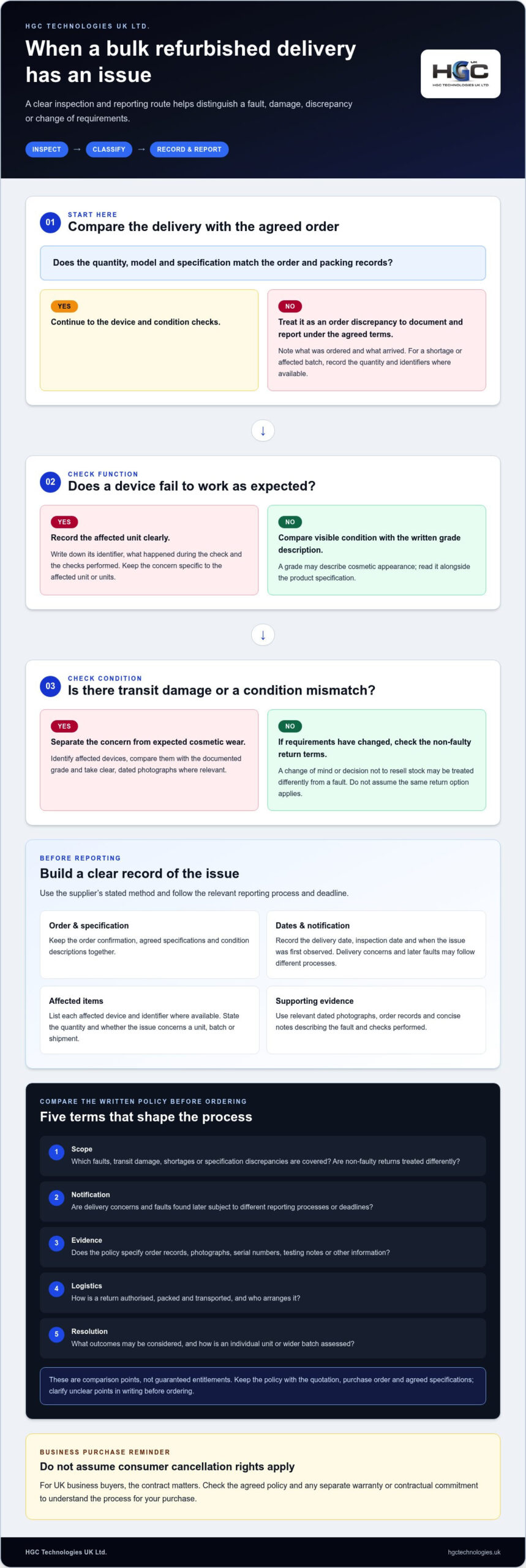
How to report faults, damage, or discrepancies in a bulk delivery
Act promptly, keep the evidence intact and follow the reporting route in the agreed terms. A consistent process helps the supplier assess the issue and helps your team limit disruption to stock, resale plans or business operations. If only part of a delivery appears affected, identify those units separately rather than describing the entire order as faulty.
What should a buyer document on arrival?
Inspect the delivery before distributing the stock. Record the delivery date, number of packages received and packaging condition, noting any visible damage. Then compare the delivered quantities, device identifiers and specifications with the order confirmation and agreed product descriptions. Take clear, dated photographs of relevant packaging or device condition, and retain packaging that may help show how the goods arrived.
Keep the record factual. Avoid altering a device or discarding potentially relevant materials before reviewing the applicable process. If you perform checks, note what you tested and what happened. This creates a useful record without assuming what caused the issue.
How should a buyer describe a fault or batch discrepancy?
Pause distribution of the affected units while you document the concern. Your report should state the order reference, delivery date, affected quantity and device identifiers where appropriate. Describe the observed fault or discrepancy in plain terms, separating confirmed symptoms from assumptions about the cause. For example, report that a device would not power on during a stated check, rather than asserting why it failed.
Use the notification method and timing set out in the relevant policy or contract. Include the evidence requested by those terms and ask for the next procedural step. Do not arrange transport or send items back unless the written process directs you to do so. The handling route depends on the agreed terms.
- Packaging: Note tears, crushed areas or other visible damage.
- Order accuracy: List missing units, incorrect models or specification differences against the order records.
- Batch scope: Separate affected devices from units that appear unaffected, and state the quantities clearly.
- Correspondence: Keep copies of reports, replies and supporting files until the issue is resolved.
A clear report makes it easier to assess whether a concern relates to one device, part of the batch or the shipment as a whole. Keep the order documents and inspection record together, and follow the agreed return policy for bulk refurbished goods throughout the process.
Planning a business or resale purchase? Explore bulk refurbished laptops from HGC Technologies.
Use clear return terms to make refurbished IT procurement more predictable
Clear terms help procurement teams plan for exceptions without assuming every issue will have the same outcome. Before placing an order, make sure the product condition, order accuracy checks, reporting route, evidence requirements and possible remedies are understood. A return policy for bulk refurbished goods supports better decisions when teams know how to handle a concern and keep its records aligned with the purchase.
A pre-order checklist for resellers and procurement teams
Agree who will check the delivery and who will record and escalate a discrepancy. Organise the key details before ordering:
- Order: Check models, quantities and specifications against your business or resale requirements.
- Condition: Read the written refurbished condition description so your team has a shared reference for incoming stock.
- Terms: Keep the applicable return policy with the order documents and note its reporting channel, notification requirements and stated remedies.
- Responsibility: Assign someone to inspect the shipment, record any issue and communicate it through the specified route.
This preparation gives staff a consistent process, whether the delivery contains bulk Dell, Lenovo or HP refurbished laptops. It also reduces uncertainty about who should act when a difference is found.
How bulk refurbished laptops fit into a considered sourcing strategy
For resellers, written condition descriptions and accurate order records help connect incoming stock with grading, pricing decisions and resale plans. Procurement teams can use the same records to understand what was agreed and assess how an issue may affect deployment or stock allocation. Clear terms do not make purchasing risk-free, but they make responsibilities and next steps easier to understand.
For more context on planning a Dell purchase, read HGC’s bulk Dell refurbished laptop procurement guide. Use it alongside the relevant order terms to align sourcing decisions with your organisation’s requirements.
Explore HGC’s wholesale laptop options to find bulk refurbished Dell, Lenovo and HP laptops for your business or resale requirements.
Make your next bulk purchase with confidence
A clear return policy for bulk refurbished goods helps your team understand how to report delivery concerns, what records to retain and which terms apply if a problem arises. Before ordering, check the written condition and specification, reporting route, evidence requirements and potential remedies. For business purchases, review the contract carefully and do not assume consumer protections apply automatically.
Good records also support practical decisions about stock allocation, resale and operations. Keep order details and agreed product descriptions accessible, and make sure your team knows who will inspect and report any discrepancy.
HGC Technologies supplies bulk refurbished Dell, Lenovo and HP laptops to business buyers and technology resellers across the UK. Explore HGC’s wholesale laptop solutions for your organisation’s requirements.
Explore HGC’s bulk refurbished laptop options and plan your next business purchase with clear requirements in mind.
Frequently Asked Questions
What should a return policy for bulk refurbished goods include?
A return policy for bulk refurbished goods should explain which issues it covers and how to report them. Check for clear terms on faults, transit damage, missing or incorrect items, condition discrepancies and non-faulty returns. It should also set out notification requirements, evidence to provide, return transport arrangements and possible resolutions. For bulk orders, look for instructions on reporting affected units separately from a batch- or shipment-level concern.
Can a business return refurbished goods if they are faulty?
A business may be able to seek a remedy for faulty goods, but the route and outcome depend on the contract and applicable law. Review the agreed product description, condition terms, reporting process and any relevant warranty. Report the issue promptly in the way the written terms specify, and keep evidence such as identifiers, test notes and photographs. For a disputed or high-value claim, seek qualified legal advice.
Are bulk refurbished goods covered by the Consumer Rights Act 2015?
Not automatically. The Consumer Rights Act 2015 concerns trader-to-consumer transactions and defines a consumer as an individual acting wholly or mainly outside their trade, business, craft or profession. A company buying laptops for business use or resale would not usually be buying as a consumer, but buyer status and purpose matter, particularly for mixed-purpose purchases. The Act’s application can also depend on the relevant UK jurisdiction, so check official guidance or obtain legal advice.
What evidence should I keep when reporting a problem with a bulk delivery?
Keep the order confirmation, agreed specifications, condition descriptions, delivery records and related correspondence. Record the delivery date, packaging condition, quantity received and identifiers of affected devices where appropriate. Dated photographs can document visible damage, while concise notes should state the symptoms observed and any checks performed. Separate affected units from unaffected stock, and retain relevant packaging until the issue has been assessed under the agreed process.
Can a reseller return a whole batch if only some devices have faults?
Not necessarily. Whether a whole batch can be returned depends on the agreed contract, return terms, evidence and assessment of the issue. Identify the affected quantity and device identifiers, then distinguish confirmed faults from devices that appear unaffected. Report any pattern across the batch clearly, but do not assume that faults in some units entitle you to return every item. Follow the stated process and await instructions before arranging a return.
Is a warranty the same as a return policy for refurbished goods?
No. A return policy explains how eligible order issues are reported and handled, while a warranty is a separate commitment covering specified faults or failures under stated conditions. The documents may overlap, but they are not interchangeable. Read both carefully for scope, reporting steps, time limits, evidence, exclusions and possible remedies. Keep the policy, warranty wording and purchase contract together so you can identify which terms apply to a particular issue.

How to Vet a Refurbished Laptop Supplier: A 2026 UK Procurement Guide
Refurbished PC sales in the UK nearly doubled between the end of 2024 and late 2025, marking a defin

How to Buy Refurbished Laptops in Bulk: The 2026 Procurement Guide
What if the primary threat to your 2026 IT budget isn't the hardware itself, but the lack of a stand

Enterprise-Grade Refurbished Servers: The 2026 Strategic Procurement Guide
The most resilient data centres in 2026 aren't built on the promise of "new" hardware; they're built