
Bulk iPhone Supply for UK Corporate Procurement
Wholesale iPhones may arrive unlocked and ready for resale, but “wholesale” alone guarantees neither. An unlocked iPhone lets its buyer choose a carrier, while lock status, activation status and condition all affect whether it is ready to deploy or resell. For teams seeking a bulk iPhone supplier for corporate use, these checks matter alongside the model and quantity.
It’s sensible to look beyond the headline grade. Grade A refurbished iPhones are fully functional with battery capacity of at least 85%, while Grade B units are fully functional with at least 80%. A grade alone doesn’t tell you whether a phone is unlocked, so understand how the supplier tests and describes each lot.
This guide explains how wholesale iPhones are graded and tested, what to establish when ordering, and what to expect from UK shipping and limited warranty options. It also explores how requirements can differ for corporate deployments, retail resale and export, helping you plan procurement around the devices’ condition, intended use and delivery arrangements.
Key Takeaways
- Match the model, storage capacity and cosmetic grade mix to whether the devices are for staff deployment or resale.
- Structure the purchase order around a clear device schedule, IMEI manifest and agreed payment milestones.
- Plan delivery around the shipment method, lead time and the scope of any limited warranty.
- Set different procurement priorities for corporate fleets, retail stock and export orders, particularly around device condition and destination requirements.
How are wholesale iPhones graded and tested?
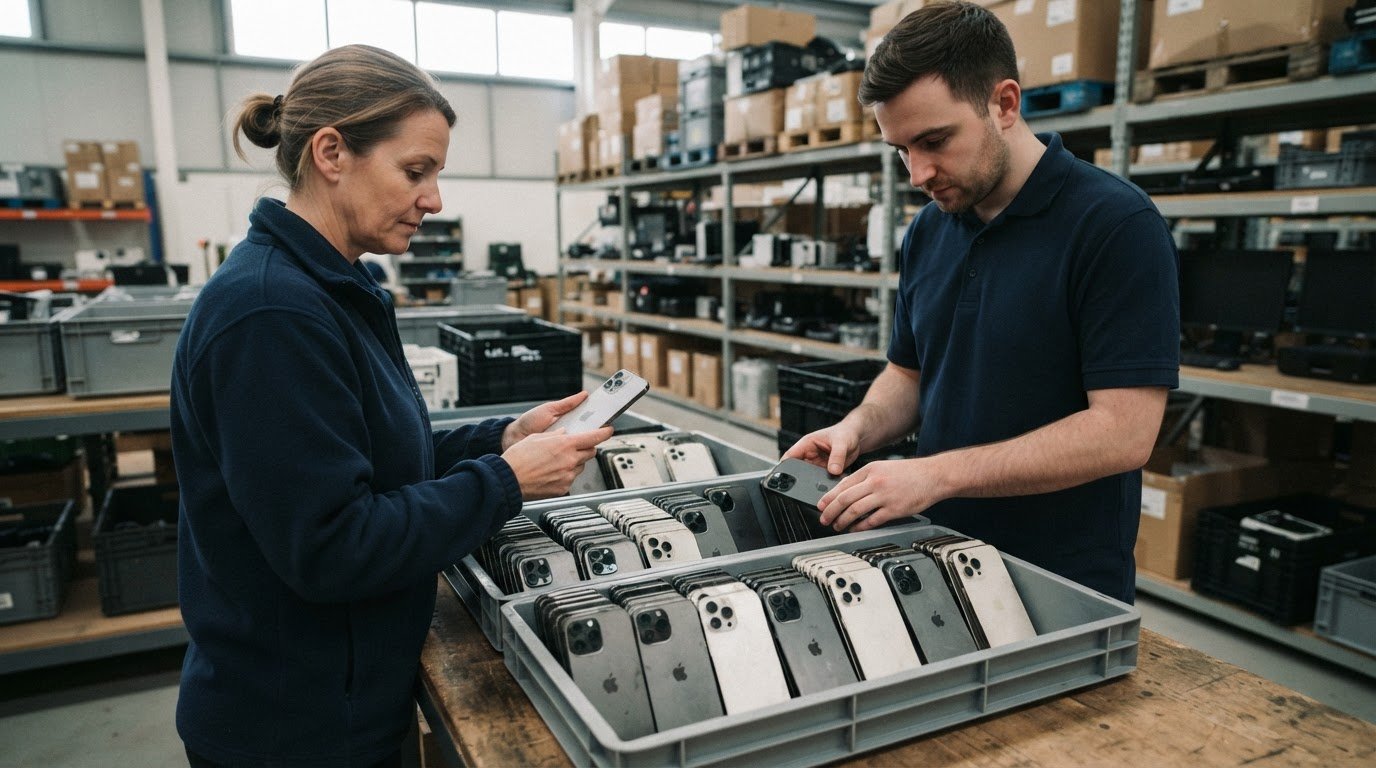
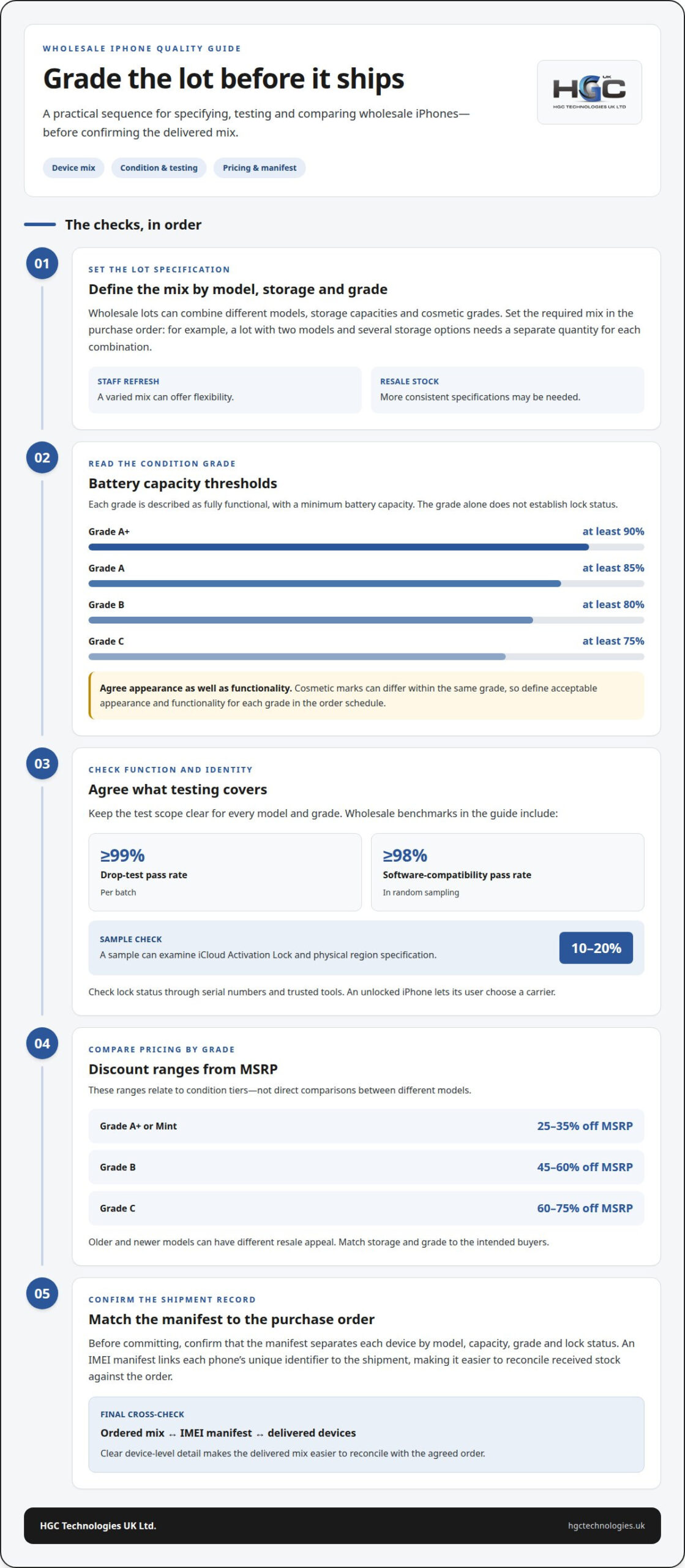
Wholesale iPhone lots may combine different models, storage capacities and cosmetic grades. That flexibility can suit a staff refresh, while resale stock may need more consistent specifications. Set the required model, storage and grade mix in the purchase order before shipment. For example, a lot containing two models and several storage options needs a separate quantity for each combination.
Grading describes condition, but it doesn’t identify every detail. Grade A refurbished iPhones are fully functional with battery capacity of at least 85%. Grade A+ units have at least 90%, Grade B at least 80%, and Grade C at least 75%. These thresholds help buyers assess likely condition, but cosmetic marks can still differ within a grade. Define acceptable appearance and functionality for each grade in the agreed order schedule.
Testing should cover both device function and identifiers. Wholesale benchmarks include a drop-test pass rate of at least 99% per batch, alongside software-compatibility pass rates of at least 98% in random sampling. A 10-20% sample check can examine iCloud Activation Lock and physical region specification. Check lock status through serial numbers and trusted tools; an unlocked iPhone lets its user choose a carrier. Keep the test scope clear for every model and grade.
Model and grade both shape wholesale pricing. Grade A+ or Mint refurbished iPhones are typically discounted 25-35% from MSRP; Grade B units, 45-60%; and Grade C units, 60-75%. These ranges help compare condition tiers, not different models directly. Older and newer iPhone models can have different resale appeal, so match storage and grade to your target buyers. Before committing, confirm the manifest separates model, capacity, grade and lock status. That detail makes the delivered mix easier to reconcile with the order.
How to start ordering wholesale Apple devices?
Build the order around quantity, device identity, payment milestones and deployment needs. A clear sequence helps purchasing, finance and IT teams coordinate.
Purchase orders and IMEI manifests
Issue a purchase order with the agreed models, storage capacities, grades, quantities and delivery details. An IMEI manifest links each phone’s unique identifier to the shipment, making it easier to reconcile received stock against the order. Set out payment terms before processing; one market approach for established suppliers is a 30% deposit and 70% against pre-shipment inspection.
For Apple Business Manager, plan device enrolment and mobile device management (MDM) assignment before deployment. Give the organisation’s administrator the device identifiers and align their allocation with the order workflow, so phones can be associated with the intended management service.
Order quantities and volume pricing
Minimum quantities depend on the purchasing route. B2B trading platforms may offer wholesale iPhone lots of 5-25 units, whilst authorised distributor orders and carrier-surplus agreements can involve larger commitments. Carrier-surplus buyers may need to commit to quarterly volumes of $250,000 or more; this figure is not a device count.
Ask for the offer to specify model, grade, storage and quantity rather than treating the whole lot as interchangeable. Volume pricing may depend on that mix, the order route and the commitment period. Resellers should align stock with expected demand; corporate buyers should prioritise consistent specifications across teams. Record any agreed substitutions and delivery schedule in the purchase order.
VAT invoices and business purchasing
For UK bulk iPhone orders, use the VAT invoice to record the supplier’s VAT treatment and reconcile the purchase with business accounts. Keep the invoice, purchase order and IMEI manifest together, with matching company, billing and delivery details. This creates a practical audit trail and helps distinguish invoiced quantities from devices received.
Before processing, the purchasing team should establish its buying entity, delivery address, authorised approver and required invoice details. Finance can then reconcile the order, while IT coordinates enrolment and resellers prepare stock records. For a wider workplace technology plan, custom-built PCs can complement mobile-device procurement.
Shipping options and limited warranty
Plan delivery around order volume, destination and receiving arrangements. A clear warranty process also helps teams manage graded inventory after arrival.
Shipping options
Choose a shipment format that fits the quantity and delivery location. Individual parcels can suit a smaller order; consolidated freight can simplify receiving for larger volumes. The initial delivery lead time recommended by the supplier-selection guide is no more than 4 weeks. Agree the dispatch schedule, delivery address and handover arrangements before the order leaves.
For a multi-site rollout, divide the shipment by destination and label each consignment against its order schedule. On receipt, match cartons and device quantities to the delivery documents. Record visible transit damage promptly, including photographs and affected package details, so the issue is linked to the correct shipment.
Warranty period and support
A limited warranty should state its duration, start point and covered faults. Read those terms alongside the grading description: cosmetic condition and a functional fault are different issues. For example, a screen mark may reflect the agreed grade, while a device that will not power on may require a warranty assessment.
Clarify the support route for reporting a fault, the evidence required and the process for returning an affected phone. For a high-volume rollout, assign one contact to coordinate cases and keep device identifiers with each report. This creates a consistent record across teams without confusing warranty support with routine device setup.
Warranty and IMEI documentation
Keep the warranty terms with the order documents and IMEI manifest. The IMEI links each device to its record, helping staff identify the specific phone under review. Reconcile the manifest against received inventory, then record the grade and battery information supplied for each unit.
For example, if one phone in a shipment develops a fault, its identifier helps distinguish it from other models in the same batch. Retain the invoice, delivery record and support correspondence together. These records provide procurement and IT with a clear audit trail from order placement through warranty handling.
Bulk iPhone supply for retailers, corporate clients and export buyers
Yes. UK companies can buy refurbished or older-model iPhones in bulk. Savings vary with model, condition, battery grade and lock status; the grade-based ranges above show how condition affects the comparison.
Retail buyers need stock that can be presented and priced consistently. List each model, storage capacity and grade separately in the inventory schedule instead of grouping mixed devices under one description. For example, itemise each capacity and condition so retail staff can explain differences accurately. Unlocked status matters too: a locked device can restrict carrier choice, affecting its suitability for resale.
Corporate procurement has different priorities. A business deploying phones to staff may value consistent models and storage more than a broad mix suited to retail. Set specifications around the intended work, then allocate devices by team or role. A procurement schedule can distinguish staff-ready stock from units intended for resale, keeping the two requirements clear during ordering and receipt.
Export buyers should account for destination as well as device condition. Regional specifications and carrier lock status can affect whether a phone suits the intended market. Identify the destination country and required device profile before agreeing the order, then keep those requirements aligned with the shipment documents. This helps separate export stock from UK retail or corporate inventory.
For iphone wholesale, distributor route and stock type shape the available mix. Authorised distributors typically price new, sealed iPhones 10-20% below MSRP. Refurbished and older-model stock is assessed differently: model, grade, battery condition and lock status influence its resale value. Compare like with like, rather than judging a mixed lot by one headline discount. Buyers should also keep the intended use clear, since a suitable fleet device may not match retail presentation standards.
For wider business technology procurement, plan bulk laptop procurement alongside your device requirements.
HGC Technologies UK
HGC Technologies UK Ltd. supports business technology procurement when a mobile-device programme forms part of a wider equipment plan. Organisations may also need refurbished computers for employees, replacement stock or complementary workplace setups. HGC Technologies UK Ltd. supplies bulk refurbished Dell, Lenovo and HP laptops, as well as custom-built PCs, helping businesses address broader equipment requirements.
Consider this route when planning devices across teams or coordinating phone purchasing with computer requirements. Matching equipment to user roles and workloads can help create a coherent procurement plan. HGC Technologies UK Ltd. focuses on these business technology needs. Contact HGC Technologies UK Ltd. to discuss your wider equipment requirements.
Plan your next procurement step
Make the next decision about fit, not just volume. A purchasing plan works best when device requirements, intended users and wider workplace technology needs are considered together. This helps procurement, finance and IT teams set priorities before the next refresh or rollout.
Choosing a bulk iPhone supplier for corporate use is one part of that wider planning process. HGC Technologies UK Ltd. can support related business technology requirements, including refurbished computing and custom-built systems. Bring your priorities into one conversation, whether you’re planning a staff deployment or aligning equipment across teams.
Discuss your business technology requirements with HGC Technologies UK Ltd., and take the next step with a clearer procurement plan.
Frequently Asked Questions
Do wholesale iPhones come unlocked and ready for resale?
Some wholesale iPhones are unlocked, but wholesale status alone doesn’t guarantee it. An unlocked phone can use a carrier chosen by its buyer; a locked phone may need to remain on its existing network. For resale, treat lock status as a separate listing attribute, not an assumption based on device grade. Keep locked and unlocked units distinct in stock records.
What is the typical cost of wholesale used iPhones?
There isn’t one typical cost for wholesale used iPhones. The amount depends on model, storage capacity, condition, battery health, lock status and quantity in the lot. Compare devices with the same specifications and grading basis rather than weighing a newer, higher-capacity phone against an older model. For business procurement, define the required mix first so quotes can be assessed consistently.
Where can wholesale iPhones be purchased?
UK businesses can source wholesale iPhones through business-to-business trading platforms, carrier-surplus channels and authorised distributors. HGC Technologies UK Ltd. supplies original smartphones to business clients and retail partners. Distinguish refurbished stock from new sealed devices when comparing offers, as the purchase route and device condition affect what the lot contains. A bulk iPhone supplier for corporate use should fit the intended deployment or resale channel.
How do I avoid counterfeit iPhones in wholesale?
Use an itemised manifest and compare each device’s identifiers with its physical labelling and order records. A sample inspection can include iCloud Activation Lock checks and physical region specification; a recommended sample size is 10-20% of the lot. Examine packaging and device operation as supporting checks, but don’t treat appearance alone as proof of authenticity. Keep results linked to the relevant identifiers.
What verification steps before paying for a lot?
Before payment, reconcile the written offer with the purchase order: model, storage, grade, quantity and lock status should align. Review the IMEI manifest and inspect a sample against the agreed specification, including activation-lock status. Make payment milestones explicit in writing. For established suppliers, one suggested structure is a 30% deposit and 70% against pre-shipment inspection, tying the balance to documented checks.
Where can UK businesses buy iPhones in bulk from authorised suppliers?
Businesses seeking authorised supply should use an authorised distributor channel and distinguish that route from refurbished or carrier-surplus purchasing. Confirm the order documentation identifies the selling entity, device condition and whether the stock is new and sealed. HGC Technologies UK Ltd. supplies original smartphones for business clients and retail partners; this description does not establish authorised distributor status. Match the source to your procurement requirements.

The Strategic Business Case for Refurbished Hardware in 2026
Sales of refurbished PCs in the UK almost doubled between the final quarter of 2024 and the end of 2
Custom PC Builder UK: Myth-Busting the Move from OEM to Bespoke Business Hardware
Why are the UK’s most agile enterprises intentionally turning their backs on the global hardware g

Scalability of Custom-Built Server Solutions: A 2026 Enterprise Guide
What if the hardware designed to fuel your expansion is actually the primary bottleneck stifling you