

Cost-Effective Business Laptop Refresh Strategy: A 2026 UK Guide
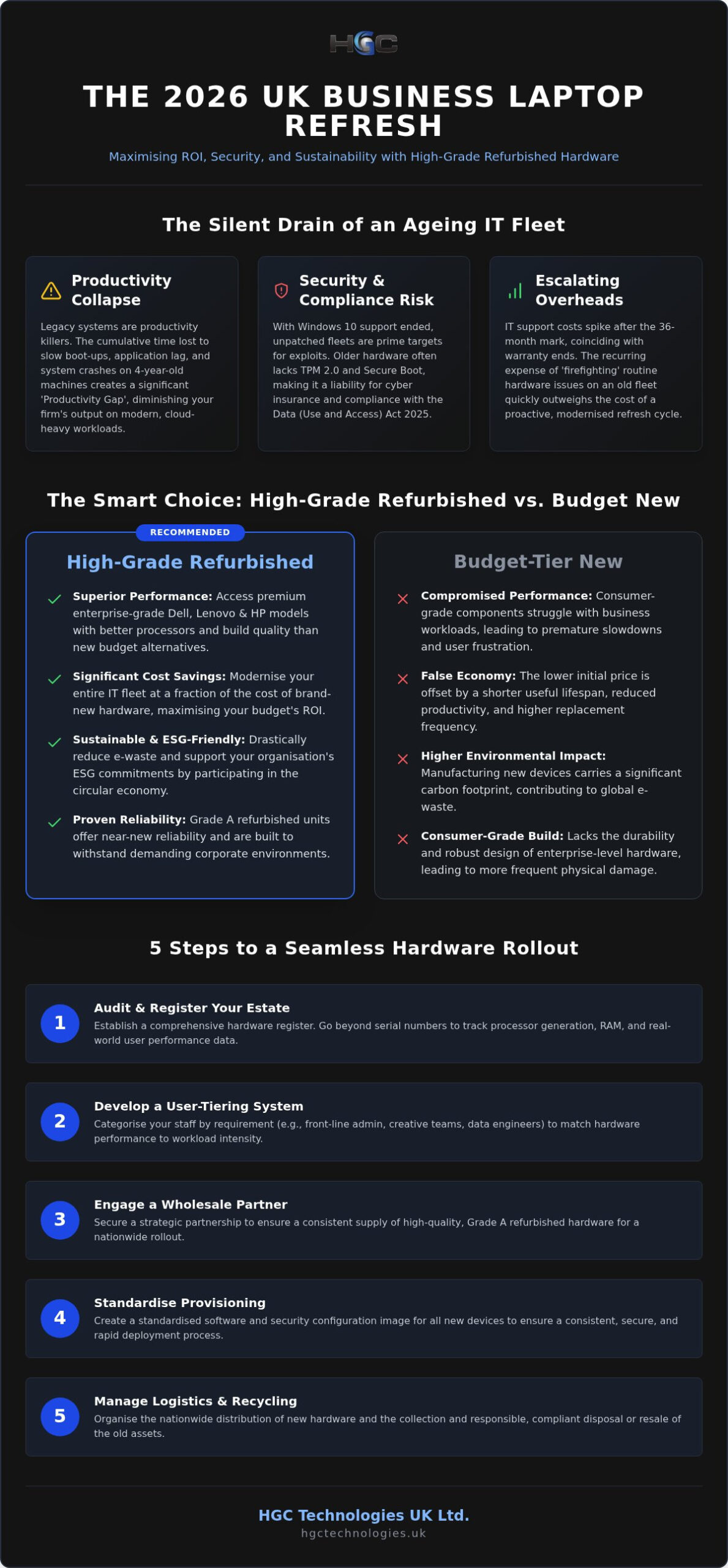
Your four-year-old corporate fleet isn’t just slow; it’s a silent drain on your bottom line and a growing security liability. With Windows 10 support now firmly in the past, many UK firms face a dilemma: pay a premium for brand-new hardware or risk the vulnerabilities of an outdated estate. Implementing a cost-effective business laptop refresh strategy is no longer a luxury for the finance department. It’s a strategic necessity for the modern enterprise.
We understand the frustration of balancing dwindling IT budgets against the rising prices of new workstations. You want high-performance tools for your team without compromising on your corporate sustainability goals. This guide promises to show you how to modernise your corporate IT fleet and maximise ROI by pivoting to a sustainable refresh plan centred on high-grade refurbished hardware. We will provide a clear roadmap for replacing sluggish machines with premium Dell, Lenovo, and HP models at a fraction of the usual cost. You’ll also learn how this approach reduces e-waste and ensures compliance with the Data (Use and Access) Act 2025.
Key Takeaways
- Learn how to implement a cost-effective business laptop refresh strategy that eliminates the productivity drain of ageing hardware whilst maintaining rigorous security standards.
- Understand the financial and performance advantages of high-grade refurbished Dell and Lenovo machines over consumer-grade new alternatives.
- Identify the optimal timeline for hardware replacement by establishing a comprehensive hardware register and user-tiering system.
- Support your organisation’s ESG commitments by integrating sustainable, refurbished hardware into your long-term procurement cycle.
- Master the logistics of a nationwide hardware rollout through standardised provisioning and strategic wholesale partnerships.
Why a Strategic Laptop Refresh is Vital for UK Businesses in 2026
Waiting for a machine to fail before replacing it is a high-stakes gamble that rarely pays off. By 2026, the technical landscape has shifted so significantly that reactive procurement creates more problems than it solves. Implementing a cost-effective business laptop refresh strategy is no longer just a matter for the finance department; it’s a critical pillar of operational resilience and employee satisfaction. British firms that delay upgrades often find themselves trapped in a cycle of diminishing returns, where the price of maintenance far outweighs the cost of a modernised fleet.
The UK job market now places a premium on the “modern tools” factor. Top-tier talent expects hardware that supports their workflow rather than hindering it. Providing high-grade, reliable machines is a silent but powerful retention tool. Beyond personnel, aligning your procurement with the UK’s 2026 circular economy standards is essential. Embracing refurbished hardware isn’t just a budget-friendly move; it’s a commitment to reducing e-waste and meeting the stringent ESG targets that shareholders and clients now demand.
Calculating the Real Cost of Sluggish Hardware
Legacy systems are silent productivity killers. When a national workforce relies on four-year-old machines, the cumulative time lost to slow boot-ups, application lag, and system crashes is staggering. Effective IT asset management reveals that the true cost of an old laptop includes the escalating hours your IT department spends on “firefighting” routine hardware issues. These support costs often spike after the 36-month mark, coinciding with the end of standard warranties. The Productivity Gap in 2026 represents the measurable disparity between a firm’s output on modern, AI-capable hardware versus the diminished returns of legacy systems that struggle with contemporary cloud-heavy workloads. Shifting to a proactive three-year cycle ensures your team remains at peak efficiency whilst keeping support overheads predictable.
The Security and Compliance Imperative
Ageing hardware is a primary target for “Day Zero” exploits. Older processors often lack the silicon-level security features, such as TPM 2.0 and Secure Boot, required to run Windows 11 and modern biometric authentication safely. Since the end of Windows 10 support in late 2025, unpatched legacy fleets have become significant liabilities for cyber insurance and compliance with the Data (Use and Access) Act 2025. A cost-effective business laptop refresh strategy prioritises hardware that can handle modern encryption without sacrificing performance. Ensuring every device in your fleet meets current UK GDPR standards isn’t just about software; it requires robust, modern hardware capable of defending against increasingly sophisticated cyber threats at the foundational level.
Auditing Your IT Estate: Identifying the Right Time to Upgrade
A precise audit is the bedrock of any cost-effective business laptop refresh strategy. You can’t manage what you don’t track, and relying on memory or disparate spreadsheets leads to procurement gaps. A comprehensive hardware register should do more than just list serial numbers. It must track processor generations, RAM capacity, and real-world user performance data. By 2026, the typical lifespan of a corporate laptop remains three to four years, but actual utility varies based on the intensity of the workload.
Effective auditing requires categorising your estate by user requirement. Front-line admin staff might thrive on a reliable Core i5 setup, whereas your creative or data engineering teams require high-performance workstations with dedicated GPUs and higher thermal ceilings. Identifying “bottleneck” components, such as ageing SATA SSDs or insufficient RAM, allows you to pinpoint which machines are genuinely failing and which might survive another quarter. For businesses looking to scale their fleet quickly, HGC Technologies UK Ltd. provides the data-backed insights needed to align your inventory with modern performance standards.
Developing a Hardware Grading System
Corporate environments demand consistency and reliability. Grade A refurbished units are the gold standard for professional refreshes, showing minimal signs of wear and offering near-new reliability. Whilst Grade B units might suit secondary back-office roles where aesthetics are less critical, Grade C is generally unsuitable for client-facing professional deployment. Understanding wholesale refurbished computers UK market trends helps you align these grades with your internal audit, ensuring you don’t overspend on premium finish where it isn’t required.
Performance Benchmarking for 2026 Software
The baseline for business productivity has risen sharply. Modern collaboration tools and integrated AI features now frequently require 32GB of RAM and NVMe SSDs to function without frustrating lag. When auditing, watch for signs of thermal throttling or rapid battery degradation in older Dell and HP models; these are clear indicators that the hardware is struggling to keep pace with 2026 software demands. Transitioning to a performance-based model, much like Defra’s sustainable technology strategy, allows you to replace machines based on actual utility rather than arbitrary dates. This ensures your cost-effective business laptop refresh strategy remains agile, targeting your budget where the performance uplift will be most noticeable.
Maximising ROI: Bulk Refurbished vs Budget-Tier New Hardware
Procuring a fleet of 100 new budget laptops might seem prudent on day one. However, the “False Economy” of consumer-grade hardware is a primary risk for UK procurement teams. These entry-level retail units are designed for light home use, featuring plastic chassis and components that rarely survive the rigours of a 40-hour work week. A cost-effective business laptop refresh strategy focuses on Total Cost of Ownership (TCO) over a four-year lifecycle, rather than just the initial capital outlay.
Professional-grade machines, such as the Dell Latitude or Lenovo ThinkPad series, are engineered for longevity and repairability. When you opt for high-grade refurbished units, you’re acquiring hardware that originally cost three times the price of a budget retail model. This translates to better screens, superior keyboards, and robust internal cooling systems that prevent performance degradation over time. Beyond the financial savings, choosing refurbished hardware provides a significant environmental dividend, helping your firm meet its 2026 ESG targets by reducing e-waste and lowering Scope 3 carbon emissions.
Build Quality: Professional vs Consumer Grade
Enterprise-grade laptops feature magnesium-alloy frames and reinforced hinges that retail models simply don’t offer. This structural integrity is vital for a mobile workforce. When you invest in bulk Dell refurbished laptops, you’re securing a fleet that is easier to maintain and standardise. Uniform hardware simplifies the IT support burden, as your team only needs to manage a single software image and a consistent set of spare parts. This standardisation reduces downtime and ensures that every employee, regardless of their location, has a reliable workstation that won’t fail during critical tasks.
The Financial Breakdown of Bulk Sourcing
Volume discounts from wholesale IT suppliers allow UK businesses to stretch their budgets significantly further. By sourcing Grade A refurbished units, you can often refresh an entire department for the same cost as buying twenty new high-end machines. These savings are substantial. Wise IT directors often reinvest this surplus into other critical infrastructure, such as upgrading their enterprise server hardware UK to support growing cloud workloads. A strategic refresh doesn’t just save money; it reallocates capital to where it can drive the most growth. Comparing the CapEx of 100 refurbished units against 100 budget-tier new units usually reveals that the refurbished fleet offers 40% better performance-per-pound over its operational life.
5 Steps to Organise a Seamless Hardware Rollout
Execution marks the final hurdle in any corporate procurement plan. Once your audit is complete and your hardware choice is finalised, the focus must shift to the logistical reality of deployment. A fragmented rollout causes friction and spikes support tickets; a structured approach ensures your team stays productive from the moment they unbox their new workstations. Success relies on a repeatable framework that accounts for both the physical hardware and the digital environment it inhabits. This operational phase is where a cost-effective business laptop refresh strategy truly proves its value through reduced downtime and seamless transition.
Follow these five steps to ensure your next refresh is handled with professional precision:
- Step 1: Secure your supply chain. Partner with a reliable wholesale laptop distributor UK to ensure a consistent supply of identical models, which simplifies your internal support and imaging processes.
- Step 2: Automate provisioning. Use tools like Windows Autopilot to standardise your software image. This allows devices to be configured automatically as soon as the user connects to the internet.
- Step 3: Phase the deployment. Don’t attempt to swap every machine at once. Roll out hardware department by department to manage the IT support load effectively.
- Step 4: Decommission securely. Implement a robust data wipe and disposal programme. Remember that 32% of corporate data leaks are attributed to improperly decommissioned devices.
- Step 5: Refine the cycle. Gather user feedback after the first phase to identify any friction points in the setup process.
Logistics for a National Hybrid Workforce
Managing a hybrid team requires a flexible delivery model. Whilst centralising delivery to a main office works for some, direct shipping to remote employees is often more efficient in 2026. You must ensure “Out of the Box” readiness. This means machines arrive fully sanitised, updated, and ready for immediate login. Managing the collection of legacy e-waste is equally vital. A professional refresh includes a clear plan for gathering old units and ensuring they enter a certified recycling or refurbishment stream. To streamline this process, source your bulk hardware from HGC Technologies UK Ltd. to benefit from our national distribution expertise.
Data Migration and Security Protocols
User transitions should be near-instant. By utilising cloud-based profiles, you can ensure that employees find their files and settings exactly where they left them on their previous machine. Before any device leaves the warehouse, your IT team must verify that hardware-level security features, such as TPM 2.0 and biometric sensors, are fully enabled. Adopting NIST-compliant data erasure protocols ensures that sensitive corporate information is permanently irrecoverable before hardware leaves your possession, protecting your firm from post-lifecycle security breaches. This final step is non-negotiable for maintaining compliance with UK GDPR and the Data (Use and Access) Act 2025.
Optimising Your 2026 IT Budget with HGC Technologies UK
A successful cost-effective business laptop refresh strategy relies on more than just timing; it requires a procurement partner capable of delivering scale without compromising on quality. HGC Technologies UK Ltd. operates as an authoritative expert in the B2B technology sector, simplifying the wholesale process for corporate clients across the nation. By focusing on high-grade hardware and a direct sales model, we ensure that your IT budget is utilised with maximum efficiency. This approach allows you to modernise your fleet whilst maintaining healthy margins and meeting your sustainability commitments.
Strategic Wholesale Partnerships
Reliability is the cornerstone of long-term business relationships. HGC acts as a trailblazer in the UK market by specialising in the supply of bulk Lenovo refurbished laptops and premium HP units. Sourcing directly from a specialist wholesaler eliminates the traditional middleman markup, providing your organisation with a significant price advantage. This direct-to-source approach ensures that every machine meets rigorous technical standards before reaching your office. Our national UK reach guarantees a consistent hardware supply. This is essential for maintaining a standardised environment across multiple sites.
Beyond Laptops: Servers and Custom Builds
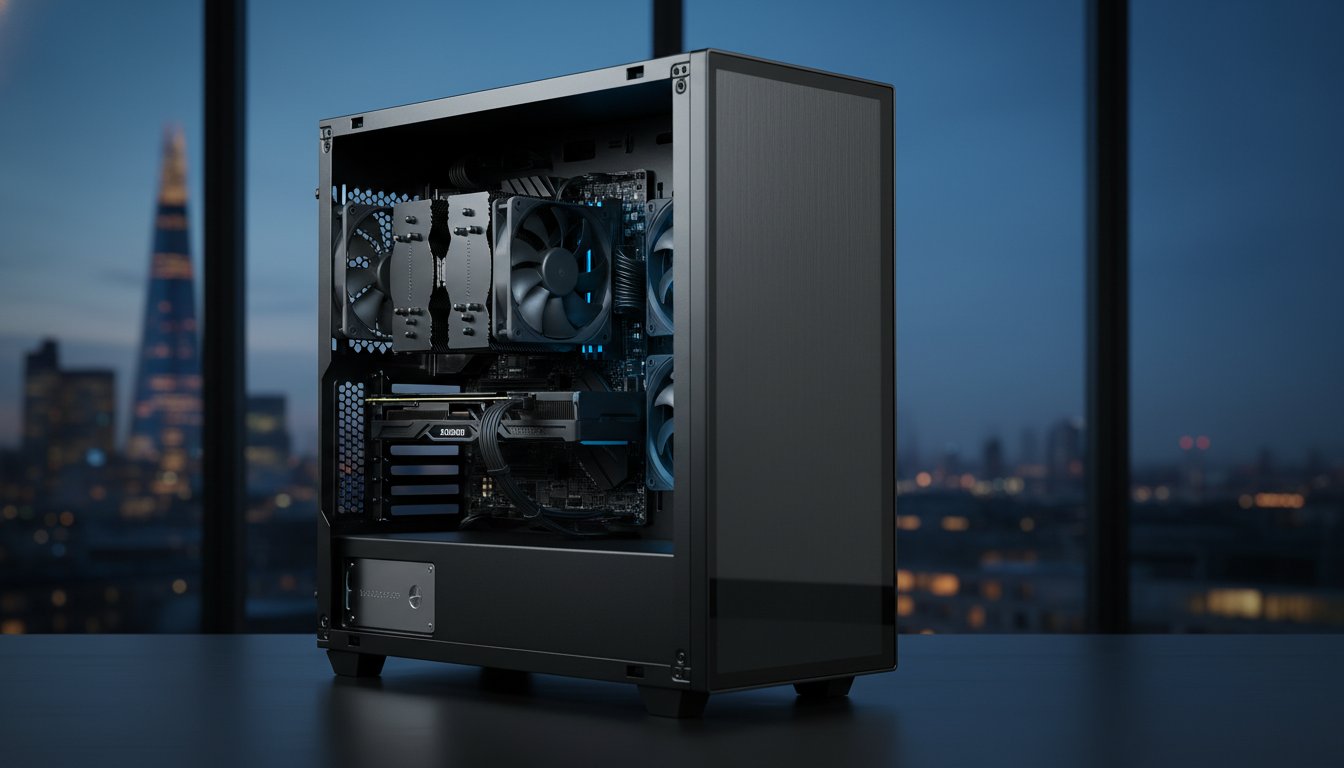
Modern enterprises require a holistic approach to hardware. Whilst laptops are the primary focus of most refresh cycles, specialised technical departments often need bespoke solutions that off-the-shelf units cannot provide. HGC offers custom-built PCs designed for high-performance environments, ensuring your engineers and designers have the specific power they require. We also provide robust server solutions to support your scalable UK enterprise infrastructure, moving you towards a “Cloud-Smart” model that balances on-premise reliability with cloud agility.
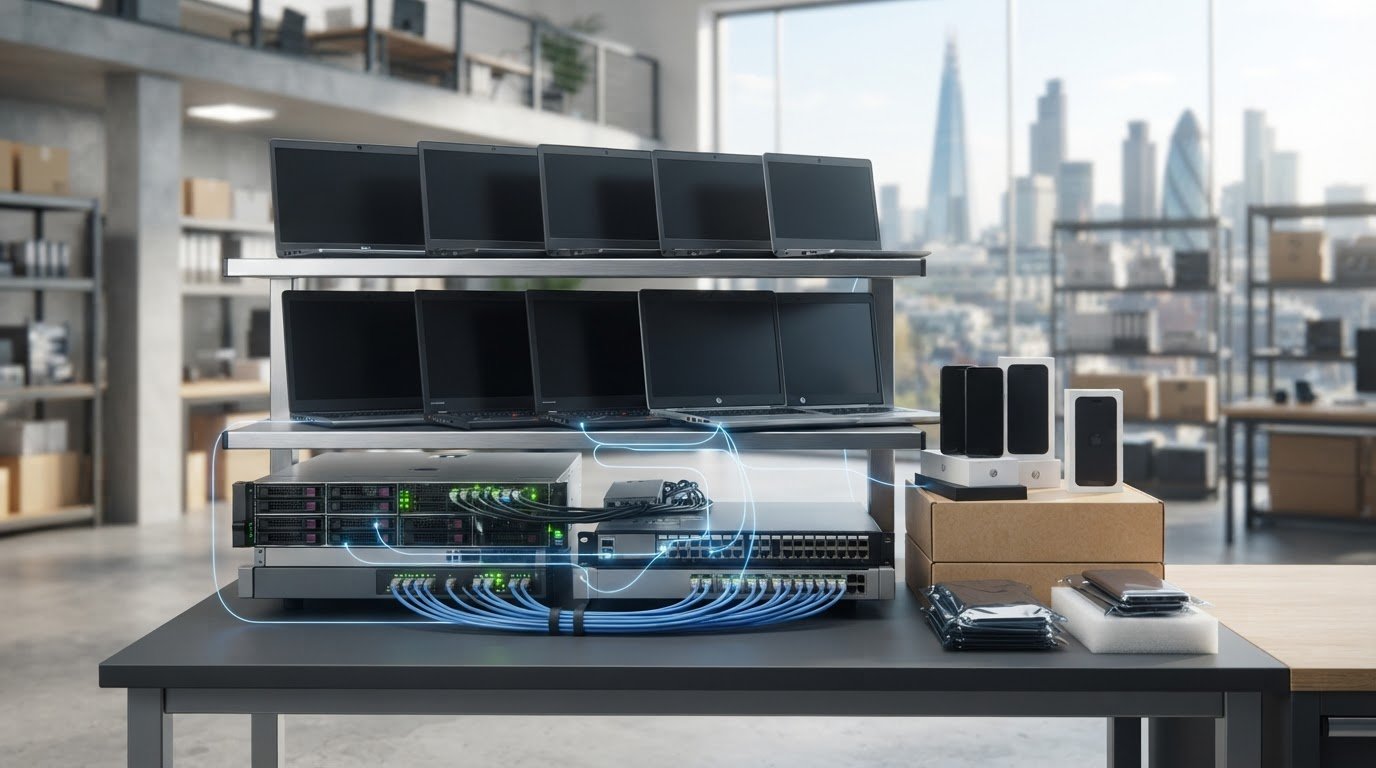
To complete your mobile ecosystem, we facilitate the procurement of original smartphones wholesale UK, ensuring your mobile fleet is as modern and secure as your desktop estate. This comprehensive service allows you to consolidate your procurement, reducing administrative overhead and ensuring a unified, high-performance IT environment. By choosing a partner that values long-term value over short-term gains, you secure a cost-effective business laptop refresh strategy that grows with your business needs.
Future-Proof Your IT Infrastructure Today
The shift toward a performance-based procurement model is the most sustainable way to protect your bottom line in 2026. By moving away from reactive “break-fix” cycles, your organisation can maintain peak productivity whilst meeting rigorous ESG standards. A successful cost-effective business laptop refresh strategy hinges on the quality of your hardware and the reliability of your supply chain. Prioritising Grade A refurbished enterprise machines ensures your team has the tools they need without the prohibitive costs of brand-new retail units.
HGC Technologies UK Ltd. stands ready to support your transition as a specialist wholesaler of Grade A Dell, Lenovo, and HP hardware. Whether you require a standardised mobile fleet or bespoke custom-built business PCs and server solutions, our national UK delivery ensures your procurement remains steady and predictable. Don’t let ageing hardware dictate your firm’s potential. Explore our bulk refurbished laptop inventory for your next refresh and secure a high-performance future for your corporate estate. Taking the first step towards a circular IT economy has never been more rewarding.
Frequently Asked Questions
How often should a business refresh its laptop fleet?
A typical cycle lasts 36 to 48 months to align with hardware reliability and security patch availability. This timeframe ensures that your estate remains compatible with the latest OS requirements without incurring excessive maintenance overheads. By adhering to this schedule, you maintain a consistent cost-effective business laptop refresh strategy that prevents the performance tax often seen in machines older than four years, keeping your workforce efficient and secure.
Is refurbished hardware reliable enough for corporate use?
High-grade refurbished units are exceptionally reliable because they were originally built for the demands of the global corporate market. Unlike consumer machines, these ex-corporate models undergo professional testing and reconditioning to meet strict functional standards. They offer the same operational stability as new units but at a significantly lower price point, making them a dependable pillar for any UK firm looking to modernise their hardware without compromising on daily uptime.
What is the difference between Grade A and Grade B refurbished laptops?
Grade A units represent the highest standard, showing very few cosmetic signs of use and near-perfect chassis condition. Grade B units are functionally identical but may feature minor surface marks or slight keyboard wear that doesn’t affect performance. For most professional environments, Grade A is the preferred choice for client-facing teams, whilst Grade B offers an even more budget-friendly alternative for internal back-office roles or temporary project staff.
How can I ensure data security during a hardware refresh?
Security is maintained through a combination of hardware-level encryption and certified data destruction protocols. Before any machine is retired, it should undergo a multi-pass overwrite process to ensure that sensitive corporate information is permanently removed. This process must be documented with a certificate of destruction to satisfy audit requirements and comply with UK GDPR. Managing this transition carefully protects your organisation’s reputation and intellectual property during the decommissioning phase.
Does HGC Technologies UK Ltd. offer financing or leasing for bulk orders?
HGC Technologies UK Ltd. operates exclusively on a direct sales model and does not provide financing or lease-to-own programmes. By focusing on direct transactions, we ensure that our clients receive the most competitive wholesale pricing without the added interest or administrative fees associated with credit facilities. This straightforward approach allows procurement officers to utilise their capital more effectively, securing high-quality Dell, Lenovo, and HP hardware at the lowest possible cost.
Why choose ex-corporate laptops over new consumer models?
Ex-corporate laptops provide superior driver support and longer production lifecycles, which are essential for maintaining a uniform IT environment. Consumer models change frequently, making it difficult to standardise images across a national fleet. By choosing ex-corporate hardware, you benefit from enterprise-level cooling systems and durable magnesium-alloy frames that are designed to survive the rigours of travel and constant use, outlasting budget-tier new alternatives in almost every professional scenario.
How does a hardware refresh strategy support ESG reporting?
Integrating refurbished hardware into your procurement plan provides tangible data for your annual sustainability reports. It demonstrates a commitment to the circular economy by preventing functional technology from entering the waste stream prematurely. Reducing the demand for new manufacturing lowers your Scope 3 carbon emissions and helps your organisation meet the UK’s 2026 environmental standards. This makes a cost-effective business laptop refresh strategy as beneficial for your corporate reputation as it is for your budget.
Can I get custom specifications on bulk refurbished laptop orders?
Yes, bulk orders can be tailored to meet the specific technical requirements of different departments. Whether you need increased RAM for data-heavy tasks or larger NVMe SSDs for creative work, we can configure your hardware before deployment. This bespoke service ensures that your team receives machines that are ready for immediate use, reducing the burden on your internal IT department and ensuring that every user has the exact performance profile they require.
Custom PC Builder UK: Myth-Busting the Move from OEM to Bespoke Business Hardware
Why are the UK’s most agile enterprises intentionally turning their backs on the global hardware g
Building a Resilient IT Infrastructure on a Budget: The 2026 Procurement Guide
The cheapest hardware can become the most expensive part of your IT estate. Repeated failures in uns
Cost-Effective IT Procurement UK: A 2026 Strategic How-To Guide
While UK procurement workloads are set to increase by 8.0% this year, budgets are simultaneously con