

Negotiating a Bulk Purchase of Refurbished Laptops: A Practical Guide
A lower unit price can hide a costly mismatch. When negotiating a bulk purchase of refurbished laptops, the aim is to secure a consistent batch that suits your organisation’s needs, with commercial terms you can rely on.
Price matters, particularly when buying at scale, but a headline figure tells only part of the story. Units may differ in specification or condition, and an offer’s value depends on exactly what it includes. Set out your requirements clearly to compare offers fairly and negotiate terms that matter beyond the per-unit cost.
This guide offers a practical framework for defining intended use, essential specifications and an acceptable batch profile before discussing commercial terms. It also explains how to document expectations so the final order reflects the agreement, not just a sales conversation. Whether you’re buying for your organisation or sourcing for resale, you’ll learn how to approach bulk Dell, Lenovo and HP refurbished laptops with a focus on supply consistency and long-term value. HGC Technologies UK Ltd. supplies these brands through a direct wholesale model for corporate buyers and technology resellers across the UK.
Key Takeaways
- Set your target quantity, deployment date, budget limits and intended users before discussions begin.
- Agree a written batch profile that separates cosmetic condition from functional expectations and configuration.
- When negotiating a bulk purchase of refurbished laptops, compare like-for-like offers and assess the documented terms as well as the unit price.
- Use one consistent specification to request and compare proposals, then clarify differences before seeking approval.
- Bring your requirements together when sourcing bulk refurbished Dell, Lenovo or HP laptops through HGC Technologies’ direct wholesale model.
Prepare to negotiate a bulk purchase of refurbished laptops
Start with the outcome you need: fit-for-purpose laptops in a clearly defined batch, supported by terms your organisation can approve. The lowest unit price may not represent the best value if the devices don’t suit their users or the batch varies more than your teams can accommodate. A focused brief gives you a stronger basis for negotiating a bulk purchase of refurbished laptops.
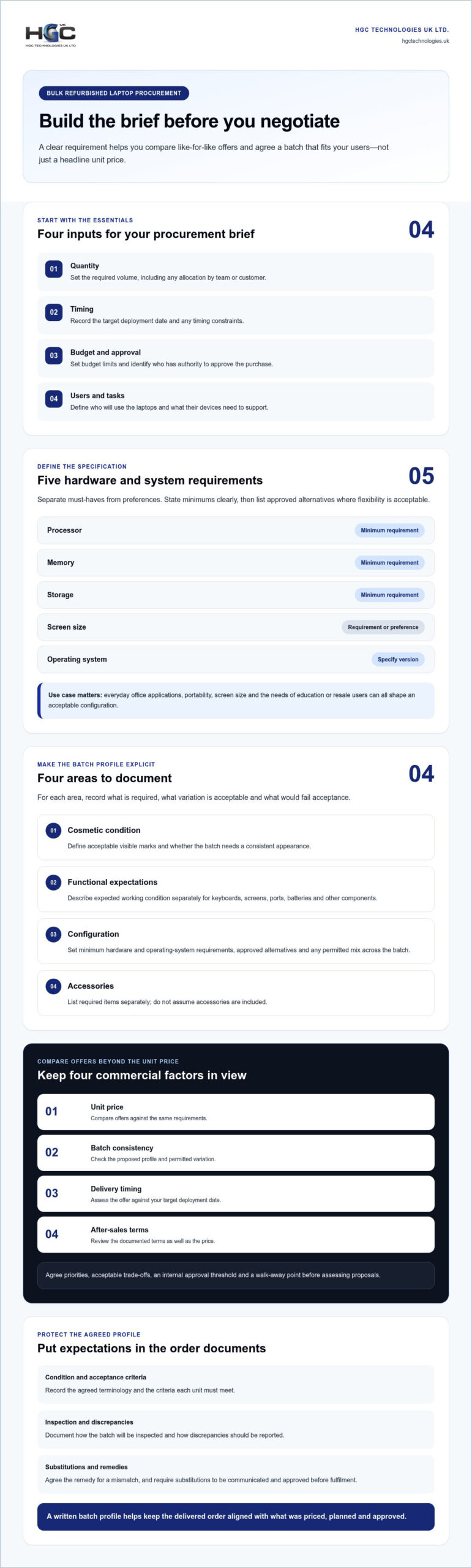
Before requesting an offer, bring together requirements from across departments. Resellers should do the same for the channels and customer groups an order will serve. Use a short checklist to record:
- Required quantity, including any planned allocation by team or customer.
- Target deployment date and any timing constraints.
- Budget limits and who has authority to approve the purchase.
- Intended users and the tasks the laptops need to support.
This preparation also helps you define what refurbished means for your procurement brief. The process can involve inspection, testing and repair, as outlined in this overview of refurbished electronics. Specify the outcomes you require instead of relying on a broad label alone.
Set the quantity, use case and acceptable specification
Translate each use case into practical requirements. Office users may need a configuration suited to their everyday applications, whilst field staff may place greater importance on portability and screen size. For education or resale, consider the needs of the intended users and the level of consistency required across the batch. Record minimum requirements for processor, memory, storage, screen size and operating system, then separate must-haves from preferences. For example, you might require a particular operating-system version but accept more than one screen size. This distinction lets you compare suitable configurations without compromising essential requirements.
Establish your negotiation priorities before discussing terms
Rank the factors that matter most, such as unit price, batch consistency, delivery timing and after-sales terms. Decide which trade-offs are acceptable, and set an internal approval threshold and a walk-away point. Keep confidential figures within your procurement team. If Dell is on your shortlist, the Dell bulk procurement guide provides brand-specific sourcing context. With priorities agreed, you can assess a proposal against your organisation’s needs, not just its headline price.
Assess refurbished laptop condition and batch consistency before negotiating
A broad description such as “refurbished laptops in good condition” leaves too much open to interpretation. Negotiate against a written batch profile that states what every unit must meet, which variations are acceptable and how differences will be handled. This gives both parties a shared reference for assessing the offer and the delivered batch.
Agree what refurbished condition means for this order
Define cosmetic expectations in terms that matter to your users or customers. Decide, for example, whether visible marks are acceptable and whether you need a consistent appearance across the batch. Keep appearance separate from function: describe the expected working condition of keyboards, screens, ports, batteries and other components independently. List included accessories separately rather than assuming they are part of the laptop specification.
Use a simple comparison template to turn these expectations into buyer-defined criteria. Complete each cell before requesting or accepting an offer. The examples below are categories, not industry grading standards.
| Attribute | Required | Acceptable | Unacceptable |
|---|---|---|---|
| Cosmetic condition | [Define minimum] | [Define permitted variation] | [Define exclusions] |
| Functional expectations | [List required functions] | [List acceptable exceptions] | [List faults that fail acceptance] |
| Configuration | [Set minimum hardware and operating system] | [Specify approved alternatives] | [List configurations not accepted] |
| Accessories | [List items required] | [List alternatives, if any] | [List missing or unsuitable items] |
Include the agreed condition terminology and acceptance criteria in the written offer or order documents. Record the inspection process, how you’ll report discrepancies and the remedy agreed for a mismatch. Clear documentation helps prevent a cosmetic description from being mistaken for a promise about function or configuration.
Reduce specification drift across the batch
Set minimum hardware configurations and permitted substitutions before negotiating quantities. If more than one configuration is acceptable, define each clearly and state whether the mix can vary across the batch. Agree that proposed substitutions will be communicated and approved before fulfilment, so a change doesn’t quietly alter the profile you priced or planned around.
For buyers comparing brand-specific sourcing options, the refurbished Lenovo bulk procurement guide adds relevant context. Apply the same disciplined approach to every proposal: document the agreed profile, clarify unresolved points and ensure the order reflects the criteria your organisation will use to assess the batch. Corporate buyers and resellers can frame bulk refurbished laptop sourcing through HGC Technologies around those requirements.
Negotiate price and commercial terms beyond the headline figure
A headline unit price is useful only when you know what it covers. Compare offers on the same basis: quantity, configuration, condition expectations and written commercial terms. Include delivery arrangements, payment timing, warranty and returns terms in your comparison. A bulk offer is comparable only when its specification and terms are stated clearly.
Ask whether the offer changes at different order quantities rather than assuming a larger order automatically earns a discount. Keep the comparison grounded in your agreed batch profile. An offer with a different configuration or condition expectation isn’t like-for-like, even if its unit price appears lower. For further context on supplier discussions, CIO’s expert negotiation tips can help frame a constructive technology-vendor conversation.
Use concessions and trade-offs to reach a workable offer
Look for flexibility that doesn’t compromise essential requirements. For example, discuss whether approved substitutions or a different order volume could make an offer more workable, while retaining fixed minimum specifications for the devices. Treat each change as a trade-off: state what you’re offering and what you expect in return. Don’t exchange a firm commitment for an undefined benefit.
If you anticipate repeat orders, share a realistic forecast as context for a broader commercial discussion. A forecast can help both parties understand potential demand, but it isn’t a guarantee of future volume or savings. Agree any resulting terms for the current order in writing, and keep possible future arrangements separate from commitments you haven’t approved.
Document the complete commercial agreement
Before placing the order, ensure the written agreement captures the full scope, not just the unit price. Record:
- Quantity and the agreed laptop configuration and condition expectations.
- Delivery arrangements and payment timing.
- Warranty and returns terms applicable to the order.
- How discrepancies will be reported and handled.
Clear documentation gives procurement teams and suppliers a shared record if questions arise. It also makes future proposals easier to compare: you can identify which terms have changed rather than relying on memory or an incomplete price summary. For broader context on building a supplier relationship around business requirements, see the UK wholesale laptop distributor reference.
Run a clear negotiation process from first offer to purchase order
A defined process keeps discussions moving and prevents a changed specification or unresolved term from slipping into the order. Use the same written brief for every proposal, whether you’re sourcing refurbished Dell, Lenovo or HP laptops. This makes differences visible and gives stakeholders a clear basis for approval.
Use this five-step sequence for negotiating a bulk purchase of refurbished laptops:
- Issue the written brief. Set out the required quantity, configuration, condition expectations, delivery needs and essential commercial terms.
- Build a comparable offer. Map each proposal against the same brief, marking exclusions or unanswered questions rather than treating them as included.
- Clarify differences. Resolve gaps in specification, batch profile or terms, and record the response against the relevant item.
- Negotiate changes. Discuss adjustments against your priorities, documenting each proposed change and whether it has been accepted.
- Secure approval. Obtain the required internal sign-off, then reconcile the approved offer with the purchase order before committing.
Keep a negotiation log alongside the proposals. For each open point, note the question, decision owner, agreed change and approval deadline. This gives procurement, finance and technical teams a shared view of what remains unresolved and who needs to act next.
Compare offers on a like-for-like basis
Use a simple grid with rows for configuration, condition, quantity, delivery and commercial terms. For each supplier response, record the stated detail, any exclusion and the status of unresolved questions. Separate non-negotiable requirements from areas where an alternative could work, such as an approved substitution. Don’t treat a blank field as agreement. Mark it as open until it’s clarified in writing.
Written acceptance criteria and commercial terms reduce avoidable misunderstandings in bulk procurement. Apply that principle throughout the comparison, so a lower headline figure doesn’t distract from a difference in batch profile or order terms.
Confirm the final agreement before committing
Before issuing the purchase order, reconcile it against the final approved offer. Check that quantities match and every substitution has been explicitly approved. Assign an internal owner to coordinate delivery, receipt and escalation of any discrepancy, then keep the approved quotation and order documents together for procurement and finance records.
For a direct wholesale discussion based on your agreed requirements, explore bulk refurbished laptop sourcing with HGC Technologies.
Source bulk refurbished laptops through HGC Technologies
A well-prepared negotiation should lead to more than an agreed unit price. Bring together your defined requirements, acceptable batch profile, important commercial terms and internal approval process. This creates a clear basis for placing an order and assessing whether the supply arrangement could work for future requirements too.
HGC Technologies is a direct UK wholesaler supplying bulk refurbished Dell, Lenovo and HP laptops to corporate buyers and technology resellers. A focused brief helps align the commercial discussion with the intended use and scale of your order, rather than leaving key decisions until after a proposal has been made.
Prepare a useful bulk enquiry
Make your enquiry specific enough to support a meaningful proposal, whilst distinguishing firm requirements from acceptable alternatives. Include:
- The required quantity and how you expect to allocate the laptops.
- The intended use, minimum configuration and any approved alternatives.
- Your expectations for batch condition and consistency.
- Preferred delivery timing and any constraints that affect deployment.
- The commercial terms that matter most, such as payment timing, delivery arrangements and applicable after-sales terms.
This level of detail gives both sides a shared starting point. It also helps you assess the proposal against the criteria used to compare options, identify open questions and carry agreed details through to the purchase order. Business buyers and resellers can discuss bulk refurbished laptop requirements with HGC Technologies.
Build a repeatable wholesale relationship
Keep the approved brief, quotation, purchase order and any records of batch discrepancies together. For a future order, these documents provide a useful reference. Compare specifications and terms, note what worked for your users or customers, and update requirements where needs have changed. Keep supplier performance discussions grounded in agreed criteria and order records, so feedback is specific and useful for the next procurement decision.
For organisations with wider technology requirements, HGC also supplies custom-built PCs, server solutions and original smartphones. Consider these separately where they support a broader procurement need, as they are not refurbished laptop products. A clear scope for each requirement helps keep discussions focused and purchasing decisions manageable across your organisation.
Make your next bulk laptop order count
Successful negotiations for a bulk purchase of refurbished laptops start with a clear brief, not a target unit price alone. Define the users and minimum specification, set an acceptable batch profile, then compare offers against consistent commercial terms. Before committing, make sure the agreed requirements and order details are clearly recorded.
This framework helps corporate buyers and technology resellers balance suitability, batch consistency and value, whilst creating a stronger basis for future orders. HGC Technologies supplies bulk refurbished Dell, Lenovo and HP laptops to businesses and resellers across the UK through a direct wholesale model.
Ready to turn your requirements into a focused sourcing discussion? Discuss your bulk refurbished laptop requirements with HGC Technologies.
Frequently Asked Questions
How do you negotiate a bulk purchase of refurbished laptops?
To negotiate a bulk purchase of refurbished laptops, prepare a written brief covering quantity, intended use, minimum specification, acceptable condition and required timing. Request offers against the same brief, then compare configuration and terms rather than the headline price alone. Clarify gaps before bargaining. Discuss possible trade-offs, such as approved substitutions or order volume, without assuming they’ll lower the price. Record agreed quantities, delivery, payment and after-sales terms before approving the order.
What should I check before buying refurbished laptops in bulk?
Check that the proposed specification fits the intended users, including processor, memory, storage, screen size and operating system requirements. Define cosmetic condition separately from functional expectations and accessories, so the batch profile is clear. Confirm whether the offer allows variation between units and which substitutions are acceptable. Before committing, make sure the order documents record the quantity, agreed configuration, condition criteria, delivery arrangements and process for reporting discrepancies.
Can you negotiate a lower price when buying refurbished laptops in bulk?
You can raise quantity-based pricing as part of the discussion, but don’t assume a larger order will automatically attract a discount. Compare offers that match on quantity, configuration, condition and documented terms before weighing the unit price. If you’re open to an approved substitution or different order volume, discuss it as a possible trade-off and consider what each side is committing to. Assess any revised offer against your requirements, not price alone.
How can I make sure refurbished laptops in a bulk order are consistent?
Set a written batch profile with minimum hardware specifications, condition expectations and permitted variations. State which substitutions are acceptable and require proposed changes to be agreed before fulfilment. Keep cosmetic condition separate from functional requirements, so appearance isn’t mistaken for a performance standard. Include an inspection process in the order documents, along with how to report a discrepancy and the agreed steps for resolving a mismatch.
What terms should a bulk refurbished laptop purchase agreement include?
Record the order quantity, laptop configuration and condition expectations, including any approved substitutions. Document delivery arrangements and payment timing, then state the warranty, returns and other after-sales terms agreed for that order. Include how the buyer will inspect the batch, report discrepancies and handle them. A clear written record gives procurement, finance and the supplier a shared reference if questions arise during fulfilment or after receipt.
Is it better to negotiate refurbished laptops by unit price or total order value?
Consider both, but don’t judge an offer by unit price alone. Check the total order against quantity, configuration, condition, delivery arrangements and documented commercial terms. A lower per-laptop figure may reflect a different specification or terms, making offers difficult to compare fairly. Use the total value to understand the commitment and the unit price to compare equivalent devices within the same clearly defined order.
How do businesses compare bulk refurbished laptop suppliers?
Use one like-for-like comparison grid for each proposal. Include configuration, condition expectations, quantity, delivery arrangements, payment timing and applicable after-sales terms. Mark exclusions and unanswered questions clearly rather than treating them as included. Also assess how clearly and promptly each supplier addresses points in your brief, since communication affects how efficiently you can resolve gaps. Make your decision against essential requirements first, then weigh acceptable alternatives and overall commercial value.

Refurbished Tech for Non-Profits: 2026 Strategic Guide
What if the greatest threat to your non-profit's mission isn't a lack of funding, but the unreliable

Sourcing Older Laptop Models for Compatibility: A 2026 Guide
A laptop with the right model name can still fail to run the software or connect to the peripherals

Durable Refurbished Laptops for Field Engineers: The 2026 Strategic Buying Guide
Your 2026 engineering budget shouldn't be held hostage by the exorbitant price tags of brand-new ult