
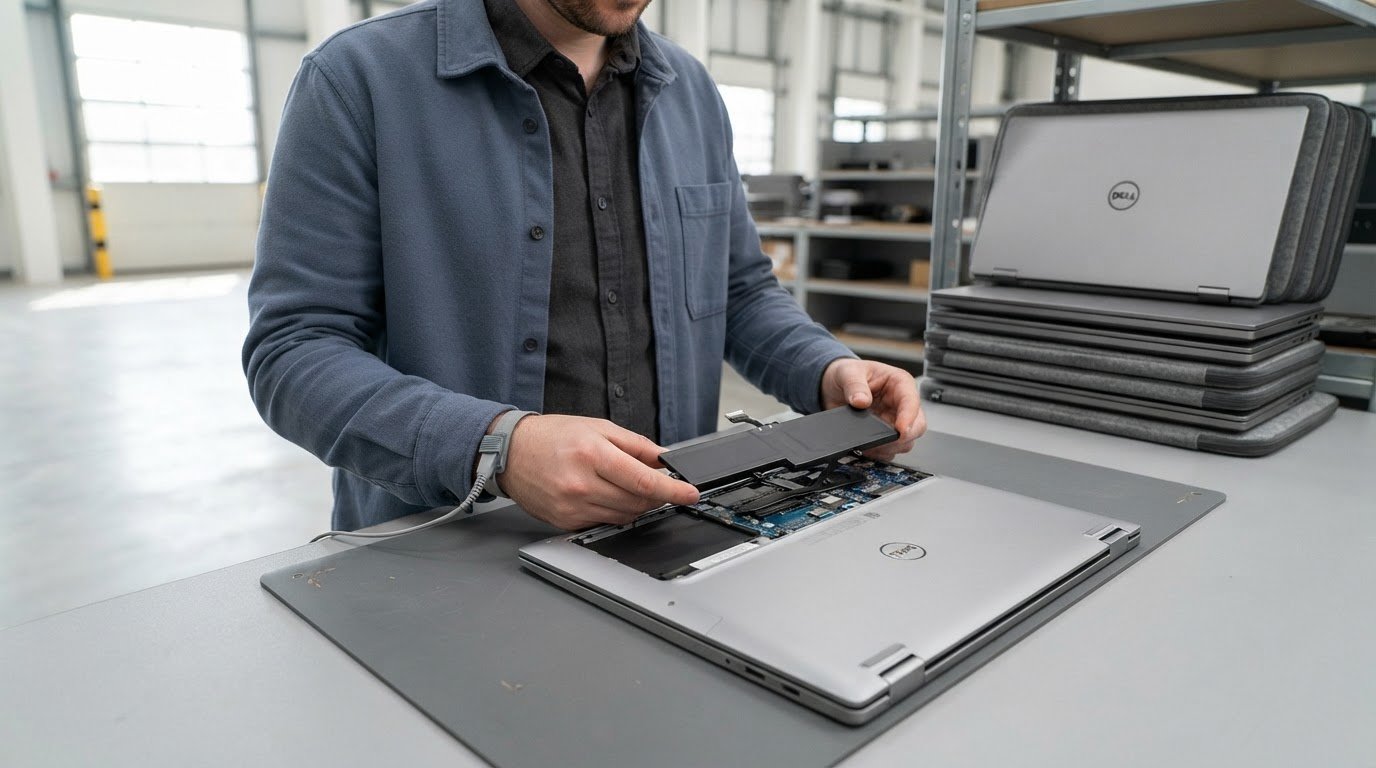
Right to Repair and What It Means for Corporate IT Buyers
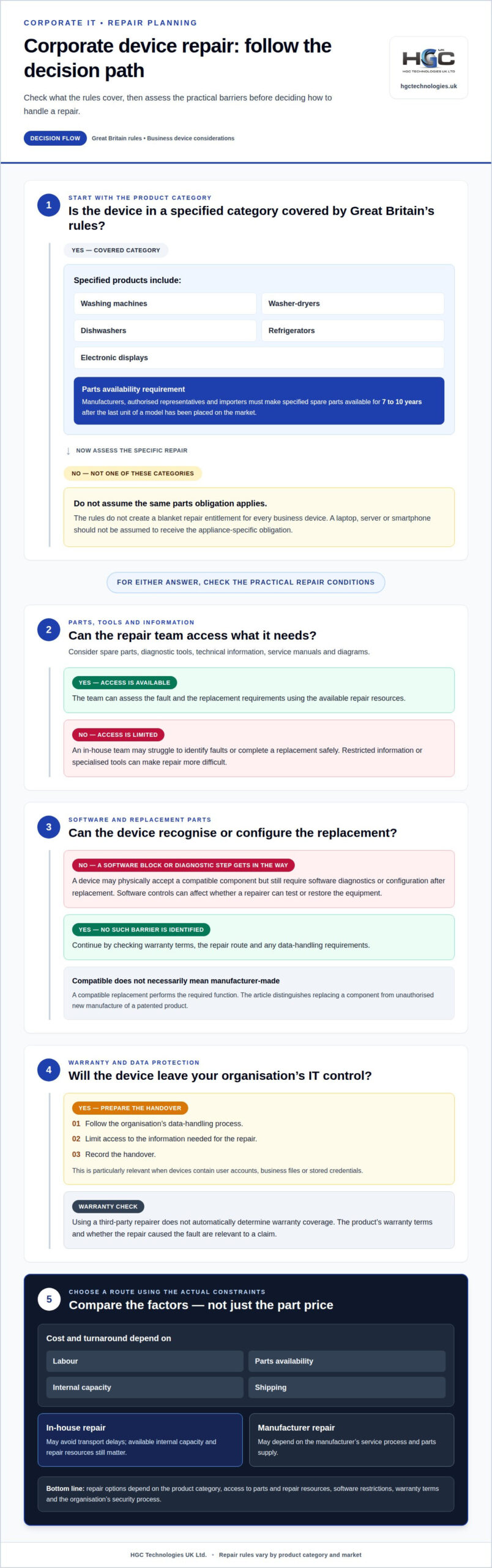
The UK’s statutory repair rules cover specified products, not every electronic device used by a business. In Great Britain, covered categories include washing machines, washer-dryers, dishwashers, refrigerators and electronic displays. For these products, manufacturers, authorised representatives and importers must make specified spare parts available for 7 to 10 years after the last unit of a model has been placed on the market.
That distinction matters when a laptop, server or smartphone fails: the right to repair and corporate IT is not a blanket promise that every business device can be repaired with any part, tool or repairer. Manufacturer policies, parts access and software restrictions can all affect what repairs are possible.
It’s understandable to expect a device to be repairable when it stops working, especially when replacement affects budgets, operations and technology lifecycles. This article explains what the Right to Repair means in the UK, which electronics the rules cover, and how parts, software and manufacturer policies shape repair options. It also looks at why repair access matters to business buyers deciding whether to keep equipment in service.
Key Takeaways
- Distinguish the UK’s rules for specified household products and displays from the repair options available for business laptops, smartphones and servers.
- Learn how spare-parts access and software restrictions can affect whether a device can be repaired and kept in service.
- Understand why manufacturer policies and the scope of legislation matter when planning repairs across a corporate device estate.
- Explore bulk refurbished laptops or custom-built PCs as procurement options when repairing existing equipment is not the right fit.
Use of compatible spare parts and software blocks
Repairability depends on more than whether a replacement part physically fits. Parts access, documentation, software controls and warranty terms can all shape corporate repair decisions.
Access to Parts, Tools and Documentation
Repair resources include spare parts, diagnostic tools, technical information, service manuals and diagrams. Without these, an in-house team may struggle to identify faults or complete a replacement safely. In Great Britain, regulations require specified parts for covered products to remain available for 7 to 10 years after the last unit of a model enters the market. This supports repair planning for covered equipment, but does not create the same obligation for every business device.
Third-Party Parts and Patent Rights
A compatible replacement part performs the required function, but it is not necessarily made by the original manufacturer. UK patent rights are exhausted when a patented product is placed on the market by the patent proprietor or with their consent, allowing further distribution or resale. This does not authorise unauthorised new manufacture. For IT teams sourcing parts, the distinction is important: replacing a component is different from producing a new patented product.
The cost and turnaround of manufacturer, in-house and independent repairs depend on labour, parts availability, internal capacity and shipping. An internal team may avoid transport delays, while a manufacturer repair may depend on its service process and parts supply.
Using a third-party repairer does not automatically determine warranty coverage. The product’s warranty terms and whether the repair caused the fault are relevant to a claim.
Corporate repairs also create security and data-protection risks, particularly when devices contain user accounts, business files or stored credentials. Before a laptop or smartphone leaves IT control, follow the organisation’s data-handling process, limit access to necessary information and record the handover. Software locks or diagnostic access can also affect whether a repairer can test equipment without accessing business data.
Manufacturer support and opposition to repair legislation
Repair legislation sets minimum obligations for manufacturers, but the scope depends on the product and market. How the right to repair applies to corporate IT procurement therefore depends on whether the equipment falls within those rules.
The Ecodesign for Energy-Related Products and Energy Information Regulations 2021 (SI 2021 No. 745) took effect in Great Britain on 1 July 2021, according to The National Archives. In Great Britain, they cover household washing machines, washer-dryers, dishwashers, refrigerators and electronic displays. Manufacturers, authorised representatives and importers must provide specified spare parts for minimum periods of 7 to 10 years after the last unit of a model has been placed on the market.
These requirements support repair access, but they do not establish a universal right to repair every laptop or corporate device. The rules set out specific requirements for covered products and parts rather than a general repair entitlement for every product owner.
EU rules have developed along a related, but separate, track. The EU Right to Repair Directive came into force on 30 July 2024. It requires manufacturers to repair certain products listed in Annex II within a reasonable time and for a reasonable price. The Directive also prohibits contractual terms, hardware or software limitations that unnecessarily obstruct repair. Businesses selling products into another market may need to meet that market’s applicable repair requirements.
For procurement teams, manufacturer support means more than publishing repair information. Parts access, repair instructions and the rules for the intended sales market all matter. A laptop fleet purchased for UK use should not be assumed to fall under appliance-specific obligations. If devices are sold into the EU, the applicable EU requirements form part of that market’s legislation.
Manufacturers may take different approaches to legislation affecting parts, diagnostics and service processes. In the UK, right to repair and corporate IT planning require separate consideration for each product category and sales market. This distinction helps buyers assess repair policies alongside procurement requirements.
Repair rights for smartphones, laptops and other electronics
Repair rights depend on the device, the market and the rules for its product category. For corporate buyers, the repair requirements for a smartphone may differ from those for a laptop or another electronic device.
Barriers to Repairing Electronic Devices
Barriers are practical or technical limits that make a device difficult to diagnose, open or restore. For IT teams, restricted repair information, specialised tools and software that rejects replacement components can affect repair decisions. For example, a phone may physically accept a compatible screen but still require software diagnostics or configuration after replacement. Such barriers can increase dependence on manufacturer processes, making repairability an important procurement consideration.
Risks of Refurbished and Repaired IT Equipment
Risks include an uncertain repair history, incompatible replacement parts, software faults and exposure of business data during servicing. An undocumented repair to a refurbished laptop, for example, can make a later hardware fault harder to diagnose. Corporate controls should include recording device history, checking that repairs meet required configurations, and protecting stored information before equipment changes hands. These checks help IT teams assess operational and security risks without treating every repaired device as equivalent.
EU rules provide specific requirements for smartphones and tablets sold in that market. Some covered smartphones and tablets are subject to repairability requirements, including access to repair information. From 31 July 2026, EU consumers can request repairs for products technically repairable under EU law. These provisions do not create identical rights for every UK business device.
Environmental pressure gives repair decisions wider importance. The UK produces 24 kg of electronic waste per person per year, while households and businesses discard 300,000 tonnes of electrical waste each year. Keeping a suitable phone or laptop in use can reduce premature disposal and support more sustainable resource use. However, repairability depends on parts, technical access and whether the repaired device remains suitable for its intended role.
For procurement, assess repair history, device condition, software compatibility and data-handling needs together. This helps balance the environmental value of extending device life with operational and security requirements.
Consumer access to repair services
Repair rights matter most when they provide a practical route from diagnosis to a working device. In the UK, access depends on the product, the repairer and the rules that apply in the relevant market. The right to repair and corporate IT planning intersect when organisations decide how staff can access repairs and keep equipment in service.
Spare-parts and reliability requirements may shape access to repairs through professional repair services rather than creating a direct repair route for product owners. This can support access through a repair service, but it does not give every consumer or business a general right to repair any electronic device. A washing machine and a corporate laptop, for example, fall under different product rules.
The EU’s Right to Repair Directive adds a consumer-facing route for certain products listed in Annex II. Manufacturers must repair those goods within a reasonable time and for a reasonable price. If a repairer uses the European Repair Information Form, proposed repair terms must remain valid for 30 days. An EU online repair platform is expected to become operational in 2027, offering another way to find repair services.
For UK businesses selling into the EU, these rules can affect how repair services are presented and accessed in that market. The Directive requires repair-service information to be easily accessible, with indicative prices for common repairs available on a free-access website. This helps consumers compare repair with replacement before purchasing. The right to repair and corporate IT operations connect through clear service pathways, although the rules do not cover every business device.
Corporate IT teams can make repair access more practical by routing faults through a defined service process. Record the device model, symptoms and business impact, then decide whether manufacturer support, an internal team or an independent repair service is appropriate. For a laptop with a battery fault, manuals and diagnostic information can help determine whether repair is practical. Teams can then weigh downtime, data handling and sustainability priorities against replacement.
Keep the distinction clear: repair legislation may create service access for specific products, while corporate devices depend on the rules and support arrangements that apply to them. This helps buyers set realistic repair pathways across a mixed device estate.
HGC Technologies UK
When repairing existing equipment is not the right fit, HGC Technologies UK Ltd. supports business procurement with bulk refurbished Dell, Lenovo and HP laptops, as well as custom-built PCs for different business requirements.
These options give procurement teams an alternative when devices no longer meet operational needs. Consider the work each device must perform, users’ requirements and how new equipment fits the organisation’s plans. HGC Technologies UK Ltd. supplies businesses and technology resellers with equipment for their procurement needs.
Contact HGC Technologies UK Ltd. to discuss your business technology requirements.
Build repairability into your next procurement decision
Make repairability part of your organisation’s ongoing technology planning, rather than a decision made only after equipment fails. Set clear expectations for device lifecycles, data protection and replacement planning, then apply them consistently to future purchases. This gives your team a stronger basis for balancing continuity with responsible equipment use.
The right to repair and corporate IT procurement intersect when repair options influence whether a device remains suitable for business use. If replacement better fits your requirements, HGC Technologies UK Ltd. supplies bulk refurbished laptops from Dell, Lenovo and HP. These options can support organisations planning a fleet refresh or sourcing equipment for their users.
Share your business requirements with HGC Technologies UK to explore suitable procurement options. Contact HGC Technologies UK to discuss your next technology decision, and take the next step with confidence.
Frequently Asked Questions
What is the Right to Repair?
The Right to Repair describes laws and policies intended to make it easier to repair certain products. Depending on the rules, manufacturers may need to provide parts, repair information or repair services. It is not a universal right covering every product: in the UK, obligations depend on the product category and whether UK or EU rules apply. For businesses, this distinction helps separate statutory repair rights from warranty terms and service arrangements.
What does the Right to Repair Directive mean for your business?
The EU Right to Repair Directive matters to UK businesses selling products into the EU market. It requires manufacturers to repair certain goods listed in Annex II within a reasonable time and for a reasonable price. It also addresses contractual, hardware and software restrictions that unnecessarily obstruct repairs. A business should distinguish these EU obligations from rules governing equipment used solely in the UK, as the products and markets covered differ.
What’s wrong with the new law?
There is no single UK repair law covering every device, which can make the rules difficult to apply across a mixed equipment estate. Product scope is a key limitation: requirements for specified household appliances do not automatically extend to laptops or servers. Legislation also does not mean every fault can be repaired; practical feasibility still depends on the fault, parts and technical access. Procurement policies should account for these distinctions.
What does the UK right to repair law cover, and which products are included?
In Great Britain, the 2021 ecodesign rules cover household washing machines, washer-dryers, dishwashers, refrigerators and electronic displays. Specified spare-parts requirements apply to these categories, rather than all consumer or business electronics. Northern Ireland follows EU ecodesign and energy-labelling regulations. For example, a monitor may fall within the electronic-display category, while a laptop isn’t included in Great Britain’s listed product categories.
Do UK right to repair rules apply to business and corporate IT equipment?
The rules apply to corporate equipment only when the product falls within a covered category. Great Britain’s listed categories include household appliances and electronic displays, not laptops or servers as general business IT equipment. A business using a covered display should distinguish its product category from the computer connected to it. Separate EU requirements may matter when a business sells covered products into the EU market.
What repair and spare-parts obligations do manufacturers have under UK law?
For covered products in Great Britain, manufacturers, authorised representatives and importers must make specified spare parts available for minimum periods of 7 to 10 years after the last unit of a model has been placed on the market. The rules direct spare-parts and reliability requirements towards professional repairers. They don’t create an equivalent parts-supply obligation for every laptop, smartphone or server used by a business.

BYOD Policy vs Corporate-Owned Refurbished Laptops: The 2026 Strategic Comparison
The long-held belief that letting employees use their own devices saves your budget is a costly misc
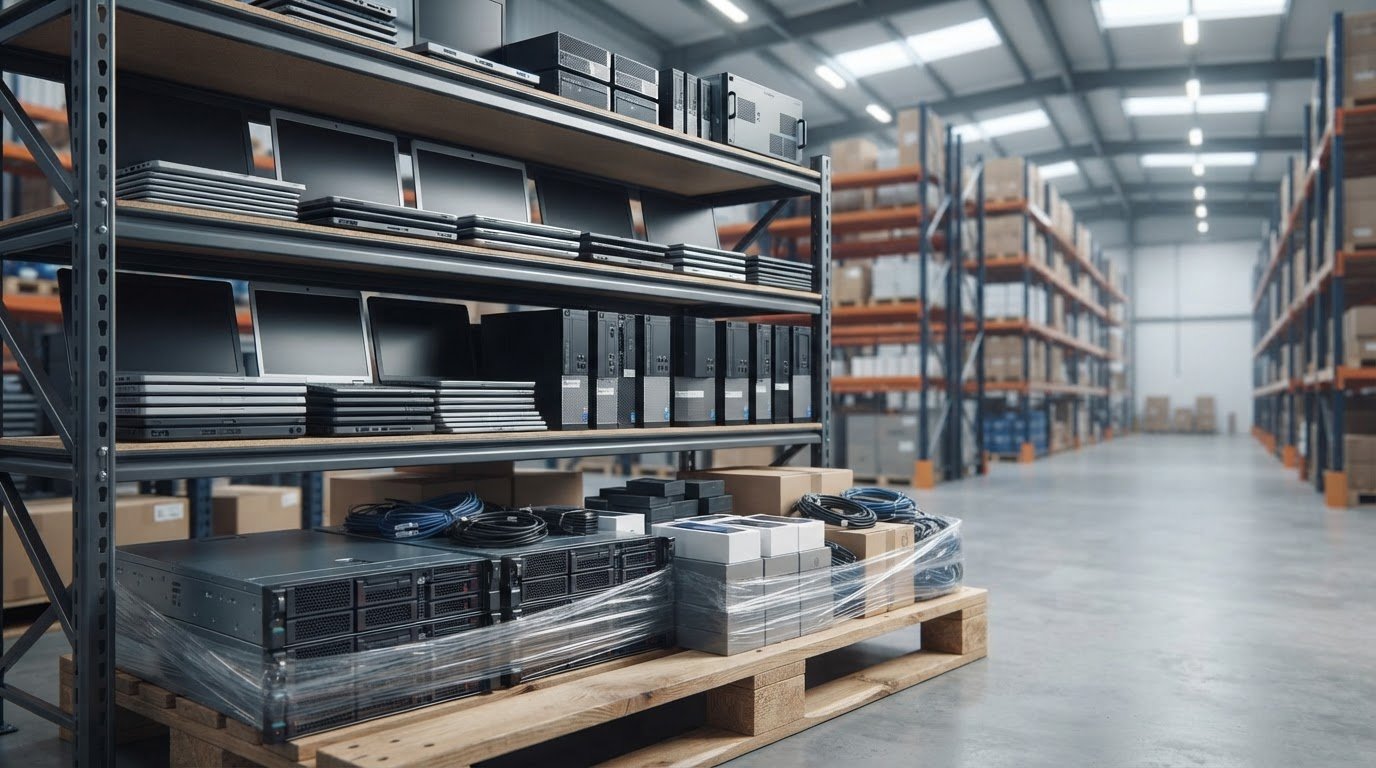
Refurbished IT Equipment in Bulk for UK Trade and Resale
Buying refurbished IT equipment in bulk in the UK does not mean choosing just one type of device. Yo

Scaling a Remote Team with Refurbished Laptops: The 2026 Procurement Strategy
The traditional model of purchasing brand-new enterprise hardware for every new hire is no longer a