

Sourcing Wholesale Refurbished Laptops in the UK: A Parts-to-Procurement Guide
A refurbished laptop is only as dependable as the checks behind it. When sourcing wholesale refurbished laptops UK businesses need to assess more than the model: parts, compatibility, condition and the information available for each batch all matter.
Comparing stock is easier when you know what to look for. Inconsistent component information or unclear grading can make it difficult to judge whether devices suit a particular deployment or resale plan. A consistent assessment process turns those concerns into practical checks on product identity, refurbishment and batch condition.
This guide explains how parts sourcing relates to refurbishment and sets out repeatable checks for compatibility, cosmetic condition and testing information. It also covers how to evaluate a wholesale laptop range against your purchasing needs and plan a useful supplier relationship.
HGC Technologies UK Ltd. supplies refurbished Dell, Lenovo and HP laptops in bulk, with wholesale pricing for business customers, personalised consultations and after-sales technical assistance. Its refurbished and open-box technology options support businesses looking to include reuse in their procurement plans.
Key Takeaways
- Use a consistent workflow, from defining device requirements to checking refurbishment and preparing stock, so you assess each batch on the same basis.
- Compare component sources and existing inventory by looking at traceability, compatibility information, batch consistency and record-keeping.
- For sourcing wholesale refurbished laptops UK-wide, organise checks around product identity, parts information, testing records and your own buyer requirements.
- Keep unanswered questions in your procurement notes and separate them from facts supplied about the stock.
- Repeatable assessment criteria help you explain your requirements and make clearer purchasing decisions.
Why parts provenance matters when sourcing wholesale refurbished laptops
A laptop’s refurbishment status describes work carried out to prepare it for reuse. It doesn’t automatically explain the history of every component inside it. For businesses sourcing wholesale refurbished laptops UK-wide, that distinction matters: a product description is only one part of deciding whether a device suits a planned deployment or resale.
Parts provenance means the available history of a component’s source and use. Depending on the records, it may show whether a part was reused or replaced and provide information about how it was handled before installation. The detail can differ between components and batches. Treat it as useful context for assessment, not as proof of performance.
A refurbished laptop is a complete device assessed and prepared for reuse; parts-only stock consists of components, not a ready-to-use laptop. Keeping the distinction clear helps you set appropriate expectations for testing, condition and usability. A component listing and a finished laptop listing answer different procurement needs.
What parts provenance can tell a wholesale buyer
Component records can link a part to a device or batch and indicate whether it was recovered, retained or replaced during refurbishment. Where available, descriptions, inspection notes and replacement records give procurement teams a clearer basis for comparing stock. They can also highlight what remains unknown, rather than encouraging assumptions about a component’s history.
Consistent batch information makes comparisons more meaningful. If descriptions use the same categories and level of detail, your team can distinguish a batch with documented component changes from one with only device-level refurbishment information. Use those records to inform your decision, then assess the laptop’s condition and suitability separately.
Why refurbished laptop sourcing is more than finding stock
Begin with the intended user and use. Laptops for a defined business role may have different practical requirements from devices intended for resale to a varied customer base. Specify the tasks, the condition your users or customers will accept, and how consistent the batch needs to be. Then compare the devices and available parts information with those requirements.
A low headline price alone cannot establish whether a batch is suitable. If condition descriptions, compatibility details or testing information do not match your needs, you may need to spend more time assessing and preparing the devices. Compare like with like: product identity, condition, refurbishment details and the records provided for the batch.
Parts sourcing is also part of a wider technology lifecycle. Reusing suitable equipment can keep devices in use for longer, while equipment that can no longer be reused needs responsible handling. The Waste Electrical and Electronic Equipment Directive (WEEE Directive) provides background on the framework associated with electronic waste and recycling. For procurement, consider reuse alongside clear records and an appropriate end-of-life route.
How parts sourcing fits into the refurbished laptop workflow
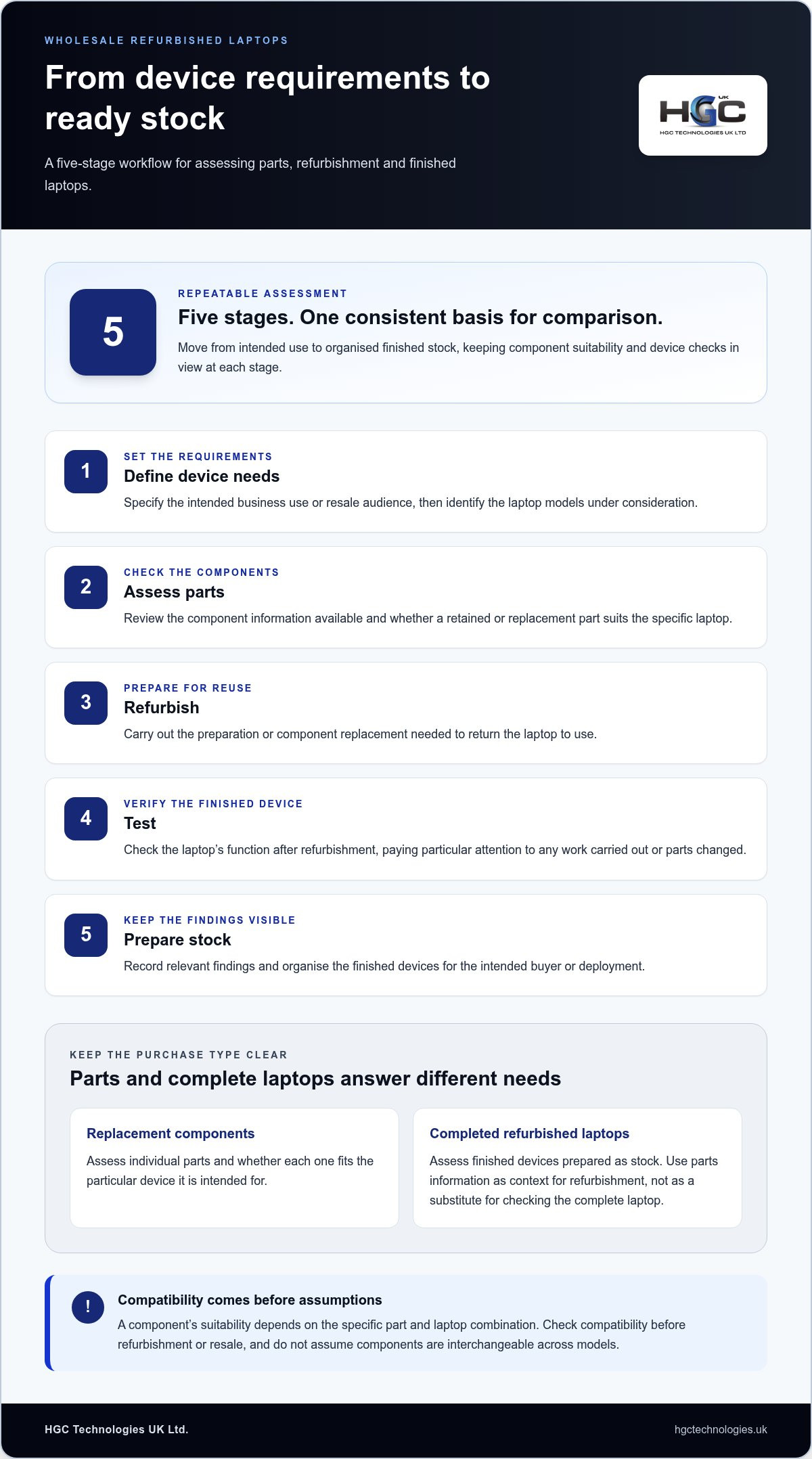
Parts sourcing is one stage in refurbishment, not a substitute for assessing the complete laptop. The sequence below is a practical framework for understanding how device requirements, component decisions and finished stock relate. For teams sourcing wholesale refurbished laptops UK-wide, it can help structure internal checks and comparisons.
- Define device needs. Specify the intended business use or resale audience and identify the laptop models under consideration.
- Assess parts. Review available component information and whether a retained or replacement part is suitable for the specific device.
- Refurbish. Carry out the preparation or component replacement needed to return the laptop to use.
- Test. Check the device’s function after refurbishment, paying particular attention to any work or parts changes.
- Prepare stock. Record relevant findings and organise the finished devices for the intended buyer or deployment.
There is a practical difference between sourcing replacement components for refurbishment and buying completed refurbished laptops wholesale. The first is about individual parts and their fit for a device. The second is about finished laptops assessed and prepared as stock. Buyers of complete devices can use parts information to understand the refurbishment, but should distinguish it from a purchase of loose components and avoid assuming every laptop has the same component history.
Check compatibility before refurbishment or resale because a component’s suitability depends on the specific laptop it is intended for. Making this an early step helps prevent plans from relying on assumptions that components are interchangeable across models.
Start with the laptop model and intended use
Record the model information available for each device or batch, then define how the laptops will be used. A laptop for a specific business task and one intended for resale may call for different assessment priorities. Compare each component with the particular device rather than relying on a broad description: compatibility depends on the specific part and laptop combination. Keep any missing details visible in your procurement notes.
Build checks and testing into the refurbishment process
At a practical level, checks can include visual inspection for damage, assessment of whether a component suits the device, and functional testing after refurbishment. Record findings against the relevant laptop or batch, including part changes and checks completed. This gives procurement teams a useful reference when reviewing stock, while allowing for differences in testing methods and record formats.
Refurbishment also fits within a broader equipment lifecycle. Reuse can keep suitable devices in circulation, while end-of-life equipment needs responsible handling. WEEE Regulations and Compliance provides an accessible overview. When sourcing wholesale refurbished laptops UK businesses can deploy, connect device requirements with clear assessment records. HGC Technologies supplies refurbished laptops wholesale, making its wholesale refurbished laptop supply one option to include in a broader technology purchasing plan.
Compare parts sourcing routes for refurbished laptop batches
No single parts sourcing route suits every refurbishment or procurement requirement. Established suppliers, recovery channels and existing inventory can differ in traceability, compatibility information and batch consistency. Compare the information available with the intended use rather than assuming one route is always superior. These routes describe how components may be sourced, which is distinct from buying completed refurbished laptops as wholesale stock.
Use this comparison as a starting point. The information available depends on the source, component and record-keeping practice.
| Route | Traceability | Compatibility information | Batch consistency | Record-keeping considerations |
|---|---|---|---|---|
| Established suppliers | May provide component descriptions or sourcing records. | Information may help identify a component, but suitability still depends on the specific laptop. | Can vary with the stock supplied and how it is grouped. | Keep descriptions, condition notes and batch references together. |
| Recovery channels | History may be available from the recovered equipment or accompanying records. | Device identification and component details can inform assessment, where available. | Recovered items may differ in model, condition or component history. | Record what is known about origin and handling, and note information gaps. |
| Existing inventory | Traceability depends on the records retained since the item entered stock. | Internal device and component records can support checks before reuse. | Inventory may include a mix of sources or conditions. | Maintain links between stock records, device identity and any component changes. |
Assess supplier information and component records
Useful records may include a component description, condition notes and a reference linking it to a device or batch. Capture details consistently so your team can use them for stock allocation, resale preparation or after-sales processes. Documentation supports traceability, but does not prove that a component performs correctly or that a complete laptop is suitable. Pair records with relevant checks on the device.
Balance consistency, suitability and sustainability
Buying a set of completed refurbished laptops can make it easier to plan around a defined batch. Sourcing components individually can be more relevant when a particular device needs attention. Neither approach is automatically right for every buyer. Assess the stock against your intended deployment or resale plan, including how much variation in model, condition or available information your business can manage.
Reuse can form part of a responsible technology strategy by keeping suitable equipment in circulation. Weigh that against practical considerations: the device’s intended role, the evidence available and the work needed to prepare it. For businesses sourcing wholesale refurbished laptops UK-wide, distinguishing component procurement from finished-device purchasing keeps comparisons focused on the actual requirement.
Use this checklist to assess refurbished laptop sourcing in the UK
A consistent checklist helps procurement teams assess batches on the same basis, rather than relying on a general description or a single headline detail. Use the points below for each batch and record open questions in your procurement notes. This gives your team a practical reference for comparing stock with your requirements and keeps unknown details separate from confirmed information.
Check product identity, condition and batch information
Start with the details that identify the laptops and the batch. Record the available information, keeping physical condition separate from assumptions about the components inside each device. A cosmetic description, for example, does not establish a laptop’s component history or testing status.
- Product identity: Note the make, model and refurbishment status stated for the stock.
- Batch details: Record how the devices are grouped and any references provided for the batch.
- Condition: Capture the condition description. Do not infer internal component condition from appearance alone.
- Parts information: Record component descriptions, replacement or sourcing details, and condition notes where available.
- Testing records: Note which checks are recorded and whether findings apply to individual devices or the batch overall.
Use the same fields for each batch. If a detail is absent from the information provided, mark it as an open point for your team rather than filling the gap with an assumption.
Match the batch to your procurement requirements
Compare the available information with your intended users, deployment context and stock plan. Decide whether a consistent brand and model range would make allocation or support easier, or whether a mixed-brand assortment better suits your needs. Base the choice on the use case, not on the assumption that one approach is always preferable.
- Intended use: Describe who will use the laptops and what tasks they need to perform.
- Batch fit: Consider whether variation in models, condition or documentation suits your deployment or resale plan.
- Stock planning: Record how the batch fits your inventory approach and what information your team needs to manage it.
- Open points: List details your team needs to evaluate, such as compatibility information or the scope of testing records.
For broader supplier and procurement considerations, use this wholesale laptop distributor UK guide alongside your batch assessment. If your requirements favour a single-brand approach, the bulk Dell refurbished laptop guide offers a brand-specific procurement reference.
A repeatable checklist makes sourcing wholesale refurbished laptops UK more structured and helps your team explain its priorities. Review HGC Technologies’ wholesale refurbished laptop range as part of your procurement planning.
Turn refurbishment checks into a dependable wholesale laptop partnership
A repeatable assessment process does more than help you compare batches. It gives your procurement team a shared way to explain what matters, from product mix and condition information to the intended use of each device. Clear criteria make purchasing discussions more focused and help everyone understand the requirements behind a decision.
Keep the conversation grounded in your plans. A reseller preparing stock for different customer needs may prioritise a varied product mix, while a business equipping a defined team may value consistency across its devices. Explain how the laptops will be used, what information your team needs to organise stock, and which details matter for internal records. This frames the discussion around suitability rather than assumptions about a batch.
What a useful wholesale supplier relationship should support
A productive relationship supports practical conversations about intended use, product mix and procurement requirements. Use consistent assessment criteria to communicate your priorities, then organise product information in a way that suits your records and planning. Buyer-led assessment remains important, but clear criteria make the basis for decisions easier to discuss and revisit as needs change.
For example, a business considering refurbished laptops for a particular group of users can describe the use case and preferred product mix before assessing suitable stock. A reseller can focus on the range and condition information needed to plan its offer. In both cases, clarity connects procurement decisions with real requirements without relying on broad claims about quality or suitability.
Explore HGC’s refurbished laptop and wholesale services
HGC Technologies supplies refurbished laptops and other IT equipment, as well as new laptops, and offers refurbishment and resale. Its wholesale supply includes refurbished Dell, Lenovo and HP laptops. Business buyers can discuss the product mix that fits their procurement plans through a personalised consultation.
HGC offers wholesale pricing for business customers and after-sales technical assistance. These services support conversations about business requirements and how laptop procurement fits into a wider technology strategy. HGC has specialised in technology since 2013.
Use your assessment criteria to guide purchasing discussions: bring together intended use, product preferences and the information your team needs to plan and manage stock. This provides a practical foundation for sourcing wholesale refurbished laptops UK businesses can evaluate against their requirements, while keeping responsible reuse in view.
Explore wholesale refurbished laptops with HGC Technologies.
Make your next procurement decision with confidence
Make your next step a practical one: turn your assessment criteria into a clear purchasing brief. Set out the intended use, preferred product mix and the information your team needs to plan stock. This gives procurement discussions a useful focus and links device selection to your organisation’s wider technology strategy.
For businesses sourcing wholesale refurbished laptops UK-wide, HGC Technologies supplies refurbished and new laptops from established technology brands. Its sustainable technology solutions include refurbished and open-box devices. Personalised consultations and after-sales technical assistance support business customers as they consider their requirements.
You do not need to resolve every procurement question at once. Start with the needs you can define, then use them to shape a considered discussion about suitable laptop options and longer-term plans. Explore wholesale refurbished laptops with HGC Technologies to discuss your business requirements.
Frequently Asked Questions
How can I assess parts compatibility in a refurbished laptop?
Compare the component information with the exact laptop model and the specific part it is intended to replace. Do not rely on the brand or a general product-family name alone, as these may not identify the precise device and component combination. Record the details used in your assessment and consider the results alongside functional checks on the laptop. If you are buying complete devices, focus on whether the supplied information supports your intended use.
Should I buy refurbished laptops or source replacement parts separately?
Choose complete refurbished laptops when you need devices for deployment or resale. Source parts separately when your work involves preparing or repairing devices you already manage. Consider who will use the equipment, what internal resources you have for handling and testing components, and how you will keep stock records. For sourcing wholesale refurbished laptops UK businesses should make this distinction early, so comparisons reflect the actual procurement need.
What records should I keep when sourcing refurbished laptop components?
Keep consistent records of the component description, its condition information, the associated laptop or batch reference, and when your team received or assessed it. Note any available replacement or installation information, along with the outcome of checks your team carries out. Separate recorded facts from assumptions and mark unknown details as such. This makes later stock reviews easier to interpret.
Can refurbished laptops contain replacement parts?
Yes. A refurbished laptop may include components replaced during preparation as well as components retained from earlier use. The refurbishment label alone does not identify which parts changed or establish their individual history. For procurement, distinguish device-level information from component-specific records, then consider both when assessing a laptop for deployment or resale. This avoids assuming every refurbished device has had the same work.
How do I compare wholesale refurbished laptop batches?
Use the same comparison fields for each batch: make and model information, condition descriptions, refurbishment details, parts information, testing records and identifiers that help your team organise stock. Compare these details with your intended users and resale or deployment plans. An internal spreadsheet can make differences visible and flag missing information for review. Avoid judging batches on one factor alone, such as appearance or headline price.
Are refurbished laptops a sustainable procurement option?
They can support a more circular approach to technology procurement by keeping suitable devices in use rather than replacing them with new equipment by default. The environmental value depends on the equipment’s condition, suitability and continued use, so do not assume every refurbished purchase has the same impact. Consider whether the laptops meet your practical needs and how your organisation will manage them throughout their useful working life.

Sustainable IT for CSR: A UK Business Guide for 2026
The UK generates approximately 1.9 million tonnes of e-waste annually, yet the 2026 WEEE collection

The Authoritative Refurbished Laptop Component Quality Guide for 2026
A 20-year study of half a million devices has officially debunked the "bathtub curve" myth, proving

Refurbished Laptop Grades Explained: The 2026 UK Business Procurement Guide
The UK's refurbished electronics market reached a valuation of £7.6 billion in 2025, yet many procu