
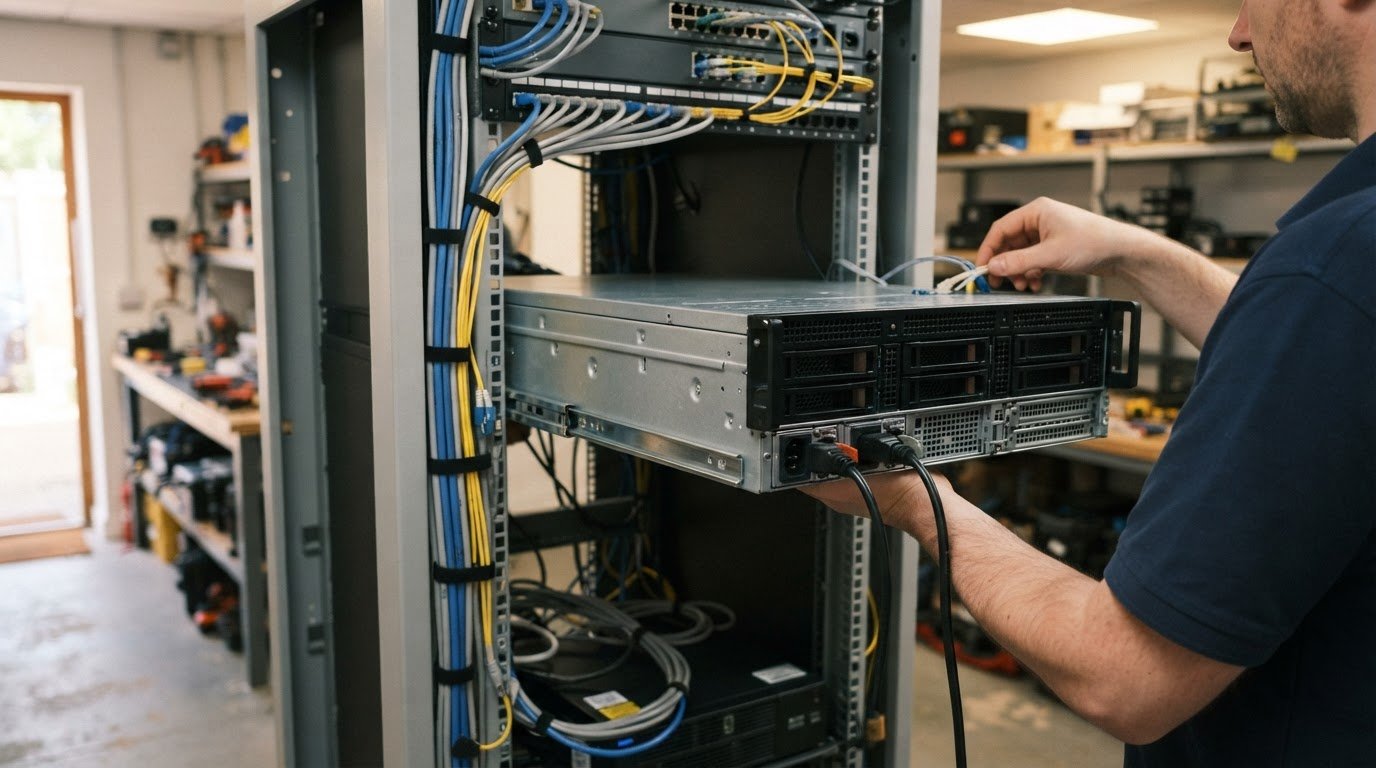
Custom rackmount server builds for UK businesses
Custom rackmount server builds in the UK should be designed around the workload, not simply the highest specification. The right balance of CPU, GPU, memory, storage and networking depends on the applications, required capacity and how the server will integrate with existing infrastructure.
Choosing a build involves more than selecting components. Rack format, cooling, power requirements and future expansion all affect how well a system will perform in a business environment. This guide explains how to match key specifications to your workload, what to consider for a high-performance or GPU server, and how professional assembly, burn-in testing and UK delivery fit into the process. You’ll also learn what information helps shape a suitable configuration, so you can make a considered decision before investing in server hardware.
Key Takeaways
- Match processor, graphics, memory and storage choices to the server’s workload and expected growth.
- Assess how a high-performance configuration balances compute capacity, GPU requirements, power and storage.
- Understand how assembly, burn-in testing and delivery contribute to a server’s readiness for business use.
- Explore HGC Technologies UK’s Server Solutions when your organisation needs a tailored rackmount or GPU server build.
CPU, GPU, memory, storage and networking options
Start with the work the server must perform. CPU choice shapes compute capacity for virtualisation, databases and general workloads. For example, the AMD EPYC 9554 has 64 cores, as does the Intel Xeon 696X. These processors illustrate high-core-count options, but core count alone doesn’t define suitability. Application behaviour, concurrency and software licensing all influence the best fit.
Choose a GPU based on whether the workload needs parallel processing for tasks such as artificial intelligence, rendering or scientific computing. For example, a system using NVIDIA Blackwell GPUs can be configured for demanding accelerated workloads. Check how the software uses GPU memory and whether it can use multiple devices together. The server’s power delivery, cooling and chassis layout must all support the selected GPU configuration.
Memory capacity affects how much active data and how many applications a server can hold in memory. One example configuration uses 512 GB of Micron DDR5 PC5 5600 MHz memory. Treat this as a reference, not a default: virtual machines, databases and in-memory analytics place different demands on capacity and bandwidth. Align memory with the workloads running concurrently, while leaving room for planned growth.
Plan storage around how applications access data. NVMe SSDs suit workloads that need responsive data access, while all-flash systems use flash storage throughout. An NVMe storage server can provide high-speed storage to other systems, and a storage cluster distributes storage across connected nodes. Traditional storage servers and appliances can suit centralised files or application data. Choose the design according to capacity, resilience and access requirements.
Networking connects compute and storage with users, applications and other servers. Ethernet is common, but the bandwidth required depends on data volumes and concurrent traffic. In a storage cluster, network performance affects how quickly nodes exchange data. Map the server’s role, storage traffic and existing infrastructure before choosing network interfaces. This clarifies how to balance CPU, GPU, memory, NVMe storage and networking in the build.
Example high-performance server configuration
A demanding server build needs hardware that suits the workload, rack and installation environment. The example below illustrates how components work together, rather than setting out a universal specification.
Configurable server components
One example pairs an AMD EPYC 9355 processor, with 32 cores and a 4.4 GHz turbo frequency, with four NVIDIA PNY RTX PRO 6000 Max-Q Blackwell GPUs. Each GPU has 96 GB of memory. The configuration also includes a 3000-watt dual redundant power supply and six 3.5-inch front hot-swap bays. Compatibility means assessing processor, motherboard, GPU, power and cooling requirements together. Multi-GPU systems need particular attention to physical space and power delivery.
When comparing UK custom server builders, assess the configuration, testing, delivery arrangements and support terms, not just the quoted price or lead time. Compare equivalent specifications, then consider warranty coverage and support routes in light of the server’s role in your operations.
Custom rack server configurations
Rack size shapes which components fit and how the system can be installed. A 1U, 2U or 4U configuration should reflect available rack space, expansion plans and the hardware’s cooling needs. The six hot-swap bays in this example support front access to storage, while the dual redundant power supply provides a different power arrangement from a single supply. These choices should be configured as a complete system, not isolated upgrades.
Customisable configurations can balance processor capacity, GPU acceleration, storage bays and memory for different workloads. Cost depends on the selected components and configuration, so there isn’t one meaningful UK price for custom 1U, 2U and 4U servers. Electrical planning should account for the server’s power demand and available supply; noise, cooling, rack space and data-centre operating requirements also affect placement.
Build and shipping times depend on the selected components, configuration and testing stages. Warranty and return terms also vary, so compare the coverage period, whether support is onsite or return-to-base, and how faults are handled. These details matter alongside the hardware, particularly when the server supports essential operations.
A clear specification can help align component choices with rack and site constraints. Explore server solutions for a tailored configuration.
UK assembly, burn-in testing and delivery
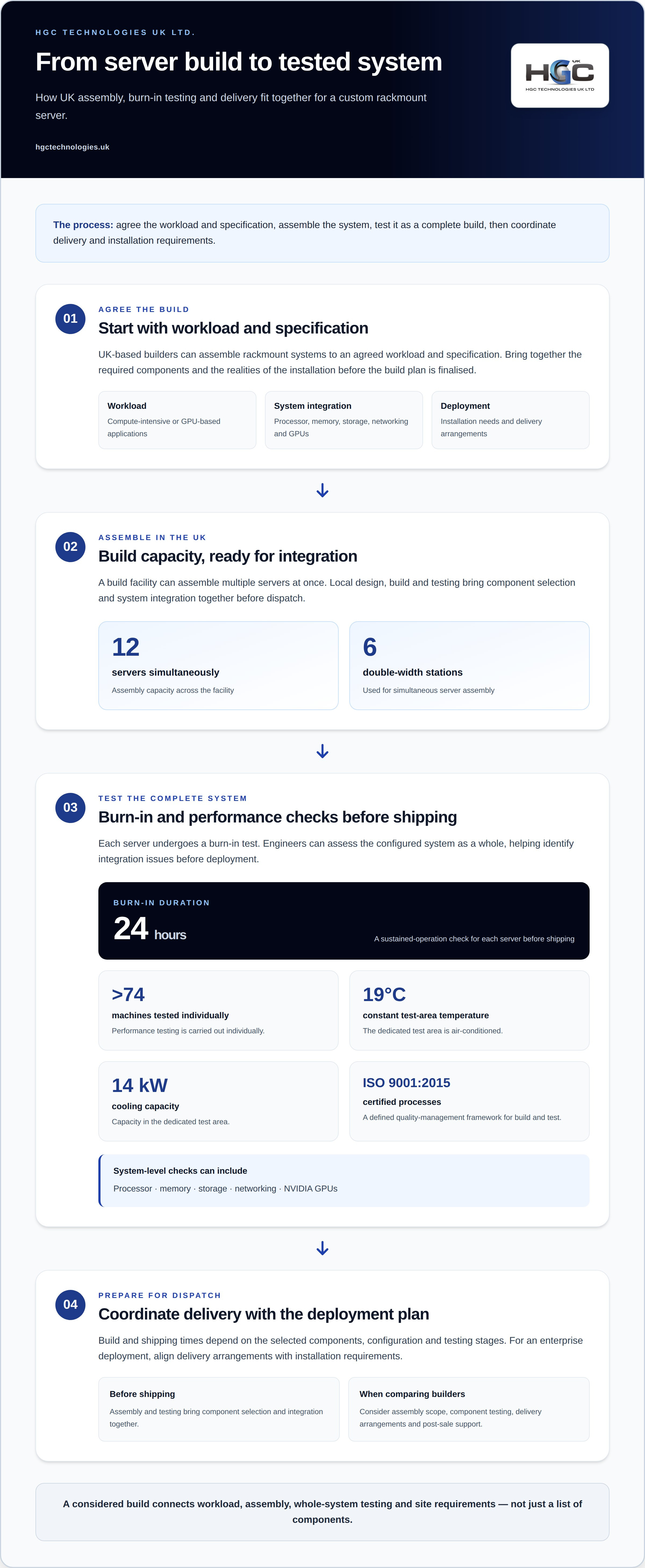
UK-based server builders can assemble rackmount systems to an agreed workload and specification. A build facility can assemble 12 servers simultaneously across six double-width stations. Local design, build and testing bring component selection and integration together before dispatch. For an enterprise deployment, the build plan should account for installation requirements and delivery arrangements.
Testing is a practical part of quality assurance. Each server undergoes a 24-hour burn-in test, while more than 74 machines are tested individually for performance. A dedicated test area is air-conditioned at a constant 19°C and has 14 kW of cooling capacity. These checks help assess system behaviour under sustained operation before shipping.
Component reliability depends on how parts work together, not simply on their individual specifications. An engineer can test the configured system as a whole, including processor, memory, storage, networking and any NVIDIA GPUs. That helps identify integration issues before deployment. Processes are described as ISO 9001:2015-certified, providing a defined quality-management framework for the build and test process.
Which UK companies build custom rackmount servers to order? Specialist builders configure and assemble servers for business workloads, including compute-intensive and GPU-based applications. When comparing options, look at the assembly scope, component testing, delivery arrangements and post-sale support.
Common risks include incompatible components, inadequate cooling or power planning, insufficient testing and unclear warranty or return terms. A documented configuration and test process helps address these issues. Plan delivery too: rack dimensions, access to the installation site and coordination with the receiving team can all affect deployment.
Evidence from relevant projects can help show how a configuration serves an environment such as virtualisation, data processing or GPU-assisted workloads. Useful case studies or testimonials describe the application, hardware and testing process instead of relying on general praise. Coordinate dispatch with site readiness so the server can be received and installed as planned.
Custom rackmount and GPU server builds
GPU servers need a design centred on the application, not simply maximum accelerator count. A listed 6× H200 GPU server illustrates how specialised these configurations can become. Custom rackmount server builds UK businesses commission should begin with a clear workload, such as AI model development, inference, rendering or another specialist task. Each use case places different demands on GPU capacity, CPU coordination, memory, storage and network traffic.
An AMD EPYC platform can provide the processor foundation for a rackmount server or workstation, with GPUs handling parallel tasks. The right balance depends on how the software divides work between the CPU and accelerators. Custom rackmount server builds UK organisations deploy should therefore reflect their applications and deployment requirements. This approach aligns the processor, GPU configuration and supporting components as a complete system, rather than treating each as an isolated upgrade.
Physical integration matters as well. GPU cards must fit the chassis, and the system needs power delivery and cooling suited to its components. Rack dimensions, maintenance access and the installation environment also shape the design. These factors become increasingly important as the number of accelerators rises. Assess the complete configuration, including how the components work together under the expected workload.
Storage and networking affect a GPU server’s usefulness too. Large datasets need storage suited to the application’s access patterns, while network capacity affects data transfer between the server and other systems. A workstation may suit a specialist user’s local computing needs; a rackmount build can form part of shared infrastructure. Choose according to where the workload runs and how users access its results.
For a tailored design, set out the applications, rack constraints, data needs and planned expansion. That brief gives a specialist a clear basis for balancing compute, GPUs and supporting hardware. Discuss a tailored server configuration for your workload and deployment needs.
HGC Technologies UK: Custom‑built PCs
HGC Technologies UK Ltd. provides server solutions for businesses planning rackmount or GPU systems around defined workloads, existing infrastructure and growth needs. Share your intended applications, preferred configuration and deployment requirements to guide the discussion. If you need tailored desktop hardware instead, HGC Technologies UK Ltd. also offers custom-built PCs.
HGC Technologies UK Ltd. also supplies bulk Dell and Lenovo refurbished laptops, which may suit organisations sourcing business devices alongside server hardware. The right option depends on whether you need specialist server capacity, custom-built PCs or bulk laptop procurement. Contact HGC Technologies UK Ltd. to discuss your server requirements.
Set your server project in motion
For custom rackmount server builds in the UK, start by turning operational needs into a clear project brief. Define the applications, installation environment and how the server should fit into your wider infrastructure. Include priorities for future expansion and identify who will manage deployment. This gives the configuration discussion a practical starting point based on your organisation’s needs, rather than a generic specification.
Server planning can form part of wider business hardware procurement. HGC Technologies UK supplies bulk Dell, Lenovo and HP refurbished laptops, alongside server solutions and custom-built PCs. This may suit organisations considering server hardware and end-user devices together.
Bring your requirements into a direct conversation and explore a configuration suited to your plans. Contact HGC Technologies UK to discuss your project and take the next step with confidence.
Frequently Asked Questions
What rackmount server configurations are available from UK builders?
UK builders can configure rackmount servers for business computing, virtualisation, data storage or GPU-intensive workloads. Options range from compact systems for limited rack space to larger chassis that accommodate additional components. A workstation-style system may suit specialist computing, while a rack server can support shared infrastructure. Choose the format according to the applications, available rack space and expansion plans.
How does a UK builder match processors, memory, storage and GPUs to a custom rackmount server’s workload?
Start with the applications, their performance demands and the number of users or processes running at once. Processor requirements depend on how the software uses cores; memory needs reflect active datasets and simultaneous tasks. Select storage for the required data access and capacity, and GPUs when applications use accelerated processing. These requirements help shape a balanced specification instead of maximising a single component.
How does a UK builder determine the right rack units, depth, rails, power and cooling for a custom rackmount server?
Use the rack’s available space and the chassis dimensions to determine suitable rack units and depth. Rails must fit both the rack and chassis, providing secure mounting and practical access. Plan power around the configured components and available supply. Cooling depends on the system’s heat output and airflow in the installation environment, including airflow around nearby equipment.
What are the delivery costs and lead times for custom rackmount servers in the UK?
Delivery costs and lead times depend on the components, configuration, assembly, testing and delivery arrangements. A build with specialist or multiple components may follow a different schedule from a standard configuration. Set the required specification and installation date early, and plan how the server will be received at the delivery site. There is no single delivery price or timeframe for every custom server build.
What UK warranty, onsite support and return policies do custom server builders offer?
Warranty and support terms vary by builder. Compare the coverage, onsite or return-to-base support, and process for handling faults. The supplier provides a three-year return-to-base warranty with each server.

Refurbished Laptop Grades Explained: The 2026 UK Business Procurement Guide
The UK's refurbished electronics market reached a valuation of £7.6 billion in 2025, yet many procu
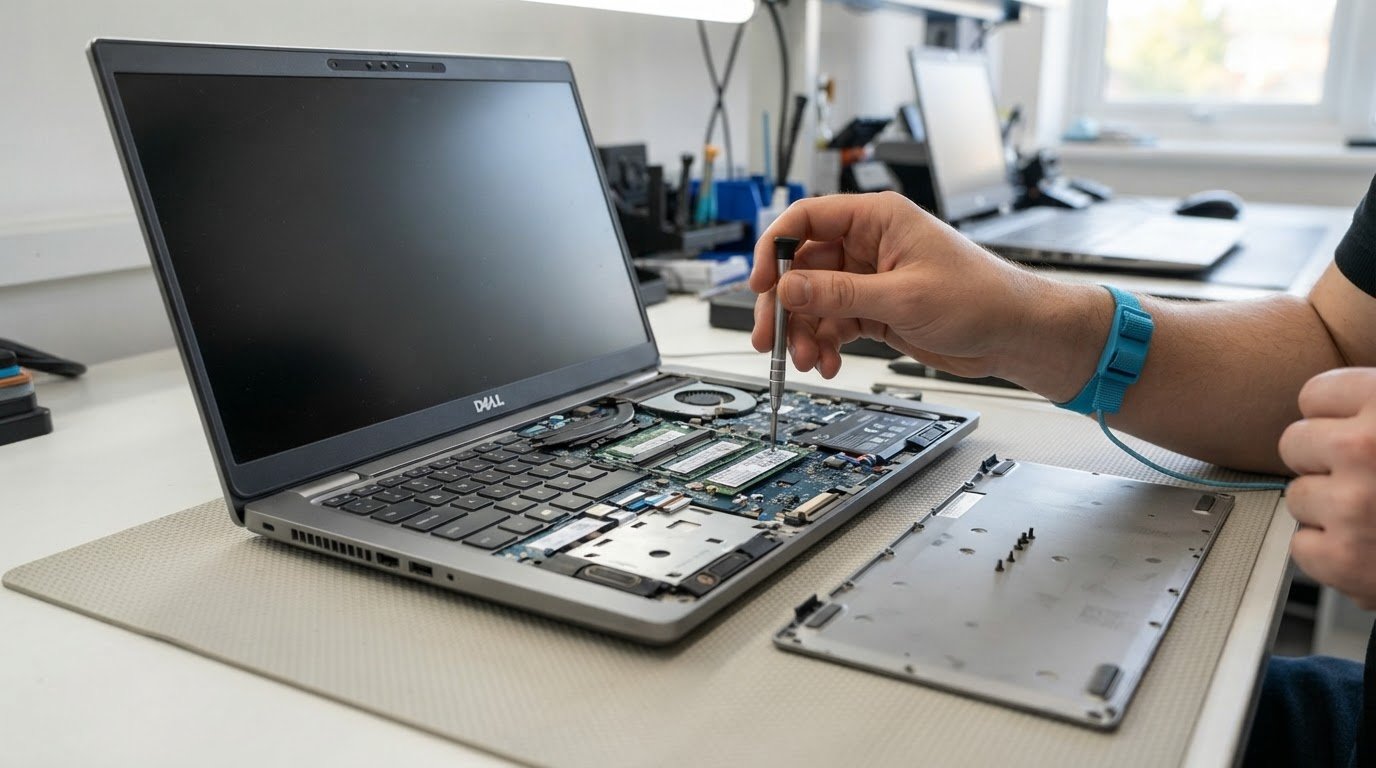
Repairable business laptops for UK professionals
Repairability can matter more than the badge on the lid. The latest ThinkPad T14 and T16 laptops sco

How to Standardise Bulk Business Laptop Models for UK Offices
Standardise the specification, not necessarily every laptop model. When standardising bulk business