
Managing Refurbished Laptops for Remote Employees: The 2026 Strategic Procurement Guide
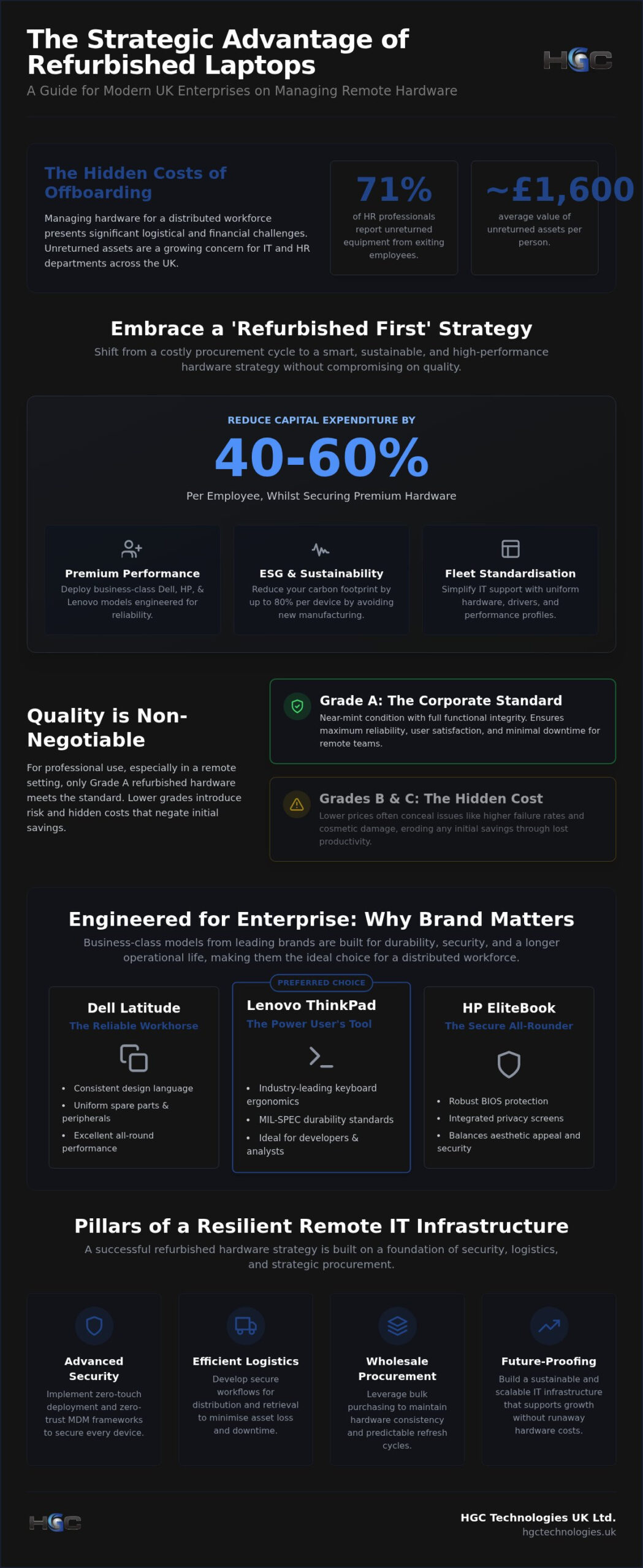
Recent data reveals that 71% of HR professionals have experienced at least one exiting employee failing to return company equipment, with the average value of unreturned assets reaching roughly $2,000 per person. This logistical nightmare is just one of the many hurdles IT leaders face when managing refurbished laptops for remote employees in an increasingly distributed workforce. You are likely already feeling the pressure of rising hardware costs and the constant threat of security breaches on unmanaged devices that haven’t been properly vetted or standardised.
We recognise that maintaining a high-performance team requires hardware that is both dependable and cost-effective. This strategic guide will show you how to effectively organise, secure, and scale your operations using premium refurbished units whilst reducing your capital expenditure by as much as 60%. We will explore the advantages of standardising your fleet with ex-corporate Dell, HP, or Lenovo models and provide clear protocols for remote maintenance. By following these steps, you can eliminate the common headaches of hardware retrieval and build a more resilient IT infrastructure for the years ahead.
Key Takeaways
- Understand how a ‘Refurbished First’ strategy reduces total cost of ownership whilst maintaining the high performance required by modern UK enterprises.
- Identify the superior build quality of business-class Dell, HP, and Lenovo models that ensures long-term reliability for a distributed workforce.
- Implement advanced security protocols for managing refurbished laptops for remote employees using zero-touch deployment and zero-trust MDM frameworks.
- Develop efficient logistical workflows for the secure distribution and retrieval of hardware to minimise asset loss and downtime.
- Future-proof your IT infrastructure by leveraging wholesale procurement to maintain hardware consistency and plan sustainable refresh cycles.
Strategic Advantages of Refurbished Hardware for Remote Workforces
The shift towards a ‘Refurbished First’ procurement model is no longer a niche cost-saving exercise; it’s a strategic imperative for the modern enterprise. UK organisations are increasingly recognising that high-grade pre-owned tech offers the same operational reliability as new equipment whilst significantly lowering the total cost of ownership (TCO). This approach allows IT departments to deploy premium business-class machines, such as the Dell Latitude or Lenovo ThinkPad, which are engineered for the rigours of professional use. Adopting this mindset ensures that your hardware strategy remains agile and scalable.
Choosing Refurbishment (electronics) over new procurement can lead to a direct reduction of 40% to 60% in capital expenditure per employee. Beyond the immediate financial relief, this strategy supports environmental, social, and governance (ESG) targets. Research indicates that up to 80% of a computer’s lifetime carbon footprint is generated during the manufacturing phase. By acquiring certified refurbished assets, your organisation effectively secures a near-zero-carbon tool for your workforce, contributing directly to corporate sustainability goals without compromising on technical specifications.
Standardisation remains a critical pillar of this strategy. Purchasing bulk batches of identical models simplifies the complexities of managing refurbished laptops for remote employees. It ensures that your IT support team deals with a uniform set of drivers, hardware components, and performance profiles. This uniformity accelerates troubleshooting and reduces the likelihood of compatibility issues during software rollouts, making the management of a distributed fleet far more predictable.
Understanding Refurbished Grades for Professional Use
Grade A refurbished hardware represents the industry gold standard for corporate reliability, offering near-mint aesthetic condition and full functional integrity. Whilst Grade B or C units might appear tempting for their lower price points, they often carry hidden costs in the form of increased user dissatisfaction and higher failure rates. In a remote setting, where physical access to the device is limited, any downtime caused by sub-par hardware quickly erodes the initial savings through lost productivity and expensive courier fees for repairs.
Ownership vs Leasing: The CapEx Argument
Owning your hardware fleet provides unparalleled control over data security and end-of-life disposal. Unlike leasing models, which often involve restrictive contracts and hidden ‘end of term’ fees, a CapEx ownership model allows for immediate asset depreciation and clearer tax benefits. This direct ownership ensures you aren’t tied to a third party’s timeline when it’s time for a refresh. By purchasing in bulk, enterprises can secure a standardised, secure fleet that remains a tangible company asset, free from the logistical complications of returning leased units to a provider.
Choosing the Right Brands: Dell, HP, and Lenovo Comparison
Selecting the right hardware architecture is the foundation of any successful strategy for managing refurbished laptops for remote employees. Consumer-grade laptops are often designed with a two-year lifecycle in mind, prioritising slim profiles over long-term durability. In contrast, business-class ranges like the Dell Latitude, Lenovo ThinkPad, and HP EliteBook are engineered for the ‘always-on’ demands of the corporate world. These machines feature reinforced hinges, spill-resistant keyboards, and modular internals that make them far easier to maintain and upgrade over a five-year refresh cycle.
The Dell Latitude series has earned its reputation as the workhorse of the UK’s remote workforce. Its consistent design language across generations allows IT teams to maintain a uniform set of spare parts and peripherals. Lenovo’s ThinkPad remains the preferred choice for roles requiring heavy data entry or coding, largely due to its industry-leading keyboard ergonomics and MIL-SPEC durability standards. Meanwhile, the HP EliteBook bridges the gap between aesthetic appeal and enterprise-grade security, offering features like privacy screens and robust BIOS protection that are essential for staff working in public spaces.
Model Spotlight: The Dell 7420 for Remote Teams
The Dell Latitude 7420 continues to be a standout performer in 2026. It strikes a perfect balance between portability and power, typically equipped with 11th Gen Intel processors that handle modern multitasking with ease. Its connectivity suite is particularly vital for home office setups, featuring dual Thunderbolt 4 ports alongside HDMI and USB-A, which eliminates the need for expensive dongles. For a more detailed breakdown of specific configurations, see our bulk Dell refurbished laptops guide for deeper model analysis.
Hardware Minimums for 2026 Productivity
To ensure your fleet remains performant throughout 2026 and beyond, certain hardware specifications are non-negotiable. Modern video conferencing platforms and browser-heavy workflows now demand a minimum of 16GB RAM to prevent system lag. For storage, 256GB NVMe SSDs are the baseline, though 512GB is preferred for employees handling large media files. When evaluating wholesale batches, battery health is the most critical metric; we recommend a minimum threshold of 80% original capacity to ensure remote staff aren’t tethered to a wall socket. If you are looking to scale your team quickly, sourcing premium wholesale hardware ensures you receive consistent, high-quality units that meet these rigorous standards.
Implementing Robust Device Management and Security Protocols
Security is the primary concern for any IT director managing refurbished laptops for remote employees. In a ‘zero-trust’ environment, the location of the device is irrelevant; the security posture is everything. Mobile Device Management (MDM) platforms, such as Microsoft Intune or Jamf, allow you to enforce strict security policies across your entire fleet without ever touching the physical hardware. This approach ensures that every refurbished Dell or Lenovo unit enters the field with pre-defined configurations that meet your specific risk profile.
Zero-touch deployment through Windows Autopilot is a game-changer for remote logistics. When you source high-quality refurbished hardware, these devices can be registered with your MDM provider before they even reach the user. Once the employee receives their laptop and connects to the internet, the device automatically downloads all necessary software, security certificates, and configurations. This eliminates the need for IT staff to manually image machines, saving hundreds of labour hours and reducing the risk of human error during setup.
Protecting company data starts at the BIOS level. Modern refurbished units must have Trusted Platform Module (TPM) 2.0 chips to support BitLocker encryption and secure boot processes. If a device is lost or stolen, remote wipe capabilities allow you to purge sensitive data instantly. This ensures that your corporate intellectual property remains protected even if the physical asset is compromised, providing peace of mind for both the organisation and the remote worker.
Security Standardisation across Refurbished Batches
Standardising on specific models, such as the Dell Latitude 7420 mentioned earlier, makes patch management significantly more efficient. Consistent hardware means your security patches and driver updates are less likely to cause system conflicts across the workforce. Implementing multi-factor authentication (MFA) through biometrics, such as fingerprint readers or Windows Hello cameras, adds an extra layer of hardware-level protection. To ensure these features are fully operational, wholesale refurbished computers UK must be sourced from suppliers who verify BIOS security and ensure no firmware locks remain from previous owners.
Employee Privacy vs Corporate Security
Maintaining a secure perimeter shouldn’t come at the cost of employee trust. Establishing clear ‘Acceptable Use’ policies is essential to define where corporate monitoring ends and personal privacy begins. You should use MDM tools to monitor device health, such as battery wear and storage capacity, rather than tracking individual user behaviour. Regular, automated security audits ensure that every remote endpoint remains compliant with your latest protocols without requiring manual intervention or infringing on the user’s digital space.
Operational Logistics: Deployment, Maintenance, and Retrieval
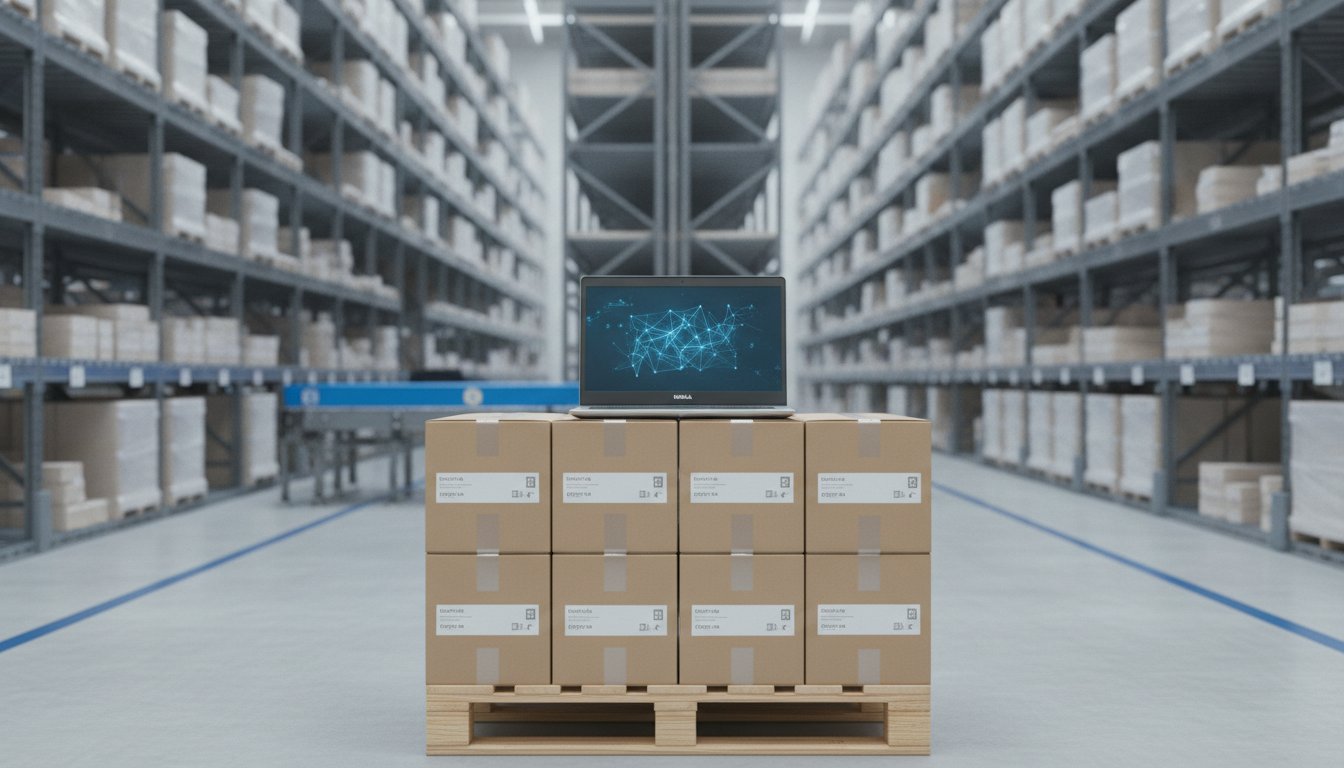
Logistics define the success of any remote hardware strategy. Whilst high-quality hardware provides the foundation, the efficiency of your distribution and retrieval network determines the long-term viability of your workforce. Managing refurbished laptops for remote employees requires a shift from office-centric IT support to a decentralised model that prioritises speed and reliability. Designing a seamless ‘Day One’ experience is vital; your remote hires should receive a professional, ready-to-use device that makes them feel like a valued part of the organisation from the moment they open the box.
Safe shipping is a non-negotiable component of this process. You must select UK couriers that offer robust tracking and insurance for high-value electronics. To mitigate the ‘Boomerang’ effect, where departing employees fail to return company assets, you should implement a pre-paid, tracked return service as part of your offboarding kit. This proactive approach significantly reduces the asset loss mentioned earlier in this guide. Additionally, maintaining a ‘Hot Swap’ inventory is essential. By keeping a buffer of pre-configured units in a central spares pool, you can ship a replacement device immediately if an employee’s laptop fails, minimising downtime to less than 24 hours.
Step-by-Step Remote Deployment Framework
A structured approach ensures consistency across your fleet. Follow these steps to streamline your rollout:
- Step 1: Bulk procurement and testing. Secure your units from a wholesale partner and perform rigorous hardware stress tests.
- Step 2: Imaging and MDM enrolment. Link the devices to your management platform using zero-touch provisioning as discussed in the previous section.
- Step 3: Secure packaging. Use custom-fit, anti-static foam packaging to prevent transit damage across national distribution routes.
- Step 4: User onboarding. Provide clear, printed instructions within the box to guide the user through their initial login and support access.
Maintenance and Remote IT Support
Remote IT support relies on powerful desktop tools that allow technicians to troubleshoot hardware issues without physical access. When a device begins to show signs of wear, you must decide whether to repair or replace. For business-class machines like the HP EliteBook or Lenovo ThinkPad, many repairs are straightforward and can be handled by sending a technician to the user’s home. However, if a repair exceeds 30% of the unit’s original refurbished value, it’s often more cost-effective to swap the device for a fresh unit from your spares pool. To streamline your logistics and secure your bulk refurbished fleet, partner with a specialist who understands the demands of the UK enterprise sector.
Scaling Remote Infrastructure with Wholesale Procurement
Scaling a remote workforce requires a departure from reactive procurement. To maintain a competitive edge in 2026, enterprises must adopt a proactive strategy that prioritises volume and consistency. Managing refurbished laptops for remote employees becomes significantly easier when you can rely on a single hardware profile across hundreds of users. This uniformity reduces the complexity of driver management and ensures that every staff member has a comparable user experience, regardless of their location.
Bulk purchasing allows your organisation to negotiate better margins whilst securing consistent specifications. This is particularly important when planning for three-year or five-year refresh cycles. By investing in large batches of ex-corporate Dell or Lenovo units, you create a stable hardware baseline that is easier to support and upgrade. Scaling isn’t limited to portables. Integrating custom-built PCs and bespoke server solutions into your infrastructure provides the necessary power for your remote-heavy operations, ensuring your back-end systems can handle the demands of a distributed team.
Owning your hardware assets provides a level of financial agility that leasing simply cannot match. By treating hardware as a capital expenditure (CapEx), you can better manage asset depreciation and avoid the recurring monthly costs that often escalate as a team grows. This model provides the stability required for long-term planning and ensures that your hardware strategy remains aligned with your broader business objectives.
The Role of the Wholesale Partner
Vetting a wholesale laptop distributor UK is a critical step for procurement officers. You need a partner that maintains a steady supply of specific Dell or Lenovo models to ensure fleet uniformity. Unlike complex financing or leasing structures that often include hidden fees, a direct wholesale model provides immediate asset ownership. This transparency allows for better budget forecasting and ensures you have a reliable source for the Grade A hardware your employees expect.
Conclusion: Building a Resilient Remote Fleet
Building a resilient remote fleet is an investment in your company’s operational agility. The ROI of an ownership model for refurbished hardware is clear: reduced capital expenditure, lower carbon impact, and higher asset control. By prioritising Grade A units and robust MDM protocols, you eliminate the risks traditionally associated with pre-owned tech and provide your team with the tools they need to succeed.
In addition to providing the right hardware, supporting the cognitive health and daily energy of your remote staff with natural wellness solutions from Gara Health can further enhance the overall success and retention of your distributed workforce.
Similarly, boosting employee confidence for video meetings through dental-grade oral care from GLI GLI can complement your corporate wellness initiatives and remote onboarding kits.
Final checklist for procurement officers:
- Quality: Ensure every unit meets Grade A certification standards for employee satisfaction.
- Security: Verify BIOS-level protection and TPM 2.0 compliance for every device.
- Logistics: Establish clear protocols for secure distribution and hardware retrieval.
- Consistency: Partner with a wholesale specialist to maintain a standardised hardware profile.
Contact HGC Technologies UK Ltd. to discuss your enterprise remote hardware requirements and discover how our wholesale solutions can scale your workforce effectively.
Future-Proofing Your Remote Workforce with Strategic Procurement
Adopting a robust hardware strategy is the key to maintaining operational agility in a distributed environment. By prioritising business-class Dell, HP, and Lenovo units, your organisation gains the durability of premium engineering whilst reducing capital expenditure significantly. This guide has highlighted how automated deployment and centralised spares pools can effectively eliminate the traditional friction associated with hardware retrieval and maintenance. This structured approach provides a secure, scalable foundation for managing refurbished laptops for remote employees across the UK.
As you look towards your next refresh cycle, remember that owning your fleet offers far greater control over security and long-term asset value than restrictive leasing models. Partnering with a specialist in enterprise-grade hardware ensures your team has the reliable tools they need to perform at their peak. Secure your remote workforce with bulk refurbished laptops from HGC Technologies UK Ltd. We provide direct wholesale pricing on premium models and offer comprehensive national distribution for corporate fleets. Build a resilient, sustainable infrastructure that supports your team’s success today and into the future.
Frequently Asked Questions
Are refurbished laptops reliable enough for full-time remote employees?
Yes, provided you source business-class Grade A units. Unlike consumer models, enterprise ranges like the Dell Latitude or Lenovo ThinkPad are engineered for heavy daily use and undergo rigorous testing during the refurbishment process. When sourced from a reputable wholesale partner, these machines offer the same operational reliability as new equipment at a fraction of the cost.
How do I secure a refurbished laptop that will be used on home Wi-Fi networks?
Security starts with enforcing a zero-trust architecture at the hardware level. Ensure every device is equipped with a TPM 2.0 chip to support BitLocker encryption and secure boot protocols. By combining these hardware features with a robust VPN and multi-factor authentication, you can protect sensitive corporate data even when employees connect via unsecured home routers.
What is the best laptop brand for a remote workforce in terms of durability?
Dell, Lenovo, and HP are the industry leaders for remote durability due to their reinforced chassis and modular designs. The Lenovo ThinkPad series is often cited for its legendary keyboard ergonomics and spill resistance, whilst the Dell Latitude range is praised for its consistent internal architecture. Both brands are excellent choices for building a long-lasting remote fleet.
Can I use MDM software like Intune or Jamf with refurbished hardware?
Yes, refurbished hardware is fully compatible with modern Mobile Device Management (MDM) solutions. You can enrol these devices in Windows Autopilot or Jamf Pro just as you would with new machines. This allows your IT team to push security patches, install software, and manage configurations remotely without ever needing physical access to the laptop.
How do I handle the return of a laptop when a remote employee leaves the company?
Implement a standardised retrieval process using tracked, pre-paid courier services. Providing the departing employee with custom-fit, secure packaging and a pre-printed shipping label significantly increases the likelihood of a successful return. This proactive approach helps mitigate the risk of asset loss and ensures the hardware can be quickly refurbished for the next hire.
Is it better to buy refurbished laptops in bulk or as needed?
Bulk purchasing is the superior strategy for fleet consistency and long-term cost savings. Buying in volume allows you to secure identical models with the same internal specifications, which simplifies the task of managing refurbished laptops for remote employees. This standardisation makes remote troubleshooting and driver management far more predictable for your IT support staff.
What happens if a refurbished laptop develops a hardware fault while remote?
Use a ‘Hot Swap’ inventory system to minimise downtime. Rather than waiting for a lengthy repair, ship a pre-configured replacement unit from your central spares pool immediately. The faulty device can then be returned, repaired, and placed back into the spares inventory. This cycle ensures your remote staff remain productive regardless of hardware issues.
How does buying refurbished laptops help my company’s sustainability goals?
It significantly reduces the carbon footprint of your IT operations by extending the lifecycle of existing technology. Research indicates that up to 80% of a computer’s lifetime carbon emissions are generated during the manufacturing stage. By choosing refurbished hardware, you are acquiring a near-zero-carbon asset and preventing high-quality electronics from entering the waste stream prematurely.
Refurbished Laptops Reseller Supplier: The 2026 Resource Guide for UK IT Partners
Did you know that the UK has officially overtaken Germany as the largest market for refurbished PCs

Wholesale Laptop Distributor UK: The 2026 Strategic Partner Reference
With a 12% drop in UK PC and laptop shipments forecast for 2026, the traditional model of simple har

Lenovo vs HP: The 2026 Comparison for UK Business Procurement
The USD 6.26 billion UK laptop market might be obsessed with AI-powered silicon in 2026, but for the
Comments are closed.